Artificial intelligence could help the housewares industry address some of its most complex business challenges, from margin pressure to rapidly evolving consumer behavior, according to Udayan Bose, founder and CEO of NetElixir, an AI-first digital agency for global e-commerce brands.
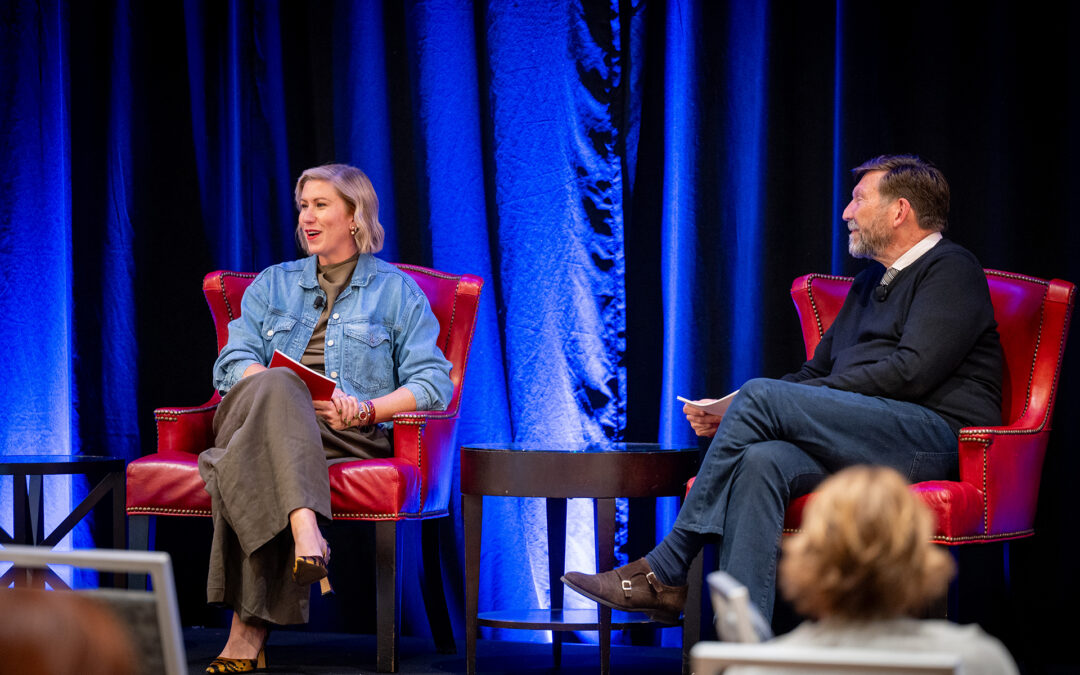
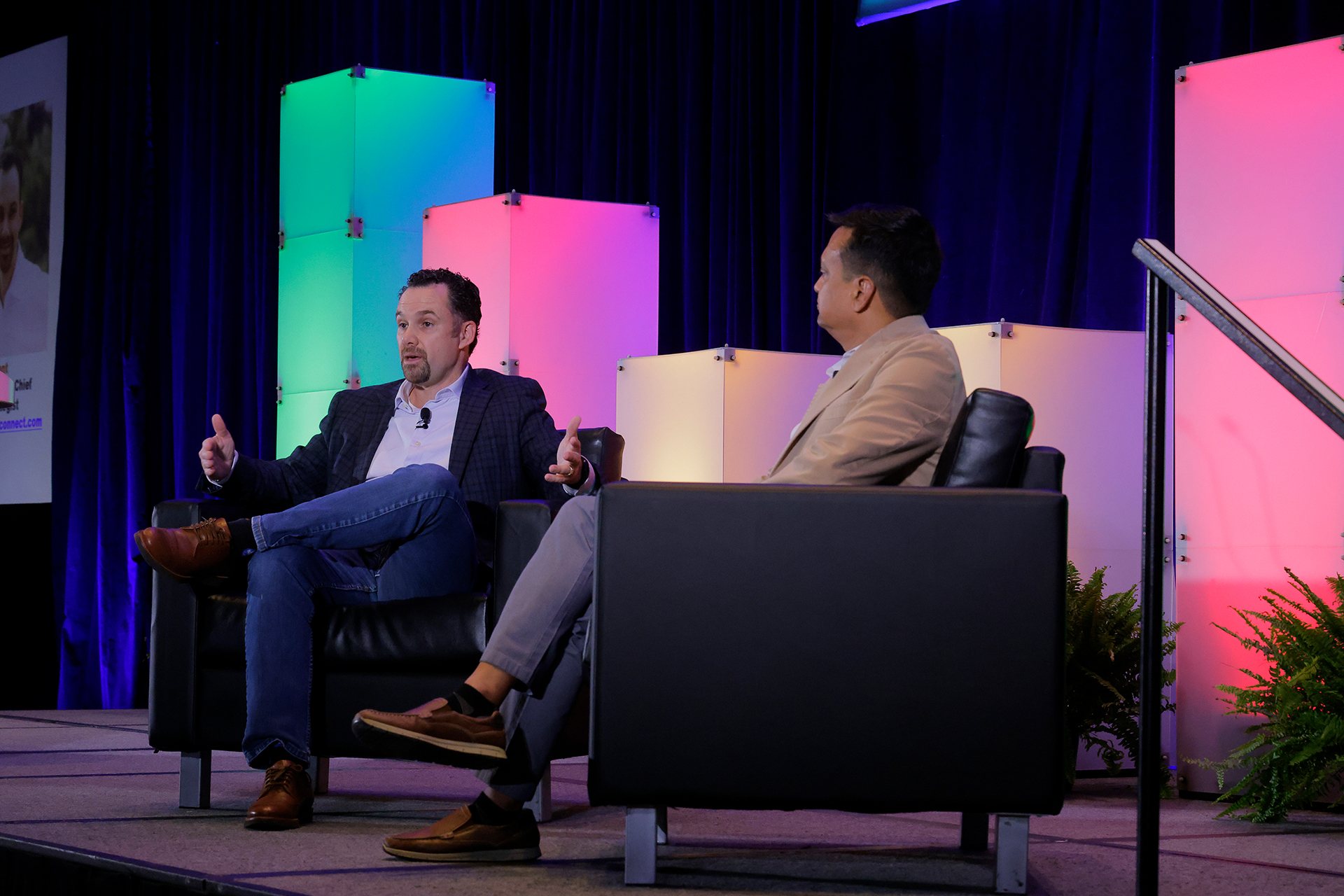
Bose (pictured right) joined Aaron Conant (left), co-founder of the commerce technology networking platform BWG Connect, for a keynote discussion titled “The Future of AI: Your Business Depends on it Today” at The Inspired Home Show 2026.
While many consumers have already experienced artificial intelligence through GPT tools and large language models used in everyday searches, Bose said businesses have only begun to explore AI’s potential.
“It’s time to move from using AI to save time on simple tasks to using it for predictive analytics that drives business growth,” Bose said. For the housewares industry in particular, where companies can manage thousands of SKUs and face intense margin pressure, AI can help uncover new revenue opportunities.
“There’s lots of money hidden in those dead SKUs, and AI can help unlock that revenue,” Bose said.
He cited an example of a company that used AI-driven experimentation to revive 1,100 SKUs, see 39 percent total growth in orders and generate $1 million in incremental revenue in just three months.
By leveraging predictive analytics, a type of performance AI, Bose said companies can drive growth and revenue. For instance, companies can identify which customers are most likely to make a purchase, which are at risk of churning and where marketing and promotional efforts should be focused.
From SEO to GEO
Artificial intelligence is also changing how consumers discover brands online, Conant said.
It’s not about SEO anymore — ecommerce companies need to be concerned about Generative Engine Optimization (GEO) now.
“This means you need to change how you structure the backend of your website and how you do social,” among other steps, said Conant. “You have to be focused on GEO; if you don’t, your brand won’t be included in AI searches.”
AI search is providing richer results for consumers, with AI bridging the gap between what they are looking for and anticipating their needs and then serving them choices on what they think they need, Bose said.
Bose cited a Walmart survey from last year that found that, after family and friends, people depend on AI more than on influencers or anything else for recommendations.
AI Enhances, Not Replaces, Human Judgment
Both Conant and Bose said fears that AI will replace jobs are misplaced.
Bose said the technology is more likely to augment human roles rather than replace them. The real value of AI, he said, lies in how organizations reinvest the time automation creates. By reducing manual work, AI allows teams to focus on higher-level thinking, creativity and strategy.
“AI should be the starting point, not the end goal,” Bose said. “The opportunity for business leaders is to take the time saved and apply it to human judgment — the creativity, intuition and strategic thinking that AI cannot replicate.”
Four Principles for AI Adoption
Bose shared practical ways that companies can start to apply AI to improve workflows and drive revenue. He pointed to the following four principles:
• AI is like electricity: The applications you build define impact. It is power that you apply to the problems you want to solve.
• Working backwards from outcomes: Start with the workflows, not the technology.
• Keep humans in the loop: Humans with AI will beat either alone.
• Start small. Experiment fast: Treat it as a series of experiments.
When looking to improve workflows, Bose encouraged businesses to question long-standing processes.
He said, “Ask yourself, do you still need those 38 steps, or can you do it in 14? Ask how can we save time? Save money? Leave your pride behind and look at that process you’ve been using for 19 years and see how you might be able to improve it.”
He added that successful experimentation often comes from diverse teams working together to solve problems.
“This is a time when hierarchies don’t matter,” Bose said. “Bring together a small, multigenerational group to tackle one problem. Encourage people to speak up and create psychological safety. If you don’t adapt, you won’t survive.”
Bose closed with a simple message for business leaders navigating the rapidly evolving AI landscape.
“Start today. The right time is now. Start with one problem. Use AI to figure out the problem. And work back from there. Experimentation is the way of the future,” he said.