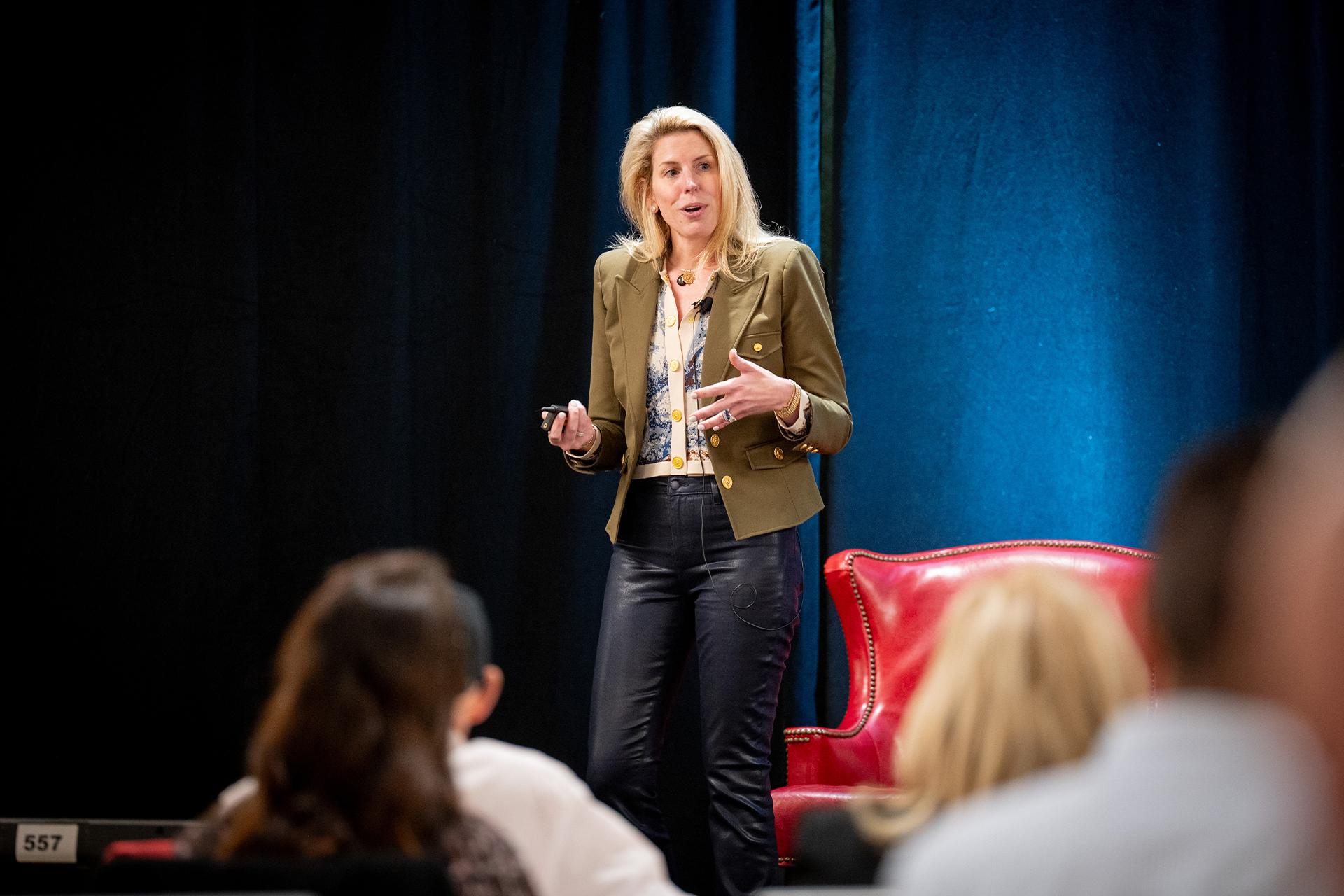
The opening day of the International Housewares Association’s 2025 CHESS (Chief Housewares Executive SuperSession) brought housewares executives together for a full slate of sessions examining the challenges and opportunities shaping the industry.
CHESS is IHA’s strategic networking event for chief officers and top decision-makers of IHA member companies. From a “housewares hot seat” examining agility to workforce strategy to tariffs, shipping updates and retail outlooks, speakers shared insights designed to help companies navigate disruption and position for growth.
CHESS is sponsored by Wholescale, Creative Planning, LaTeam, Pattern, JPalmer Collective and J.B. Hunt.
Read a recap of the day-one sessions at CHESS:
Housewares Hot Seat: Putting Agility to Work
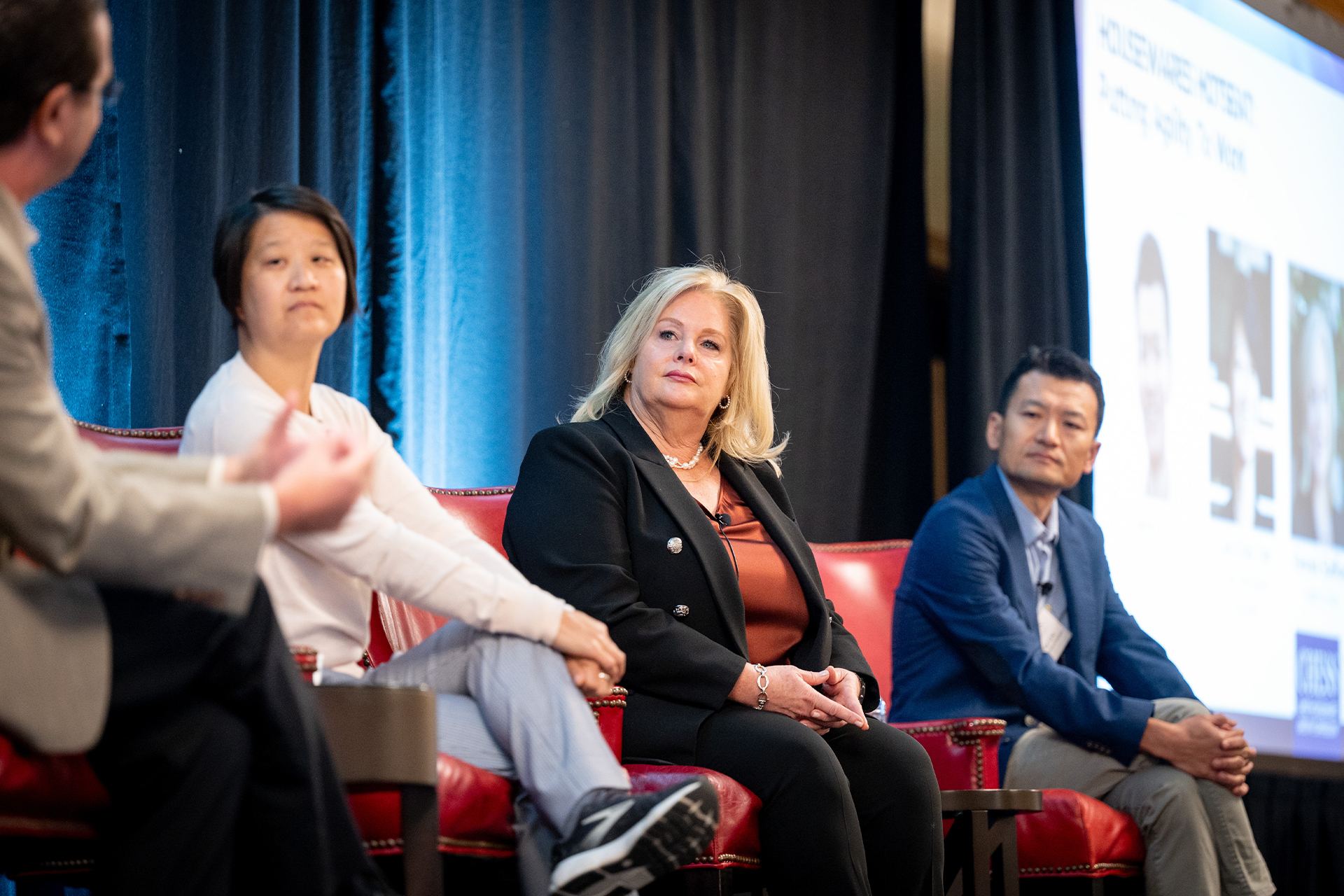
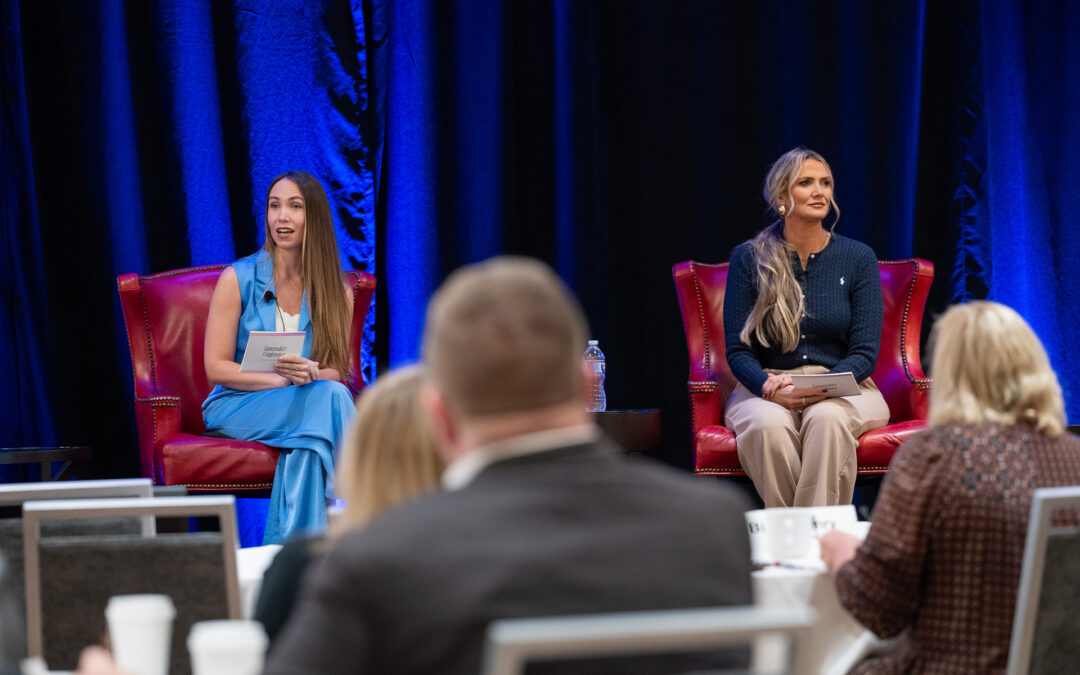
From left: Cze-Chao Tam, Pamela Stafford, Henry Liu
Challenging common assumptions and looking for ways to turn challenges into opportunities were major themes in the CHESS opening session. Three housewares executives took the stage to share their company’s stories and how disruptive product, marketing and operational innovation are helping their businesses adapt in an ever-changing marketplace.
Panelists included Henry Liu, President and CEO of Cangshan Cutlery; Cze-Chao Tam, CEO of Trinity International Industries; and Pamela Stafford, President & CEO of Hestan Culinary. Peter Giannetti, Editor-In-Chief of HomePage News, served as moderator.
All three panelists said adopting an innovation mindset has been a key to their success. Both Liu and Tam admitted they were “a little bit crazy” in their pursuit of innovation and excellence in their relatively new companies. Tam founded TRINITY in 2007 as a storage and organization company and recently launched a new line of kitchen and furniture items made from recycled chopsticks. Liu founded Cangshan in 2015 as a premium cutlery brand, added a silverware line, and is in the process of building a U.S. manufacturing facility.
Even Hestan Culinary, which is part of the larger Hestan brand that began in the 1970s, has adopted the mindset of “an entrepreneurial start-up,” according to Stafford.
Sticking to your company’s overall vision is important, said Tam, but staying nimble in how you get there is equally important. “The challenges of this year have challenged us to innovate at a faster speed than ever before,” she said, sharing that her company has been getting more flexible with product development so they can adjust product parts and materials as policies change.
Persistence and perseverance have been especially important to Cangshan, which is disrupting conventional norms in the cutlery business by building its own U.S. manufacturing plant. Liu shared that they had tested the production line three times already this year and failed; it passed on the fourth try two weeks ago.
Building the right team has been key to Hestan’s success, according to Stafford. “We’ve built a team of believers – a scrappy team who are passionate about and believe in our cause,” she said, adding that she once hired someone she met on a retail visit – not because she had a job opening at the time – but because she really connected with the person and believed she had a lot to offer her team and what they were trying to achieve.
Other key themes that emerged during the session included the importance of brand building, stories that resonate with consumers, and attentive channel management.
U.S. manufacturing has its challenges, but partnering with a domestic factory to repurpose used chopsticks for TRINITY products supports the company’s sustainability mission and offers a competitive marketing advantage. “It’s a story that resonates with people,” said Tam.
At the end of the day, everyone emphasized the importance of working closely with retailers, maintaining relationships and helping them meet their goals. It’s important to get out and explain your story to buyers, said Stafford, who added that her team relies heavily on trade shows, industry events and store visits.
Spring Forward for Growth: Navigating Retail Trends and Future Disruptors
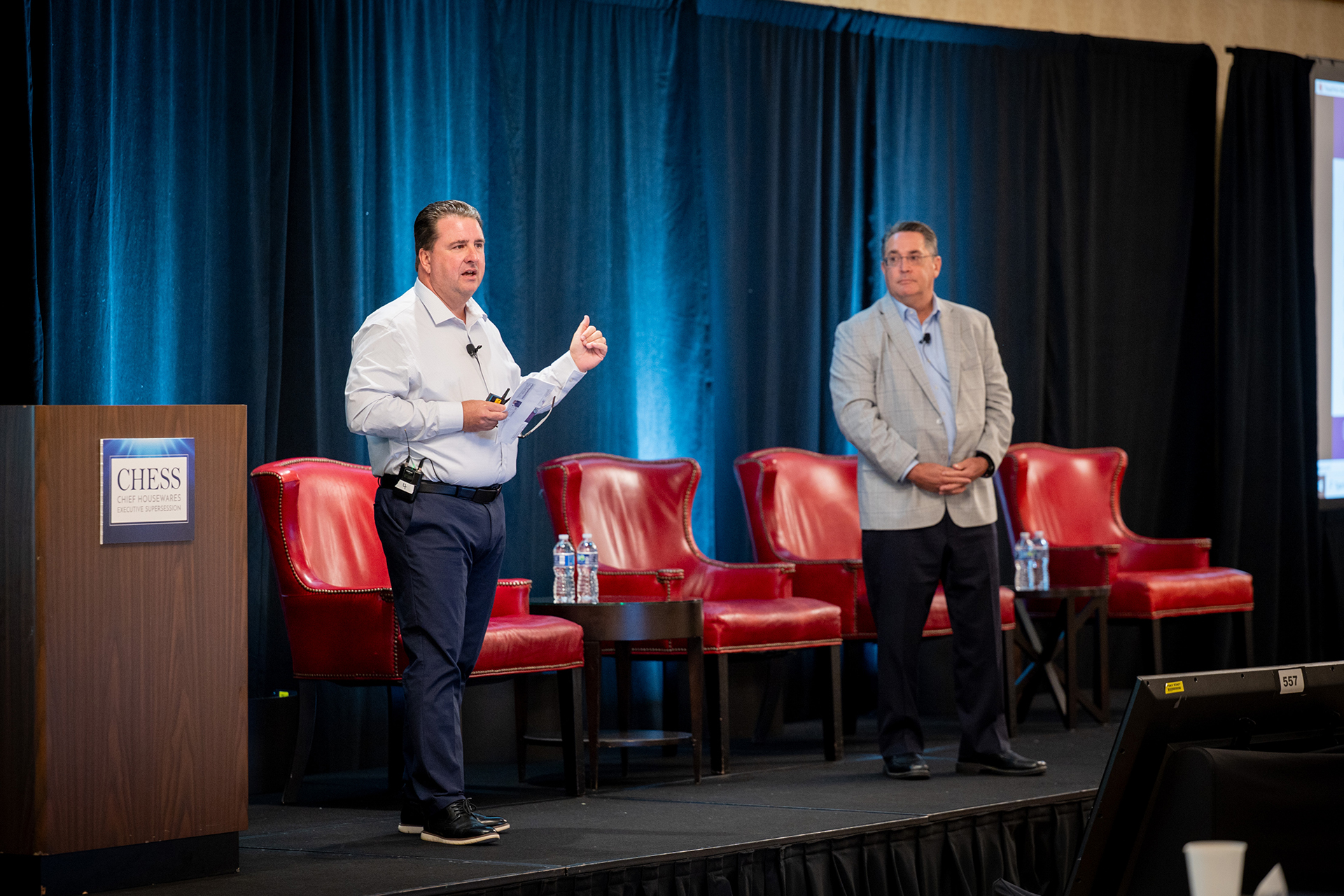
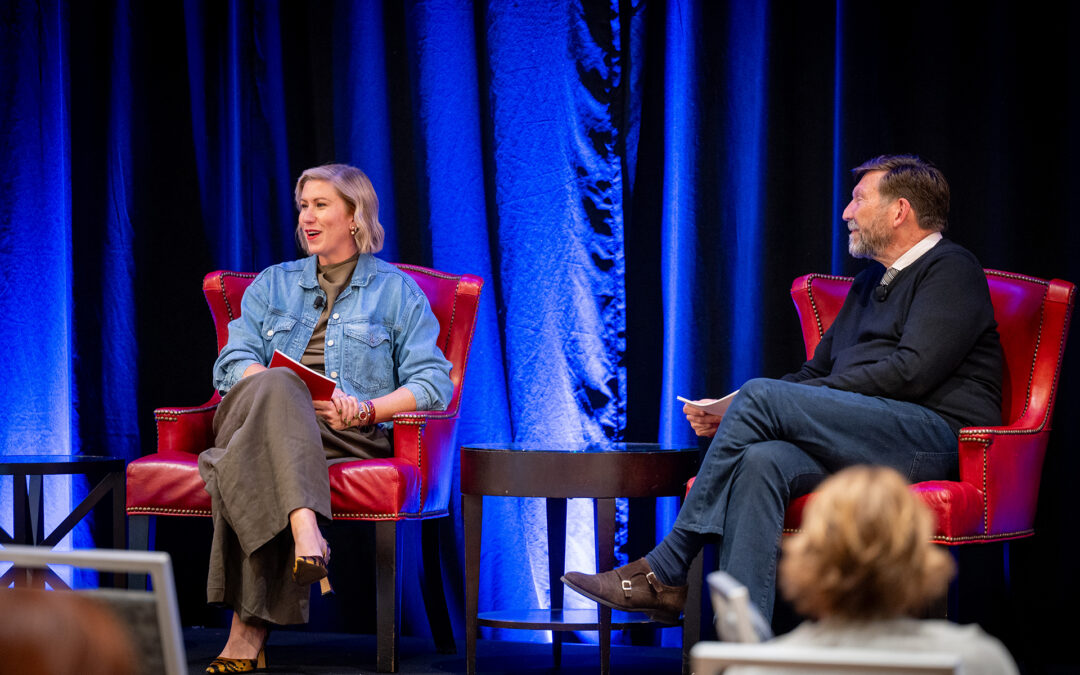
From left: Don Unser, Joe Derochowski
At the Spring Forward for Growth: Navigating Retail Trends and Future Disruptors session, Circana’s Don Unser and Joe Derochowski examined how inflation, tariffs and evolving consumer habits are influencing general merchandise and home category performance as 2025 winds down and the industry looks ahead to 2026.
Unser framed the discussion around what he called the “big six” forces shaping retail’s trajectory: persistent inflation, widening value bifurcation, accelerating social commerce, demographic shifts, the emergence of agentic commerce and the need for innovation that drives true differentiation. Inflation remains the central disruptor, he noted, as “invisible” price increases tied to tariffs continue to erode purchasing power and test elasticity across categories. “Even with good jobs, it’s really, really hard,” Unser said. Consumers are being forced to make tradeoffs and companies are getting scientific about how to respond.
Social commerce is now retail’s fastest-growing channel, generating more than $11 billion in annual sales within just two years. Unser pointed to TikTok Shop as a key platform to watch, along with OpenAI’s new instant-checkout functionality for Etsy and soon, Shopify, which he said signals a new frontier for “agentic commerce” that will connect inspiration, transaction and fulfillment.
Circana data underscores the ongoing squeeze on discretionary spending. In August, consumer prices rose 2.9% year over year, while general merchandise unit sales declined 6% over the most recent four-week period. Food and beverage dollar growth was driven almost entirely by higher prices and restaurant traffic was down 1%. With a 30% tariff on Chinese goods in place through at least November 10, Unser said inflation could climb above 3% in the coming months.
Derochowski noted areas of relative strength in kitchen electrics, home environment and décor, supported by replacement, entertaining and weather-driven demand. Still, younger consumers — particularly ages 18 to 24 — are spending less in discretionary categories. Looking ahead, Circana projects home category sales down 1% to 2% for Holiday 2025, flat to up 1% in 2026 and up 2% in 2027.
“Execution wins,” Unser concluded. “Despite the many headwinds, smart pricing, promotion and marketing strategies can still drive meaningful growth.”
IHSA Shipping Update

Craig Akers
Craig Akers, Executive Director of the International Housewares Shippers Association (IHSA), provided an update on how tariffs, legislation and geopolitical events have affected shipping so far this year – and what’s on the horizon for 2026.
After a summer surge, Akers said shipping demand is expected to decline sharply for the rest of the year. While demand may start to rebound in 2026, he advises suppliers to strategize and prepare for continued volatility.
His recommendations for mitigating risk included:
- Maintaining a balanced freight strategy with a maximum of 20% volume on spot rates,
- Having contingency plans in place for disruptions across the entire supply chain (not just containers), and
- Keeping a close eye on inventory levels and possible surges in shipping rates.
Looking ahead to next year, shippers should focus on “resilience, agility and risk mitigation,” he said. “Is your shipping provider marriage material?” is an important question to ask.
According to Akers, specific issues on the horizon for 2026 include:
- Organized crime – which includes train shipments, container skimming, and door-to-door delivery risks,
- The International Maritime Organization’s plan to drive decarbonization, with penalties for vessels with high emissions passed down to shippers,
- S. trade policies – which are accelerating changes to global supply chain maps, and
- Service provider consolidation.
IHSA is a not-for-profit association formed to benefit companies belonging to the International Housewares Association. Through the combined leverage of members, IHSA negotiates freight contracts and partners with other logistics providers to lower supply chain costs.
Building Value Through Your Workforce

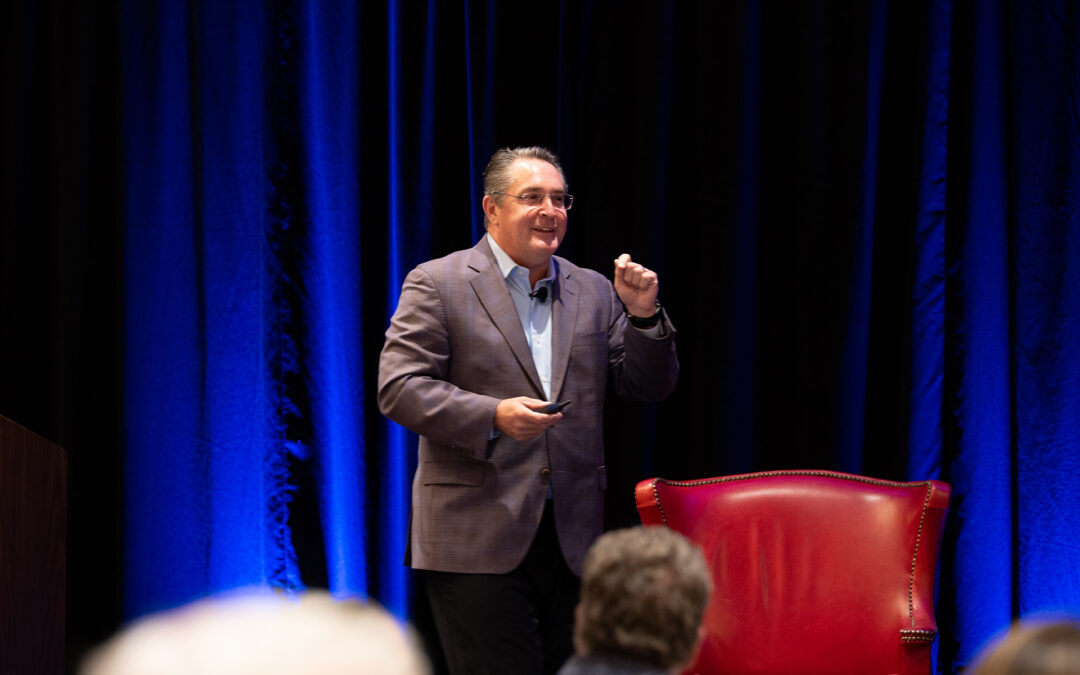
Lee Roberts
In his session “Building Value Through Your Workforce,” Lee Roberts challenged leaders to stop searching for quick fixes and instead look inward. “Find out what your best people are doing and model it,” he said. “We keep searching for hacks, but the answers are already in our top performers.”
Roberts, a partner and managing director at Creative Planning who works with thousands of business leaders each year, said too many companies promote their top producers without equipping them to lead. “Your job isn’t to grow revenue, it’s to grow revenue-producing people,” he emphasized. The most common mistake, he added, is expecting those same high performers to manage while maintaining their previous workload, a dynamic that often leads to burnout and turnover.
The solution, Roberts said, lies in building intentional systems that develop people and performance. “There aren’t 35 ways to do it. There’s one best way,” he noted, citing sports and military examples where discipline, structure and shared standards drive excellence.
Culture, he said, must also be cultivated by design. Quoting investor Fred Wilson, Roberts reminded attendees that culture is everything. The strongest organizations, he said, are value-driven, intentional and consistent. “Do you have a culture by design or by default?” he asked.
At its core, Roberts said leadership is a privilege grounded in empathy and accountability. “The best performers do what they say they’re going to do,” he said. “If you can instill that habit in yourself and your team, your organization will take off.”
He closed with a reminder that despite uncertainty in the market and workforce, leaders control the environments they create; if you grow your people, your value will follow.
Retail Outlook: Navigating Tariffs, Consumer Headwinds and Competitive Shifts

Scott Friedman
Scott Friedman, Chief Credit Officer of Pulse Ratings, discussed the key macroeconomic forces shaping the retail industry. His session included economic pressures and resulting consumer behaviors, the impact of tariffs and trade challenges, and how retailers are faring amid the volatility.
Friedman opened his session with some of the many – and often conflicting – headlines people see each day about the state of the economy. “From a consumer’s perspective, this uncertainty…this roller coaster…is never good,” he commented.
The current inflation rate is 2.9%, but that’s only a comparison to the same month last year, he pointed out. Over the past five years, inflation has increased by 20%. Overall retail spending appears to be holding steady, but credit card debt has reached an all-time high of $1.21 trillion.
In addition, there’s growing evidence that lower- to middle-income consumers are under the most significant pressure. According to Moody’s, high-income Americans are responsible for roughly half of all U.S. spending (up from a third in the early ’90s).
Value and affordability are dominating purchasing decisions across all income levels. As a result, retailers are leaning into proprietary brands and targeted promotions. Price increases have been used sparingly, he said, with many treating them as a last resort.
However, Friedman acknowledged that tariffs and cost inflation loom larger in late 2025 and 2026. “Companies have so far mitigated tariff impacts through front-loading inventory, supply chain shifts and adjusting inventory mix,” he shared. “But as older, lower-cost inventory sells through, higher post-tariff costs are expected to show up more fully later this year and into 2026…if tariffs remain in effect.”
When it comes to retailer health, Friedman said there was another spike in bankruptcies in the first half of 2025, in addition to increased merger and acquisition activity. However, on the positive side, “I see fewer companies teetering on the edge of bankruptcy” going forward, he commented, while also noting that bankruptcy can help retailers emerge stronger than before.
Retailer Keynote: At Home
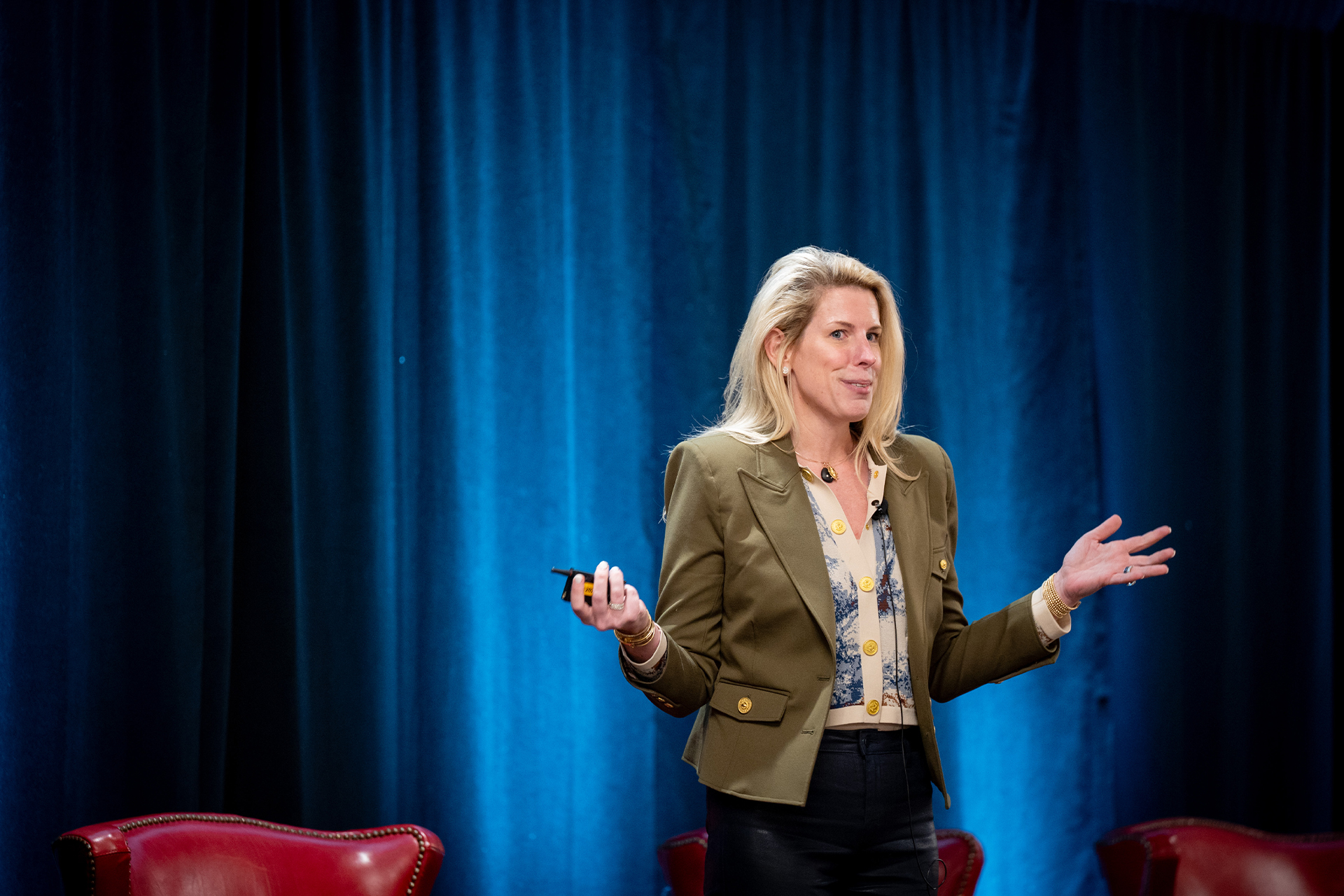
Jamie Jo Cockrell
Jamie Jo Cockrell, senior vice president and general merchandise manager of At Home, shared both a personal and professional reflection on resilience, renewal and the company’s next chapter.
Cockrell, who began her retail career as a buyer at JCPenney, opened by emphasizing her deep connection to the people and purpose of the housewares industry. “Life is uncertain, and it’s going to throw us obstacles,” she said. “The most important thing we can do is stay resilient and support one another.” She noted that her greatest growth as a leader, merchant and person came from the hardest moments.
That mindset of transformation is now central to At Home’s reemergence. Cockrell confirmed that the retailer recently received approval for its restructuring plan, positioning the company to emerge from Chapter 11 in the coming weeks with $200 million in new equity investment and a cleaner balance sheet. “It’s a big day,” she said. “We’re ecstatic to go into this next chapter and grateful for the partnership and support we’ve had across the industry.”
At Home’s forward strategy centers on what Cockrell called the brand’s three driving forces: people, product and passion. The company is recommitting to being a product-led organization and a design-forward destination for customers seeking affordability with personality. “Good is not good enough,” she stressed. “We have to strike a chord emotionally with our customer.”
That customer At Home’s core “she” sees her home as a reflection of herself, Cockrell said. The brand’s mission, “Design Your Life At Home,” aims to help her express her personal style and create spaces filled with creativity, connection and comfort. Strategic pillars supporting that mission include becoming a customer-obsessed, brand-led and product-proud retailer through improved merchandising standards, optimized assortments, and cohesive brand storytelling.
Cockrell also previewed a series of initiatives to elevate At Home’s everyday assortment to the level of its strong seasonal business. These include trend-led “edits” such as The Autumn Edit and the debut of a new collaboration with Real Simple, designed to make everyday living simpler, more stylish and organized.
“We’re bringing our old customer along but creating a new one,” she said. “Her expectations are rising, and ours have to as well. This industry needs growing retailers—and we need one another.” Competition is a good thing, but the ultimate goal is to make sure our customer wins, Cockrell continued, “We’re in the people and product business, we can’t lose sight of what we can do for ‘her.’”