This article originally appeared in the 2025–2026 edition of Inspired Magazine, the official publication of The Inspired Home Show.
No doubt you’ve heard the term “retail theater” to describe engaging shopping experiences. But theater sometimes has the connotation of being a one-sided experience, where the audience sits still and watches a preplanned performance unfold in front of them.
Today’s shoppers are looking for immersive experiences where they not only take part in the action, but help determine the outcome.
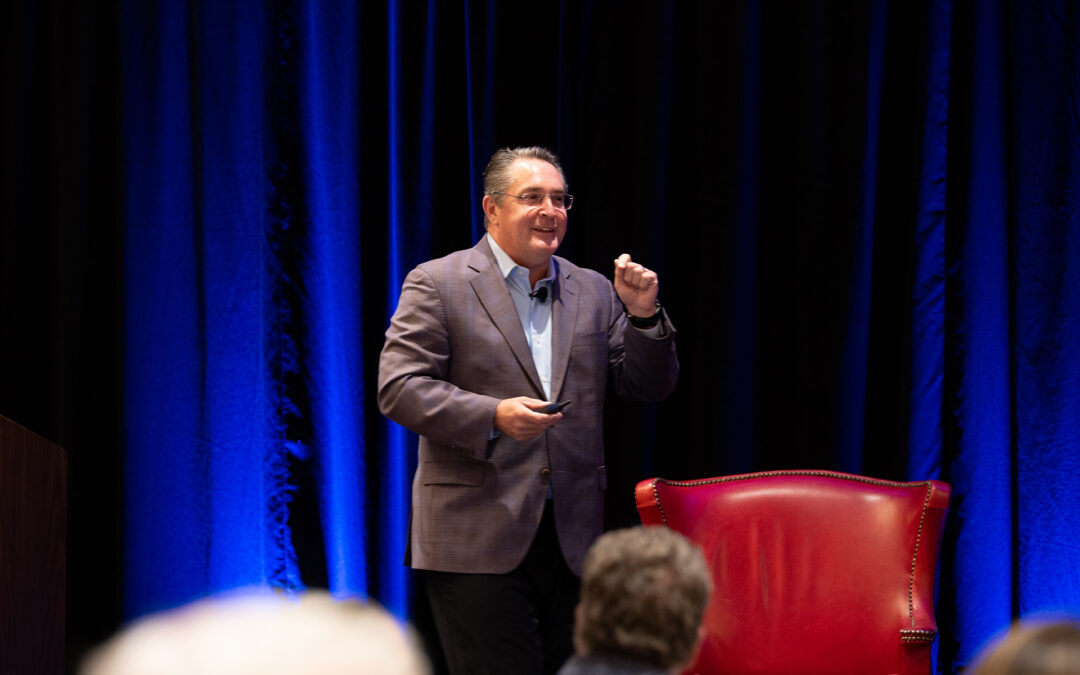
“The boundaries between disciplines have dissolved,” says Denise Foley, a visual and brand experience consultant and leader with more than 30 years of experience across luxury retail, brand merchandising, consulting and education converge, working in unison to create immersive, surprising and collaborative customer experiences.”
Denise, who is the newest member of IHA’s Global Innovation Awards (gia) jury, says there are several key shifts taking place in visual merchandising and store display.
“Instead of just seasonal décor or products, window displaysa re evolving into immersive, narrative-driving and emotionally engaging experiences,” she explains.
“Think theatrical set pieces, sound or light cues, even small motion. This draws in foot traffic, increases dwell time and enhances shareability.”
To make displays more immersive, she encourages retailers to think about ways to employ sound, scent and tactile experiences. Designing with social media in mind also provides ways for shoppers to interact with visual elements. (This can mean backdrops, photo walls or hands-on experiences that encourage digital sharing).
Lighting and motion (or at least implied motion) are also gaining traction as ways to capture shoppers’ attention. These elements add a “surprise or dynamic factor” that blurs the lines between physical and digital retail, she says.
Beyond these shifts, there are five key trends to consider for visual merchandising and display.
1. Upcycling and Craft
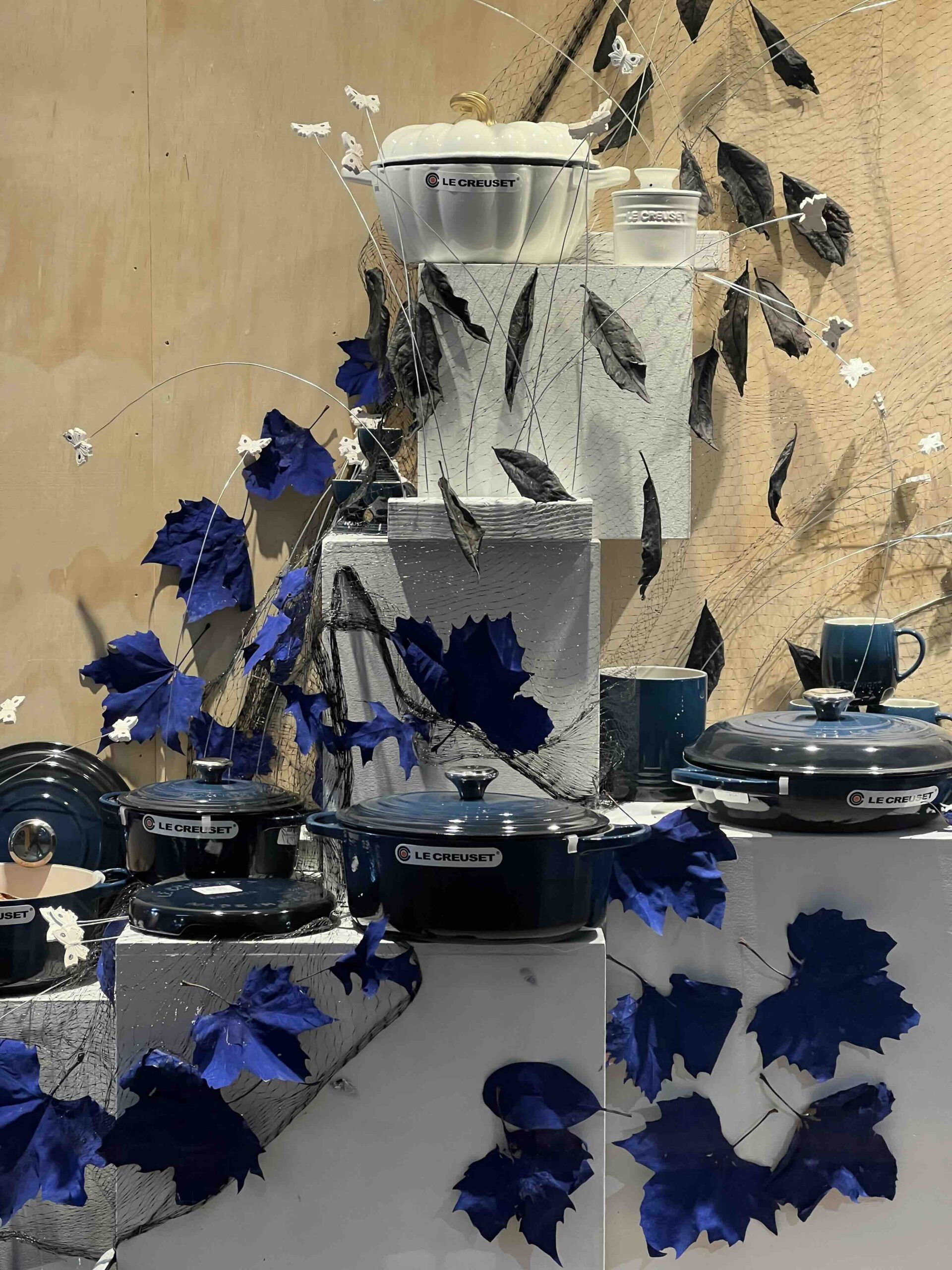
“Natural textures, organic and back-to-nature touches are being enhanced through the re-use of materials and craftsmanship in windows,” says Denise. This design direction “provides a calming contrast to busy urban environments and supports a sustainability narrative.”
There’s plenty of room here for birds, bees, flowers and other animals, but Denise also encourages retailers to look for ways to reuse materials and create handcrafted looks. Even everyday objects can have creative potential, as artist Rebecca Hutchinson demonstrated recently at the Art on Paper Fair by using pages of upcycled books to make flower petals. France’s Ambience & Styles offers a recent retail example, as they handcrafted a forest scene with kitchen objects hanging from the trees.
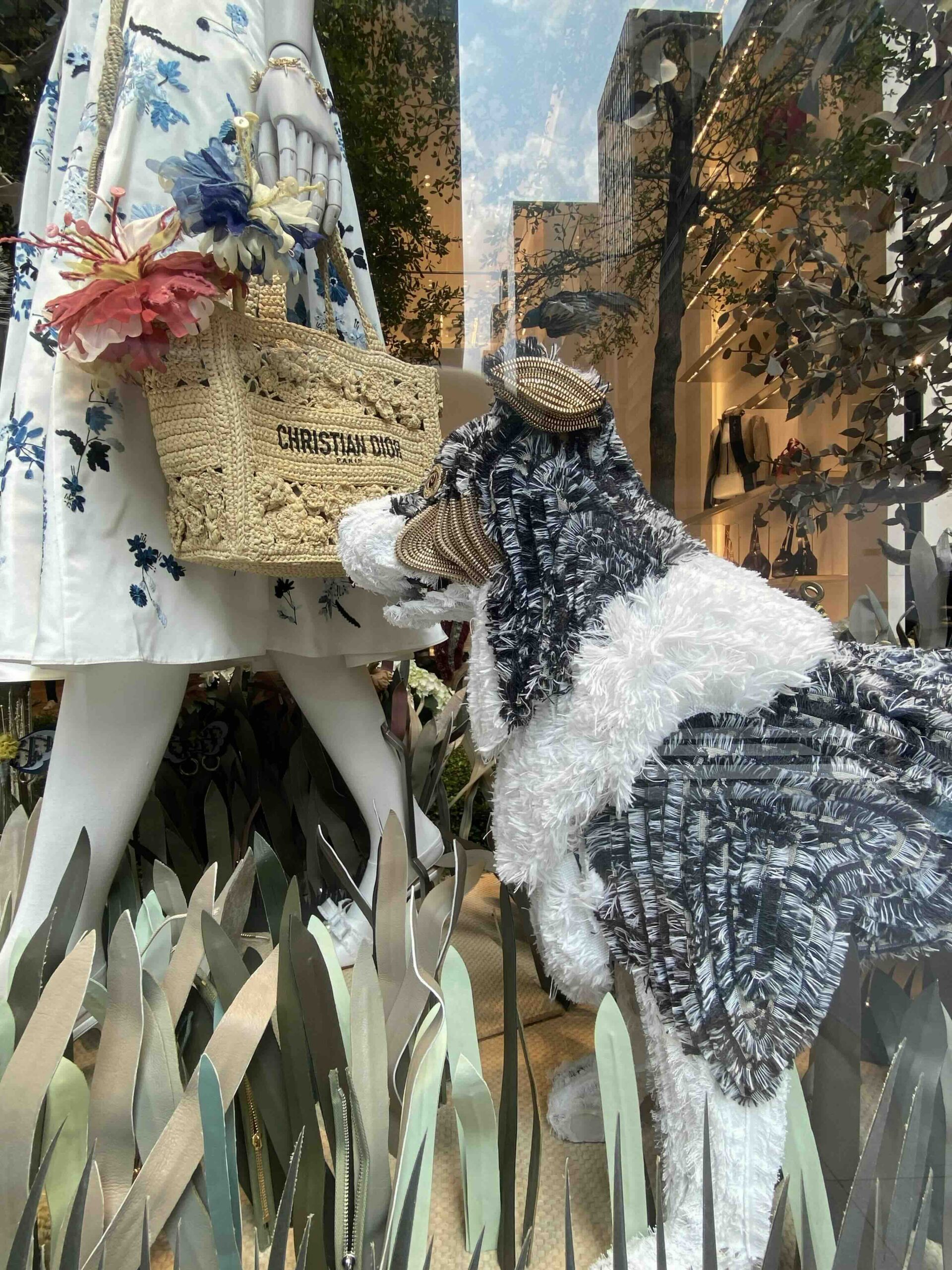
Dior, New York
Homestead, New Zealand
2. Color
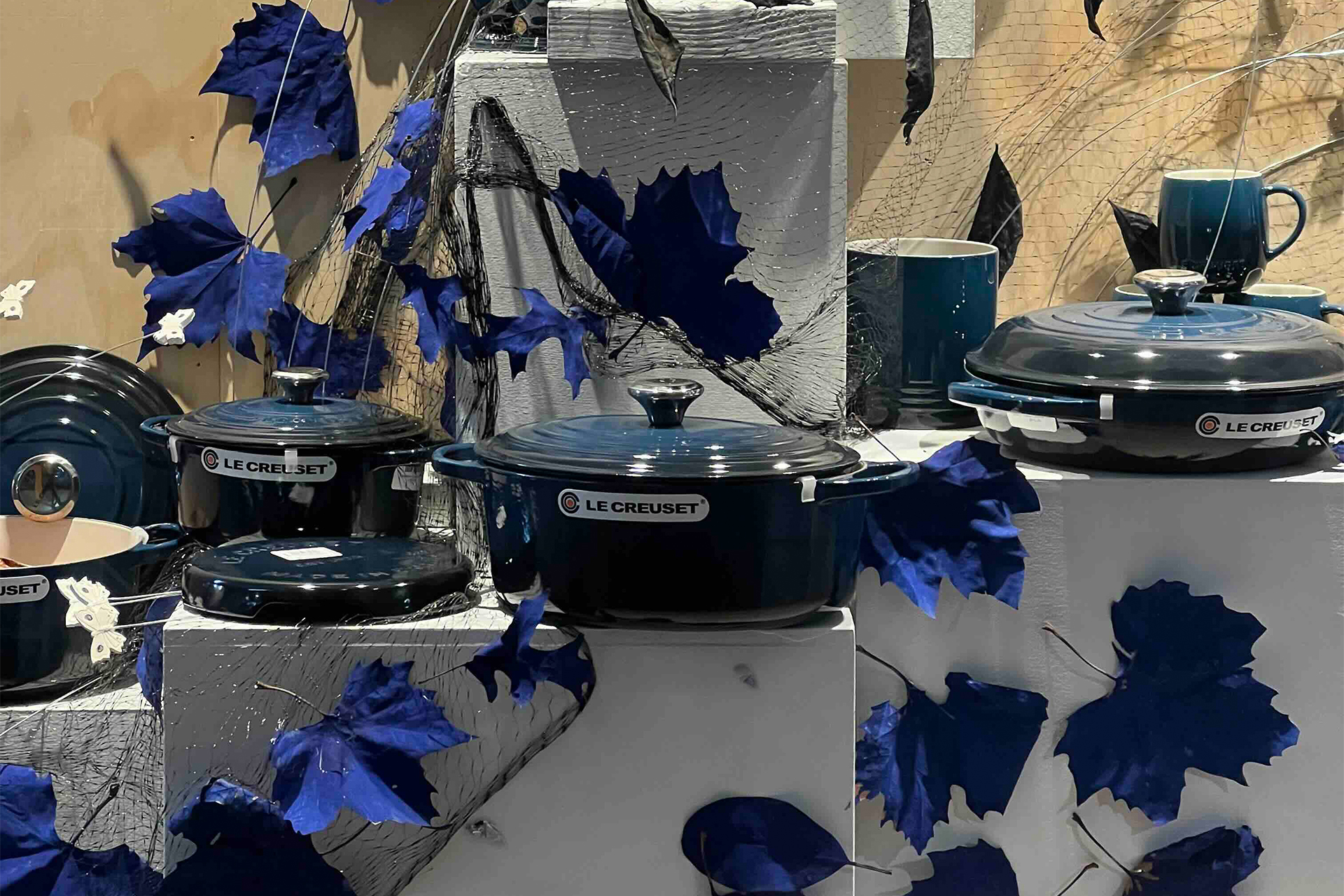
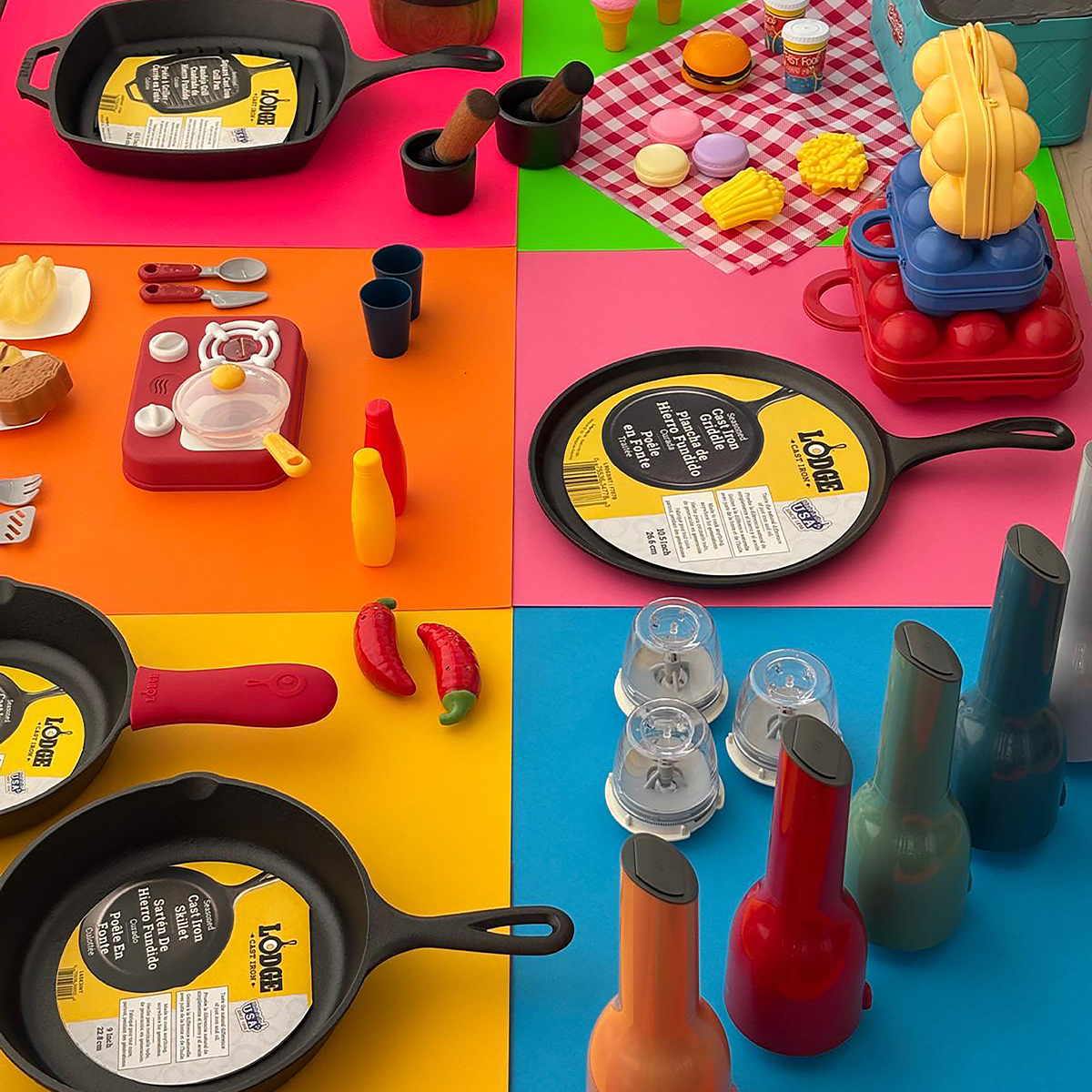
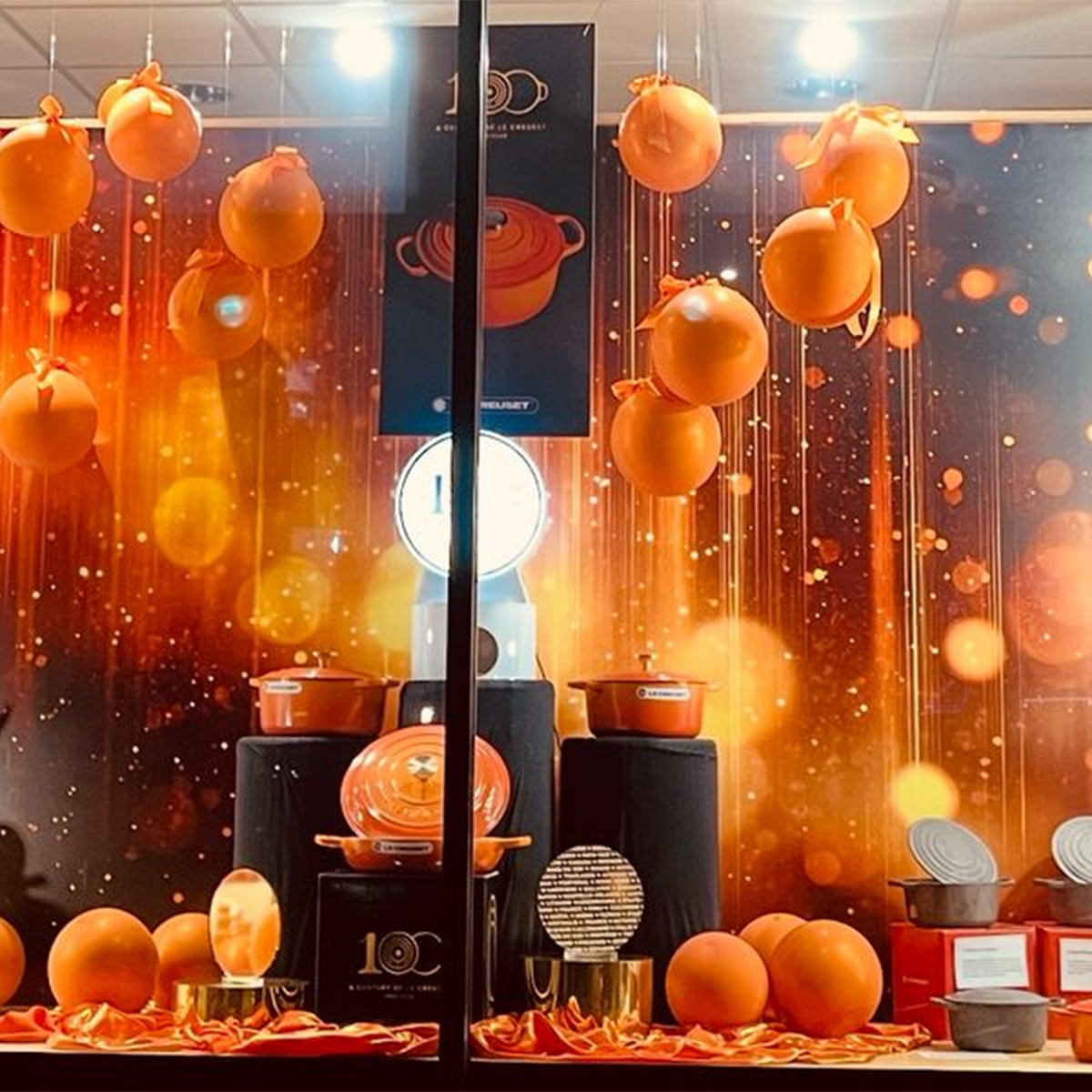
“After years of minimalist trends, there’s a resurgence of strong color, bold contrast, layered textures and oversized props,” Denise comments. “This deepens visual interest and helps brands break through visual clutter in busy retail streets and shopping areas.”
Bold color treatments can take different forms, including color blocking (see Fernando Gonzalez, Spain), incorporating the whole color wheel (Dior, NYC) or using tone-on-tone color to effectively mix patterns and textures.
Fernando Gonzalez, Spain
Potters Cookshop, United Kingdom
3. Scale, Rhythm and Flow
Denise says there are many different ways to go about achieving scale, rhythm and flow, but Hermès did this memorably with a window display featuring a giant whimsical elephant.
“The contrasting size and weight grab attention from afar, while the apparent movement of the elephant’s body forces your eye to the products below,” she explains.
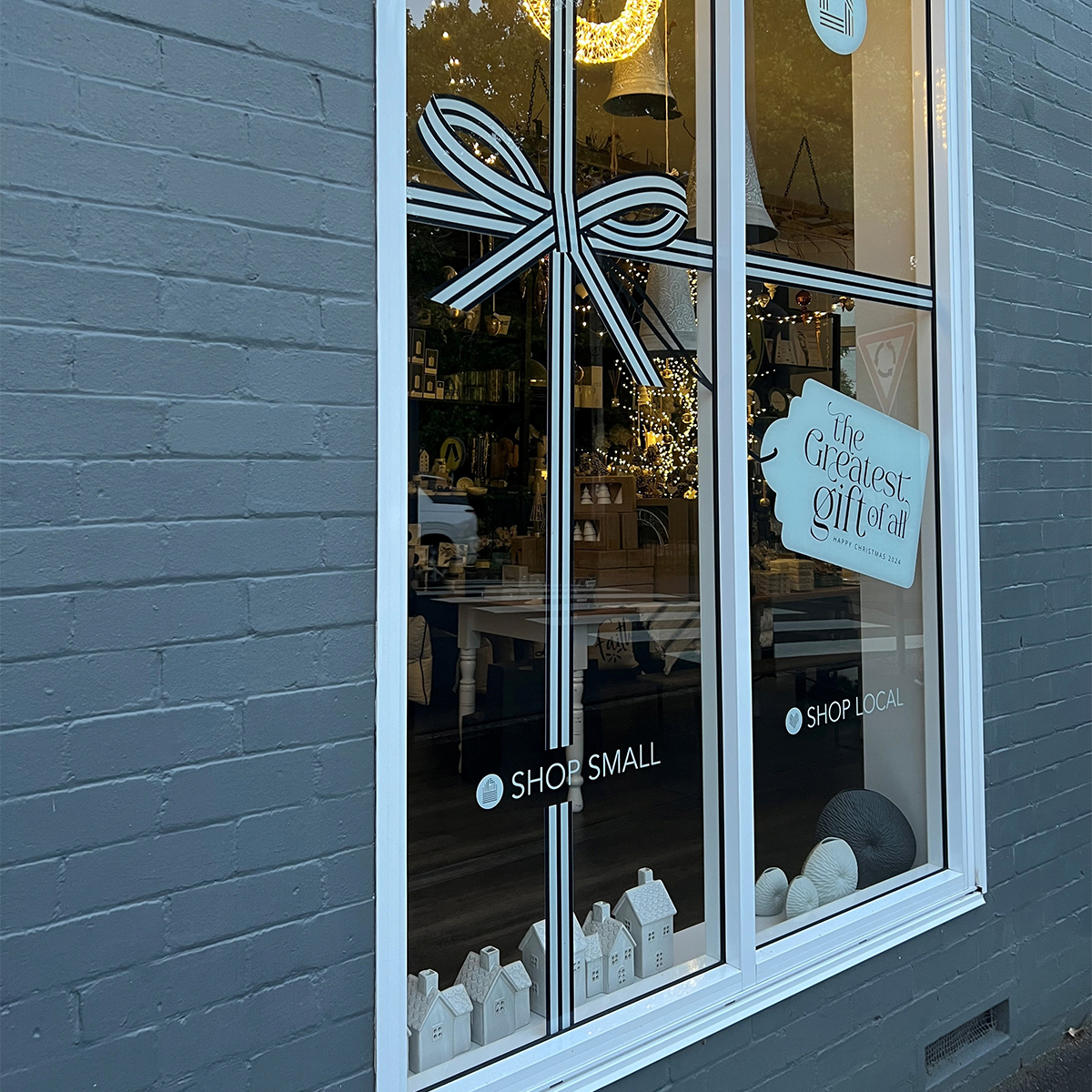
These techniques don’t necessarily have to be expensive to be effective. Australia’s Well Versed Homes successfully used vinyl decals to “wrap” their windows, creating symmetry and balance that forced your eye directly into the store, says Denise.
Well Versed Homes, Australia
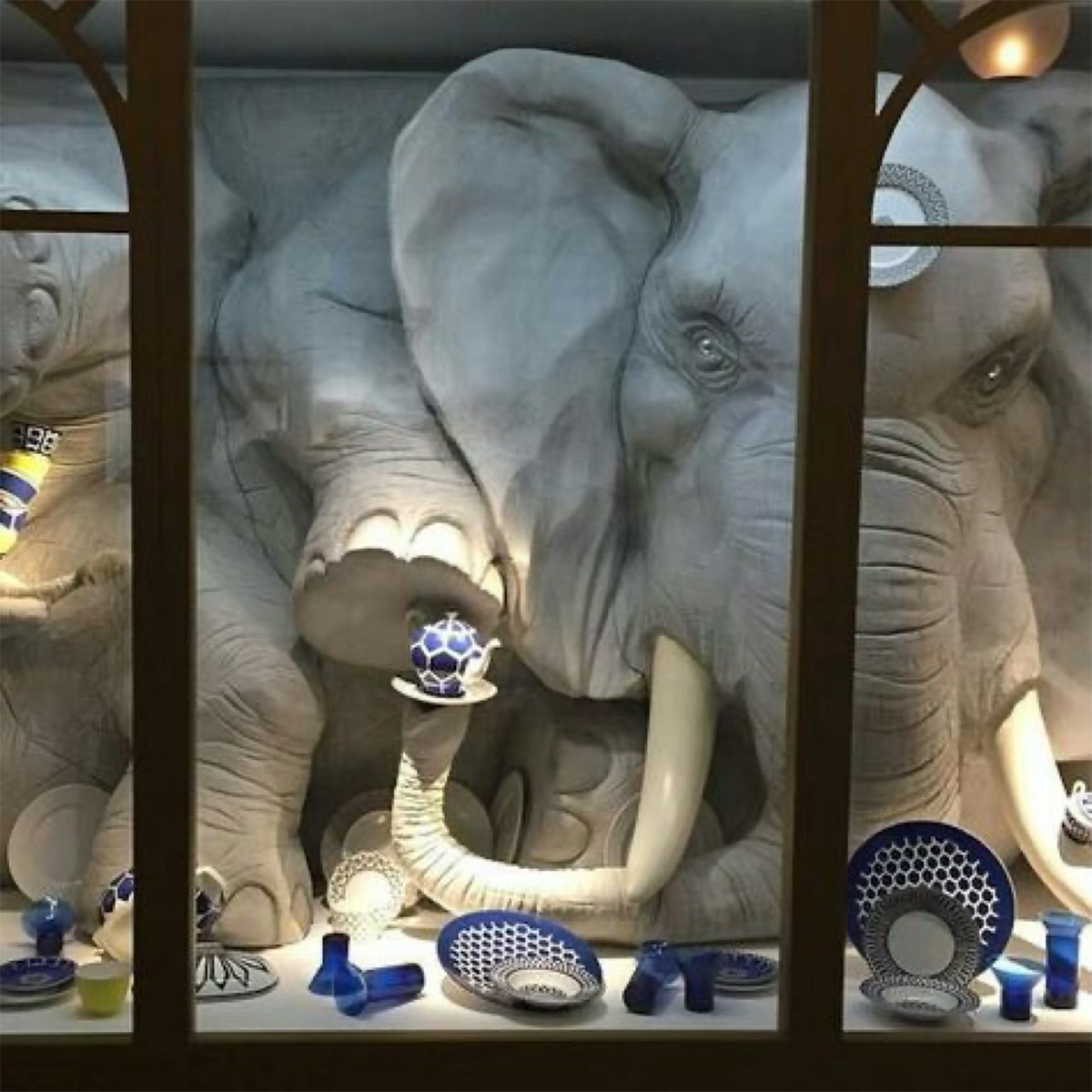
Hermés, Wanderland Display
4. Immersive and Experiential
Attention-getting displays should not just be about the product, but also an experience. To illustrate the point, Denise highlights a pop-up shop at Louis Vuitton’s SoHo store created for the new LV Beauté lipstick collection in collaboration with Pat McGrath.
In this immersive experience, a lacquered red portal leads shoppers to a make-up station shaped like Louis Vuitton’s signature flower. From there, shoppers can visit three individual rooms where they can “try on” different shades using immersive digital technology. From the image below, you can see that the tubes of lipstick are actually a very small part of their dramatic visual.
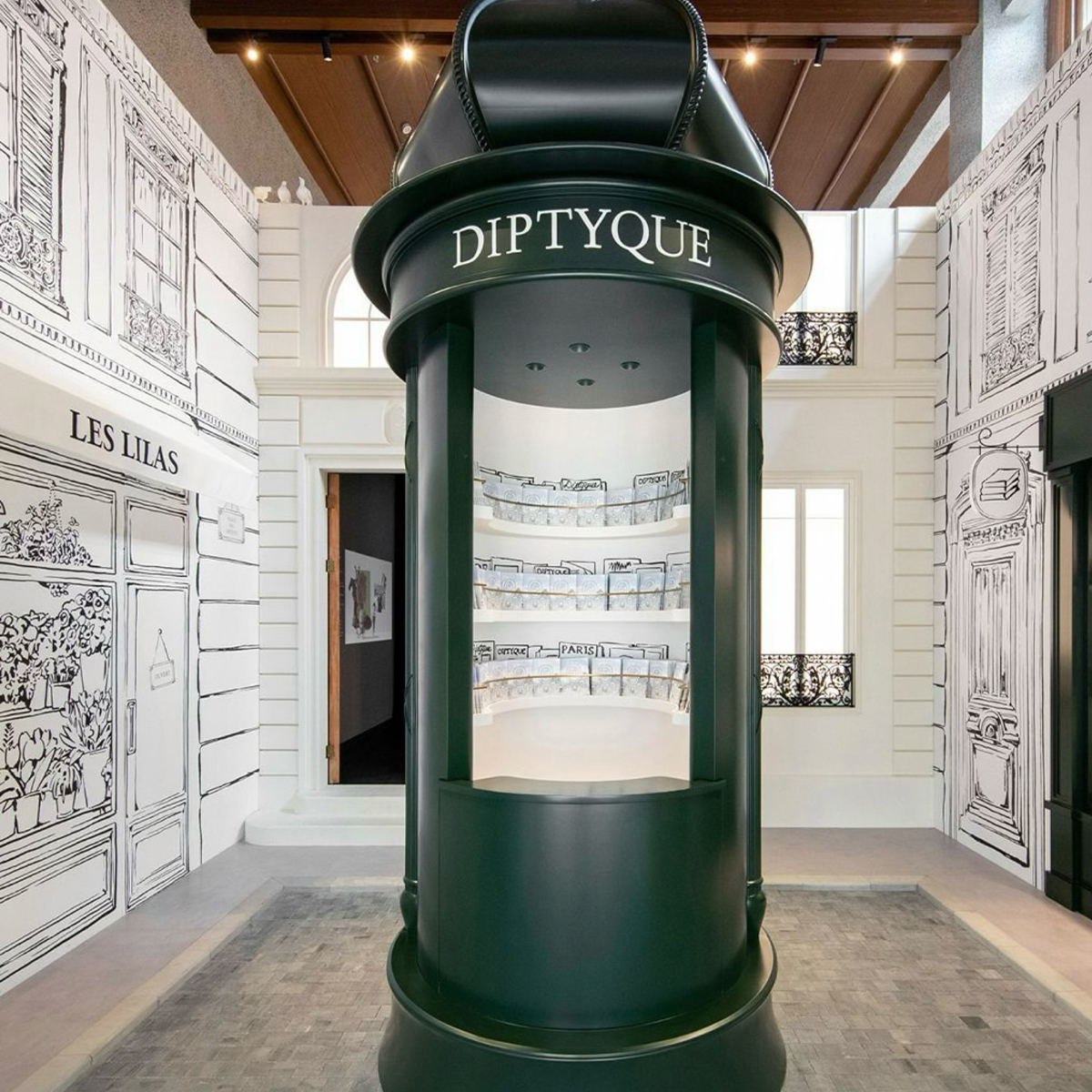
Diptyque, Shanghai
(Credit: Shop Drop Daily)
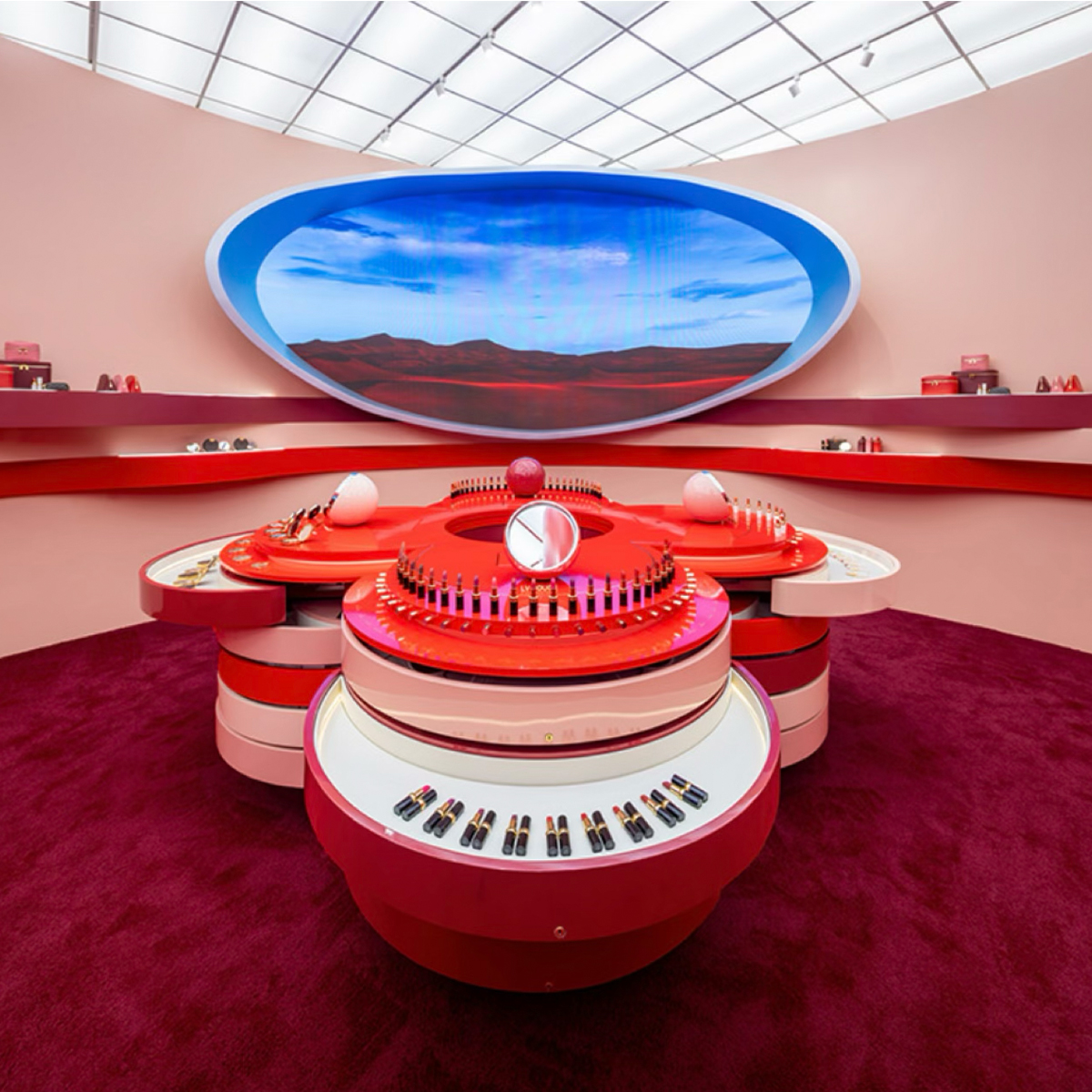
Louis Vuitton, New York
5. Collaboration
Unlikely partnerships also create opportunities for highly engaging window displays. In particular, Denise has been enjoying the partnership between Tiffany & Co. and Netflix on the opening of the new “Frankenstein” movie.
Any retailer looking to replicate the appeal of this movie tie-in should think about elements that blur the lines between film and retail, whether dramatic lighting, intense storytelling or the immersive feeling of watching a movie on a big screen.

Tiffany & Co., Netflix