
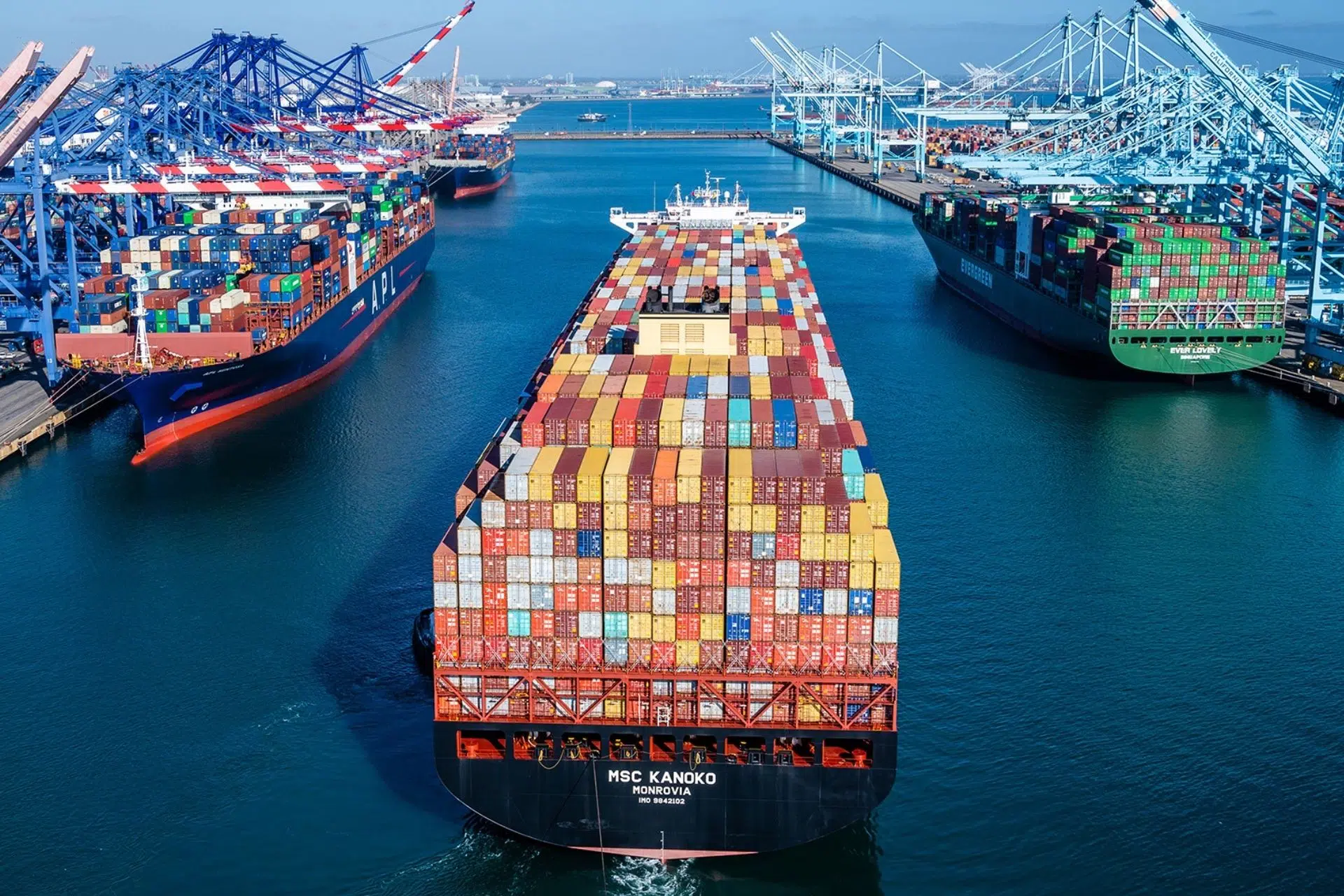
The Global Port Tracker report by the National Retail Federation and Hackett Associates predicts import volume at the major container ports across the United States should hit a new all-time record this month, driven by retailers stocking up ahead of expected tariff increases.
The temporary 10% Section 122 global tariffs that took effect in February will expire on July 24, and the Trump administration has prepared a new round of duties that look to kick in as early as August.
U.S. ports covered by Global Port Tracker handled 2.24 million Twenty-Foot Equivalent Units, a 20-foot container or its equivalent, during May, the latest month for which final numbers are available. The figure was up 14.9% from a year earlier, when imports slid sharply because of last year’s tariff impositions, and up 10.1% from April.
Ports have not yet reported June numbers, but Global Port Tracker projected the month at 2.33 million TEU, up 18.7% from the period in 2025, bringing the first half of 2026 to 12.77 million TEU, up 2% from the same timeframe in the year earlier.
Port Tracker projects July to come in at 2.47 million TEU, up 3.3% from the 2025 month and topping the previous monthly record of 2.4 million TEU set in May 2022 as the U.S. economy bounced back from the COVID-19 pandemic. Imports are expected to drop to 2.22 million TEU in August, down 4.5% year over year. It forecasts September at 1.99 million TEU, down 5.7% year over year, October at 1.99 million TEU, down 3.8%, and November at 1.92 million TEU, down 5.2%.
May-through-July numbers are likely to be the highest of the year, Port Tracker noted. The peak shipping season, which historically centered around October, has moved up in recent years due to factors including port labor disputes and expected tariff increases.
Imports in 2025 totaled 25.4 million TEU, down 0.3% from 2024’s 25.5 million TEU.
“This year’s early peak season is expected to continue through July as retailers and other importers prepare for potentially higher tariffs beginning in August and other trade uncertainties,” said Jonathan Gold, NRF vice president for supply chain and customs policy. Gold pointed to continued supply chain impacts from the conflict in Iran. “The busy back-to-school selling season has already started, and the winter holidays won’t be far behind,” Gold said. “So retailers have been working to get products into the U.S. and ready to go before new tariffs can potentially drive prices higher. Despite ongoing economic headwinds, consumers are continuing to spend, but affordability is a key factor affecting their spending habits.”
Hackett Associates founder Ben Hackett added, “Import volumes have risen sharply, with strong growth likely continuing into July. Much of this increase reflects frontloading ahead of expected tariff increases.”
Global Port Tracker, produced for NRF by Hackett Associates, provides historical data and forecasts for the U.S. ports of Los Angeles/Long Beach, Oakland, Seattle and Tacoma on the West Coast; New York/New Jersey, Port of Virginia, Charleston, Savannah, Port Everglades, Miami and Jacksonville on the East Coast, and Houston on the Gulf Coast.