


Consumer Purchase Priorities in a Changing Marketplace
Consumer Purchase Priorities in a Changing Marketplace
The second installment of the 2026 International Housewares Association (IHA) State of the Industry — MarketOutlook — examines consumer purchase intent across a full range of home and housewares categories.
At a time when the retail marketplace is marked by uncertainty, trying to navigate tariffs, inflation, mounting agentic influence and other potentially disruptive forces, understanding consumers and their purchasing priorities is essential to a successful growth strategy for every link in the supply chain. MarketOutlook provides a comprehensive directional resource to help inform home and housewares suppliers and retailers seeking more clarity and confidence in their product development, marketing and merchandising strategies.
The exclusive MarketOutlook survey of more than 2,000 likely home and housewares purchasers in each of 15 core home and housewares categories was conducted for IHA by Morning Consult.
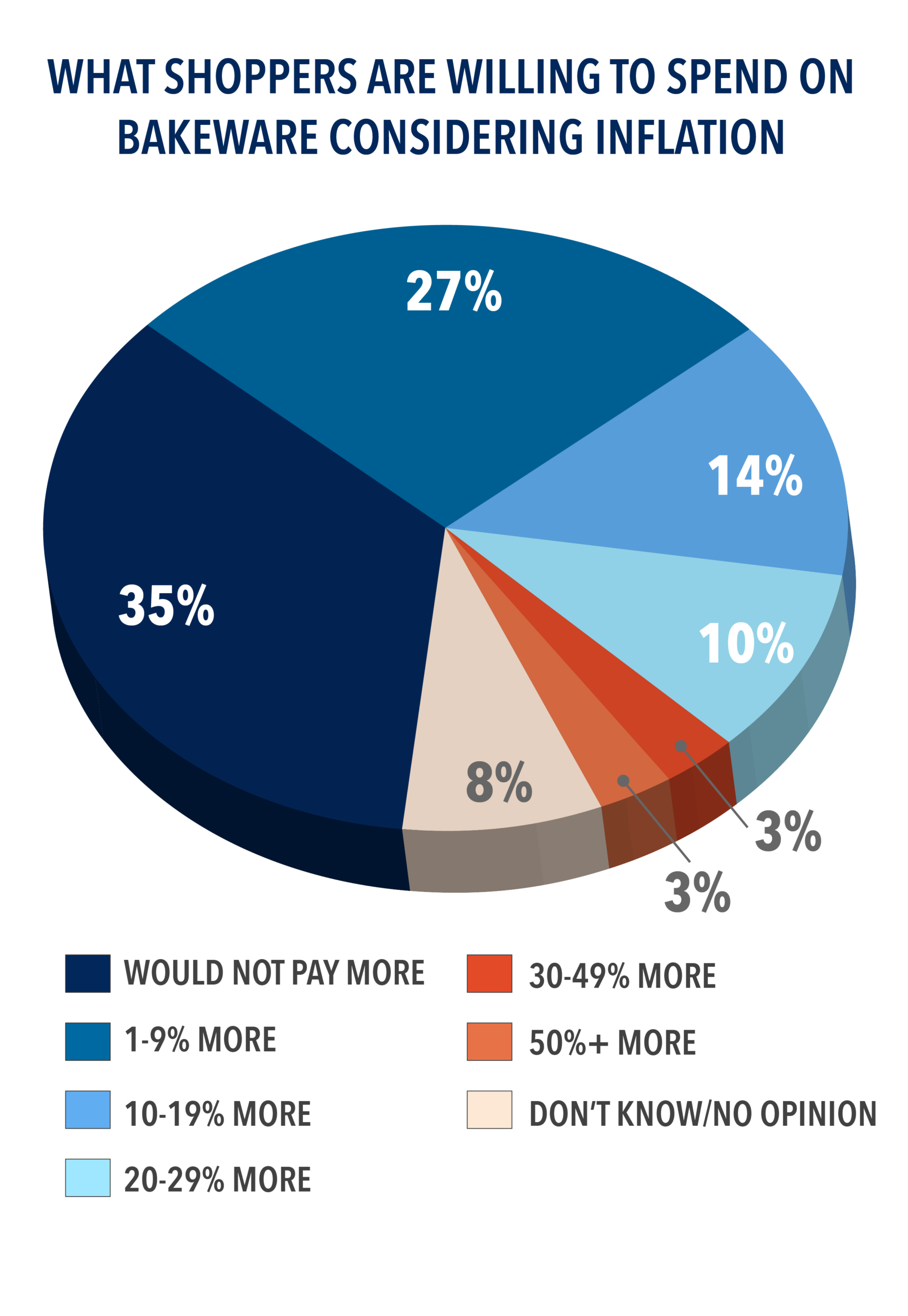
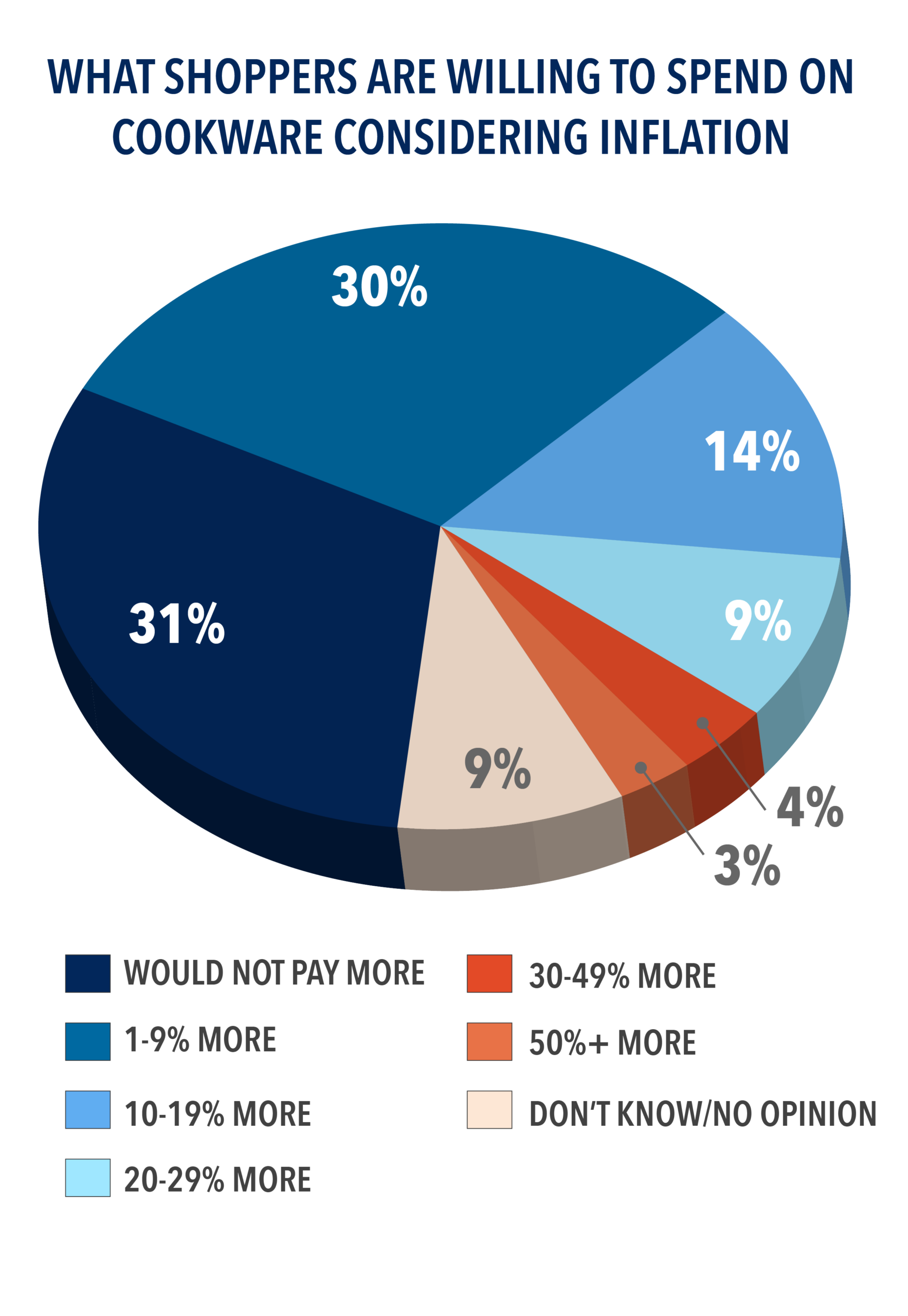
The MarketOutlook report offers detailed insight into which home and housewares products consumers expect to purchase in 2026 and beyond, key factors influencing planned purchase decisions and the retail channels from which consumers are most likely to make purchases. The survey also takes a close look at the extent to which inflationary concerns are weighing on discretionary purchase intent in home and housewares.
The MarketOutlook survey results are supported by in-depth analysis by the editors of HomePage News, the official media partner of the 2026 IHA State of the Industry.
Methodology: The 2026 MarketOutlook survey was conducted for the International Housewares Association by Morning Consult among a sample of 2,201 adults. The interviews were conducted online, and the results are weighted to approximate a target sample of adults based on age, gender, race, educational attainment, region, gender by age, and race by educational attainment. Results from the full survey have a margin of error of plus or minus two percentage points.
Hover over charts and click to enlarge.
Wellness Categories Lead a Resilient Purchase Outlook
Most core housewares categories tracked in the survey indicate a combined “very likely/somewhat likely” to purchase score at or above 50%. This underscores home and housewares as a reliable general merchandise producer at retail, often resistant to and sometimes buoyed by inflationary pressure and economic uncertainty.
A notable health and wellness lifestyle influence is evident. In the next 12 months, cleaning tools (31% very likely/36% somewhat likely) and home health care products (32% very likely/33% somewhat likely) are the top housewares goods that adults plan to purchase, with grooming and beauty (29% very likely/31% somewhat likely) coming in third.
Purchase intent across houseware categories is higher among adults aged 18–44 than among those 45 and above.
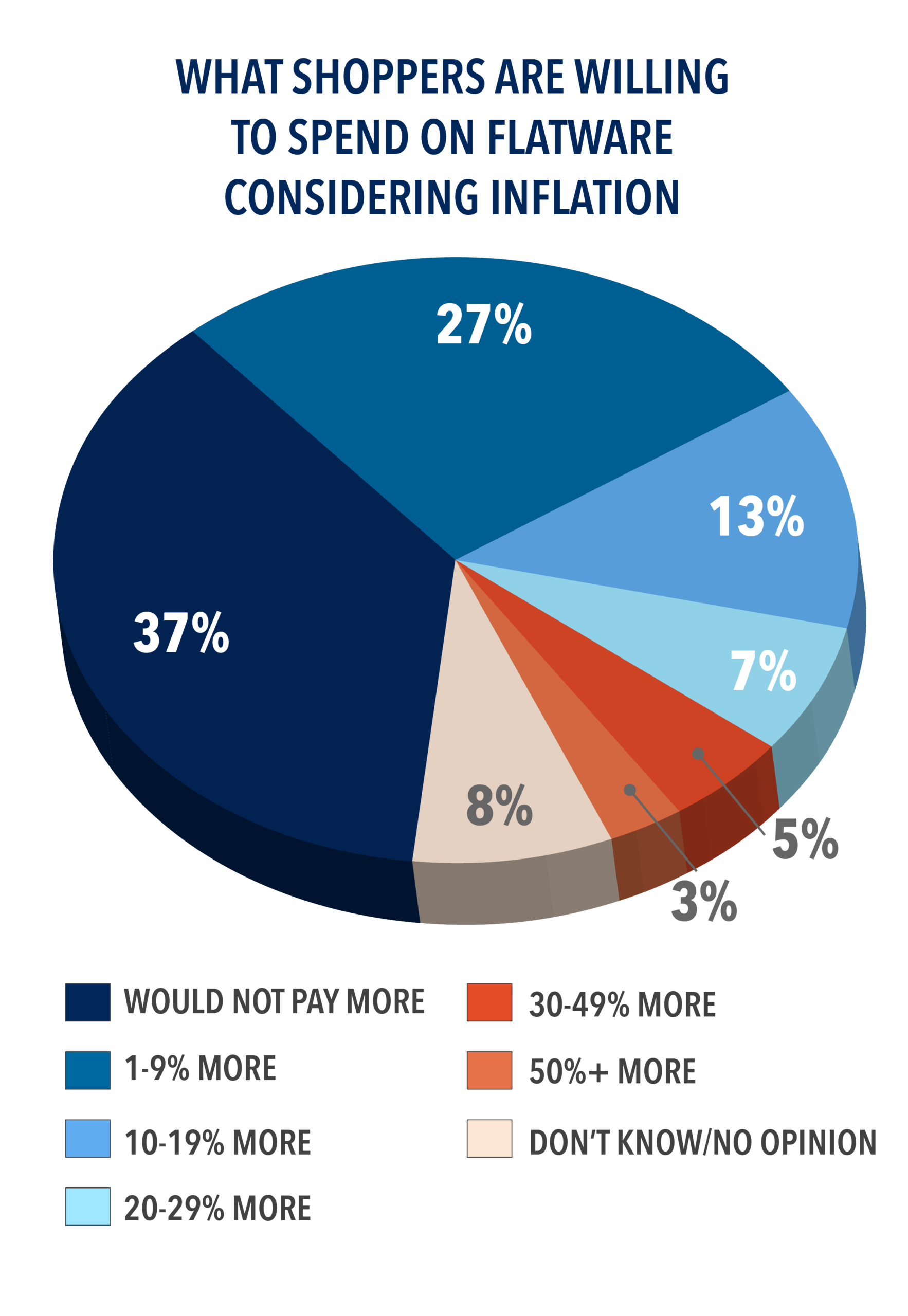
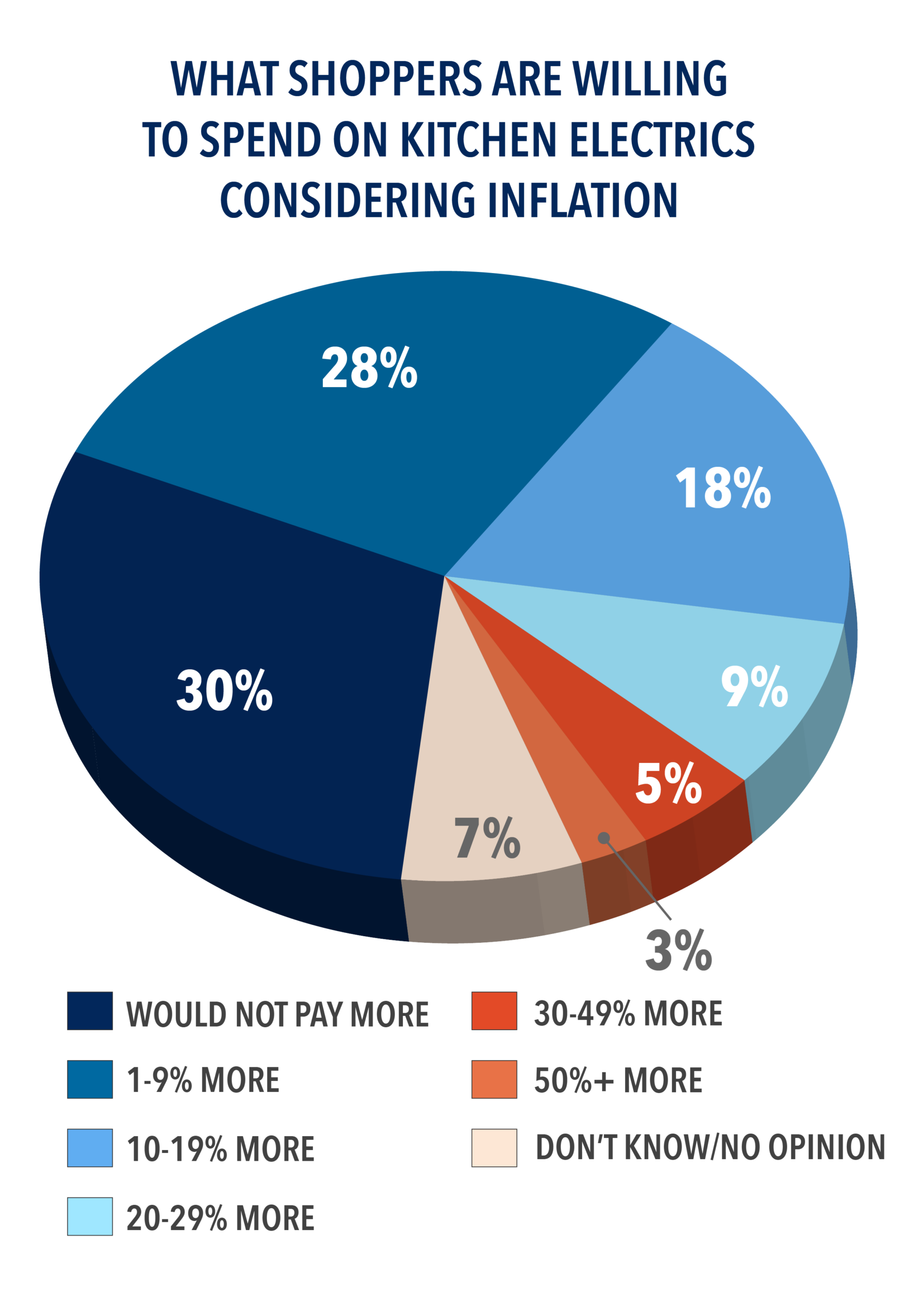
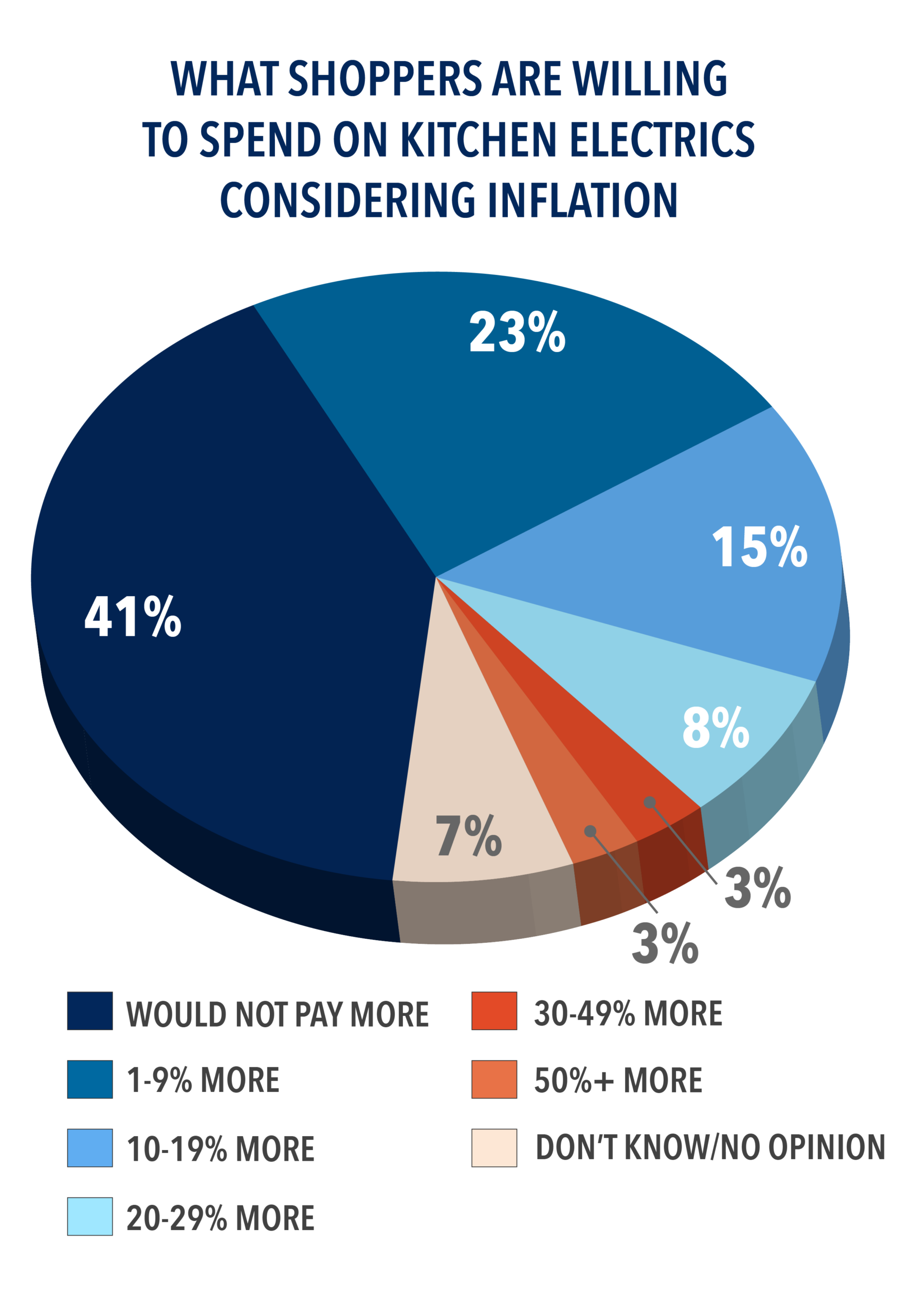
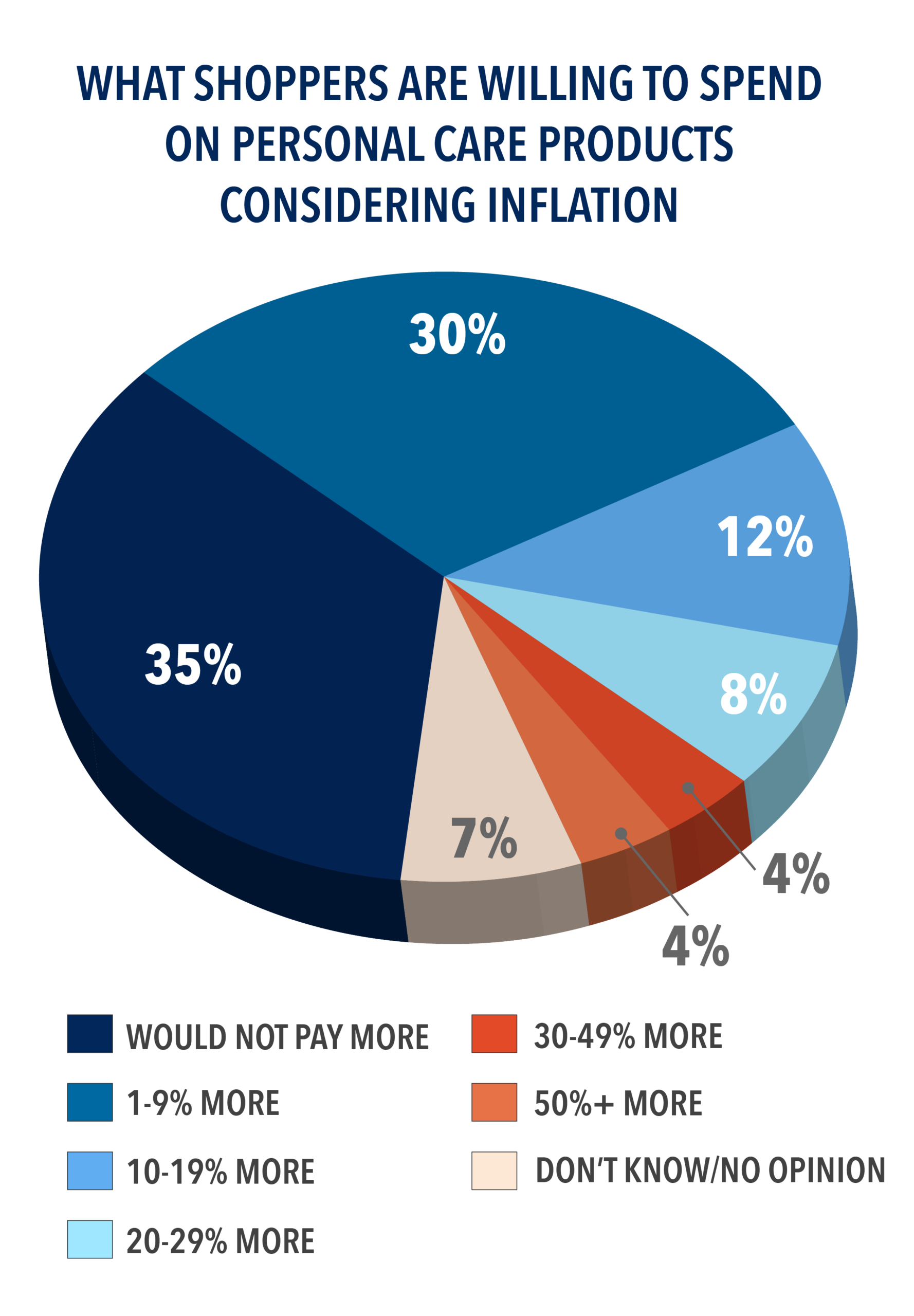
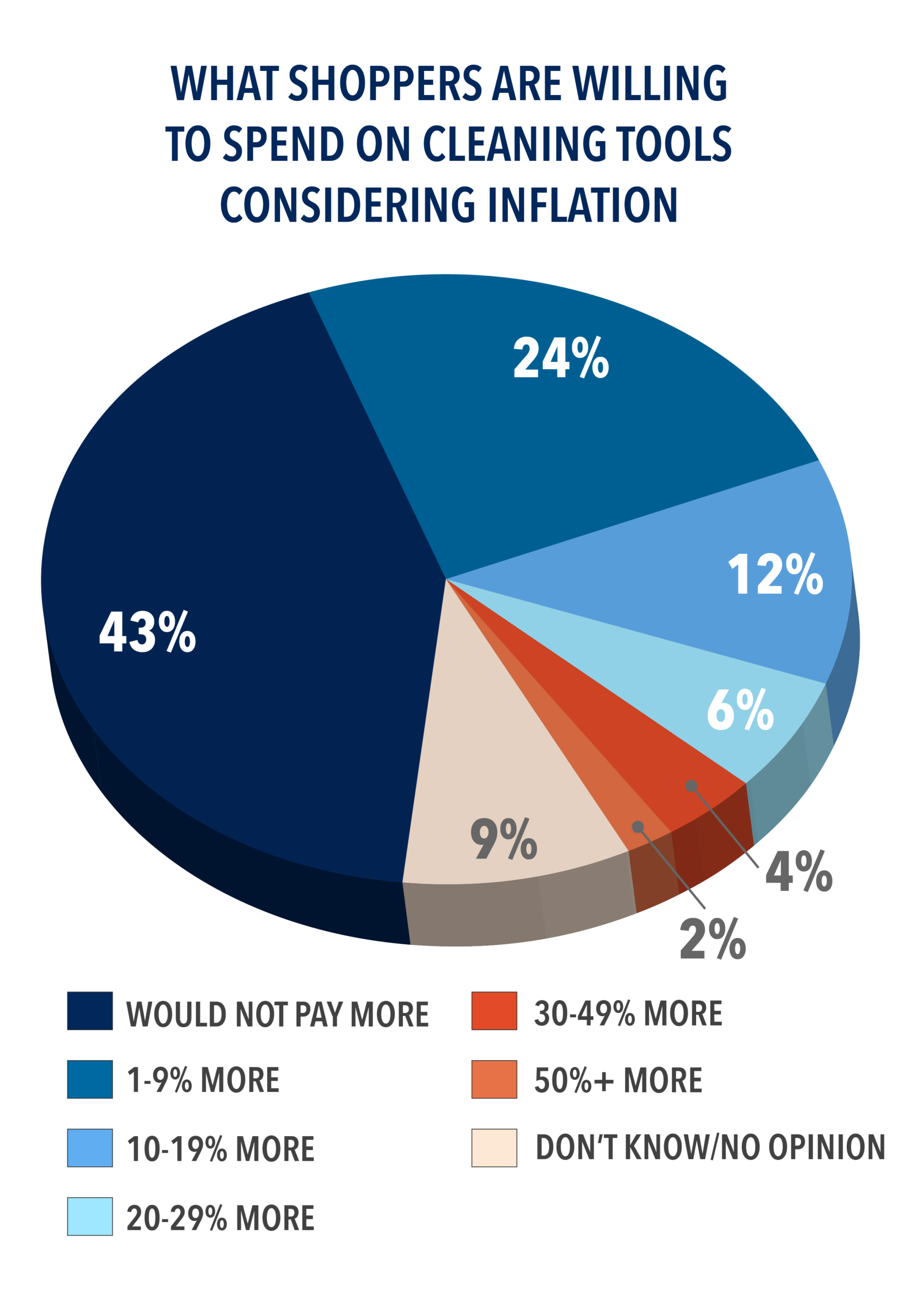
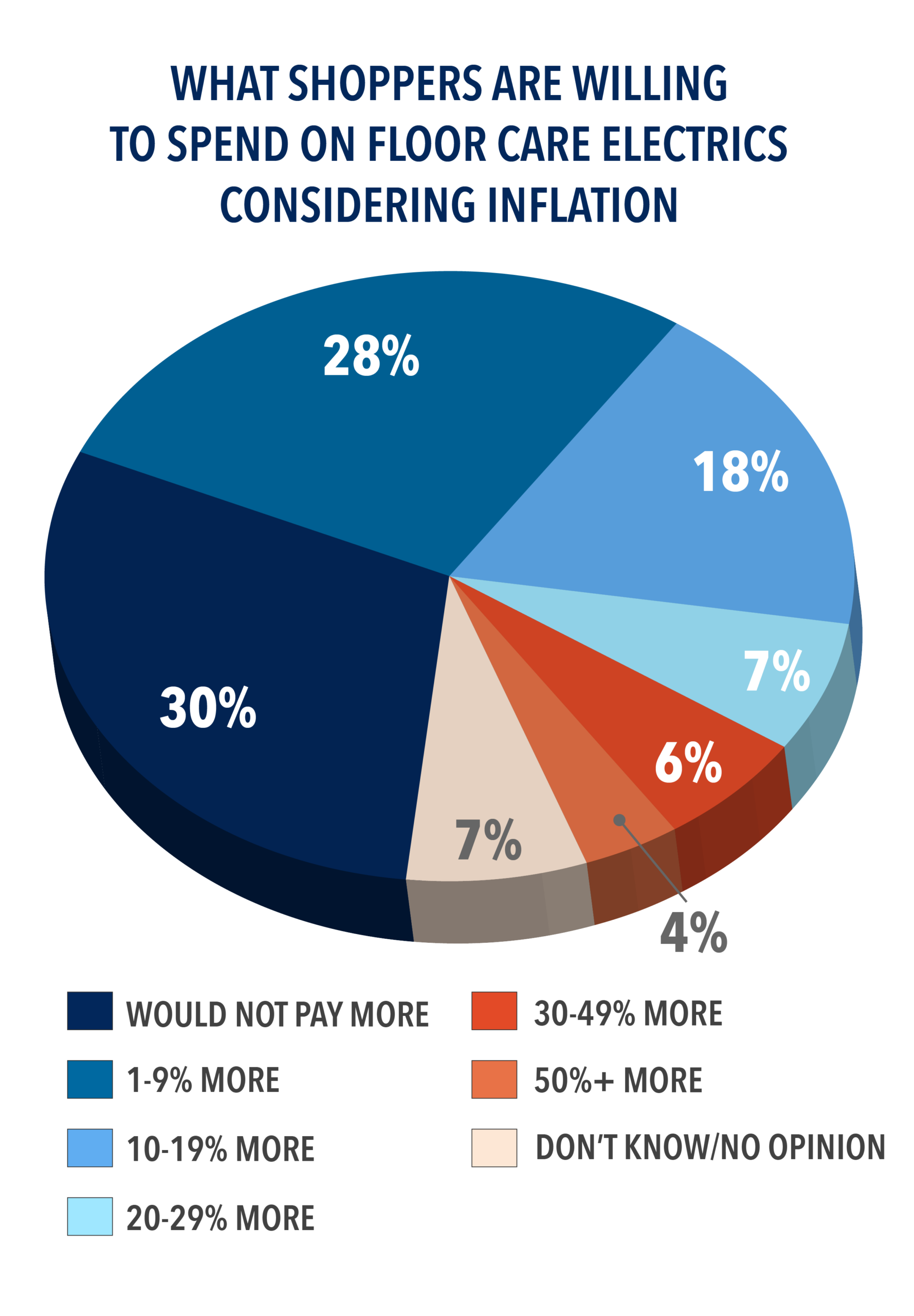
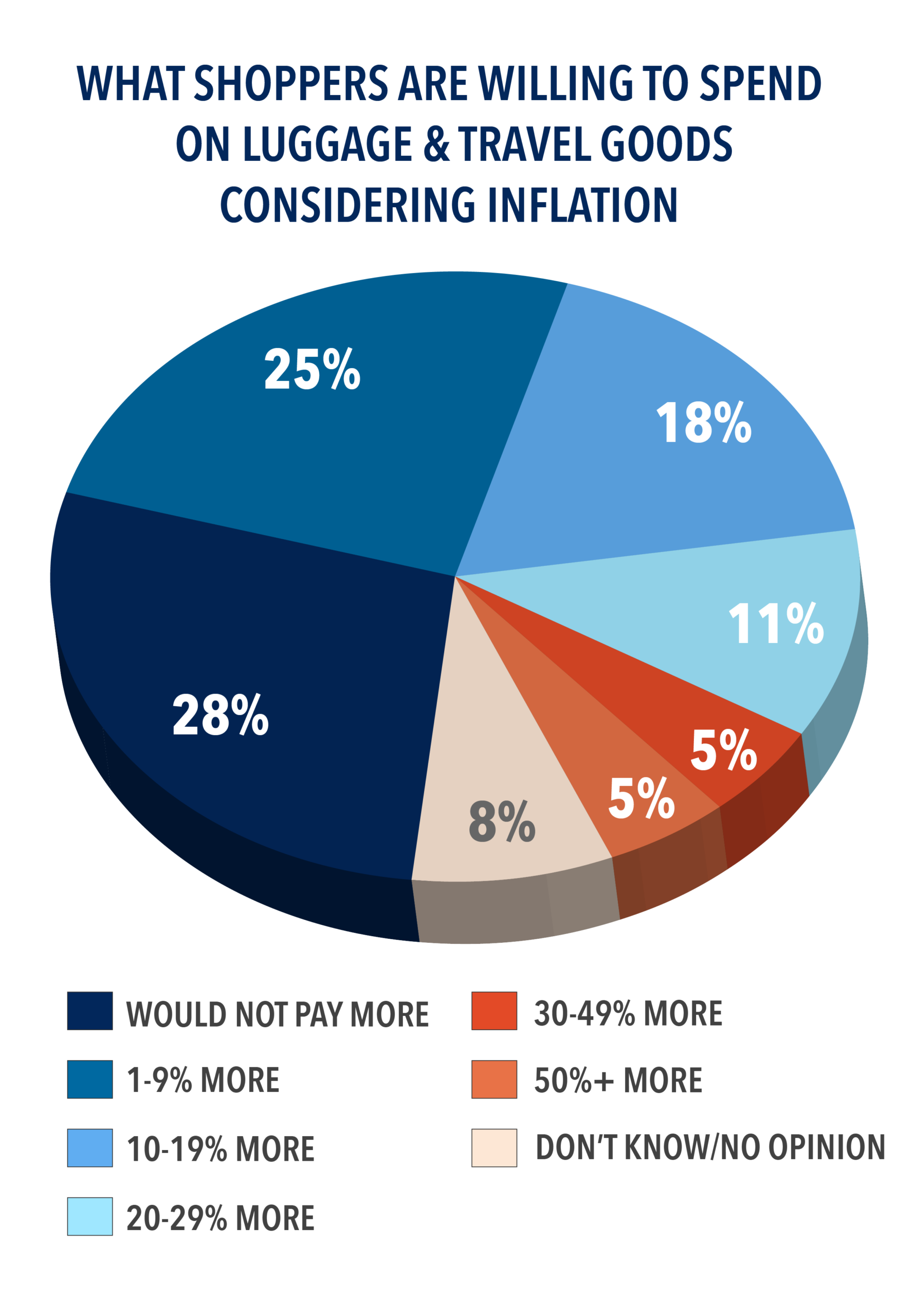
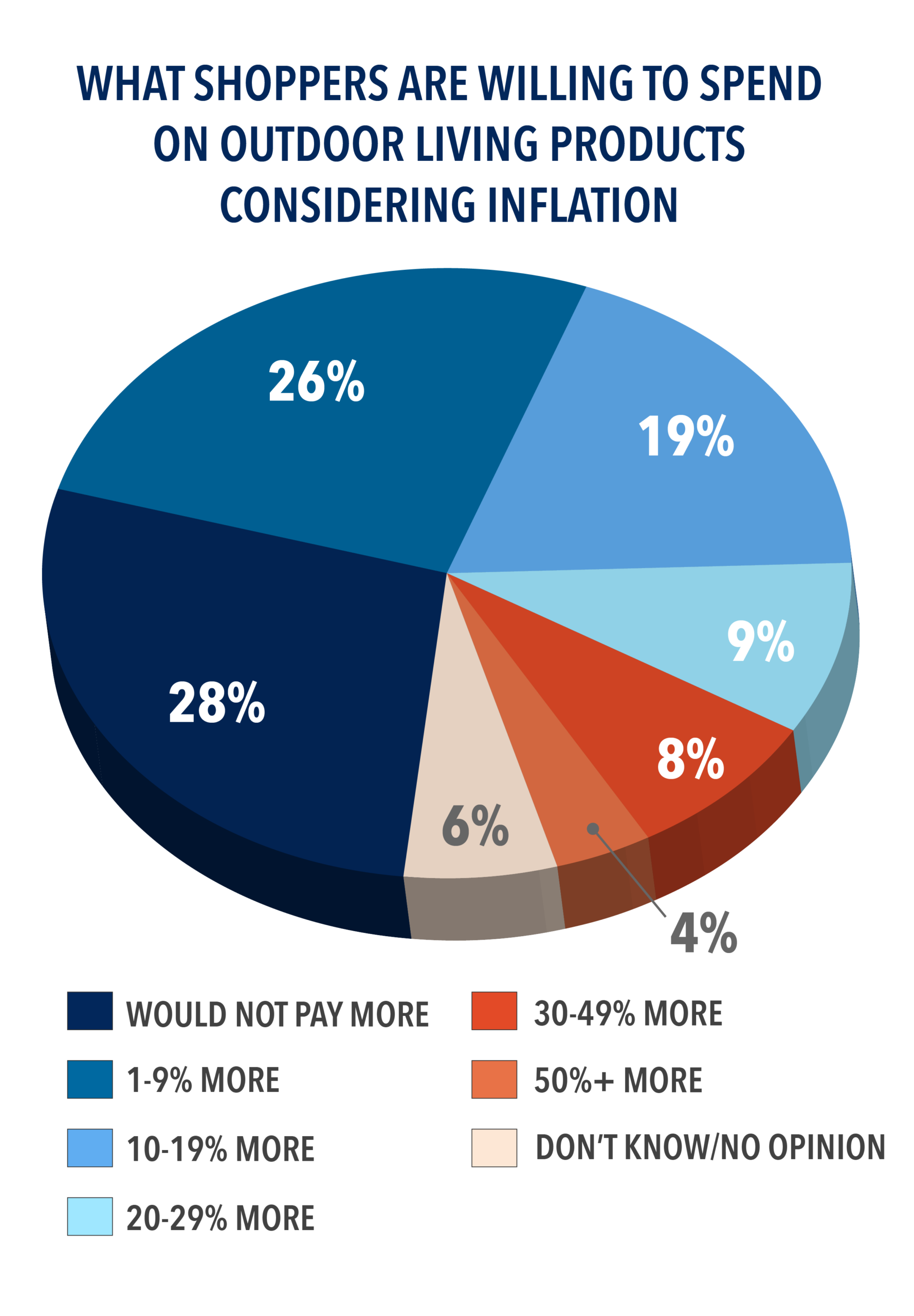
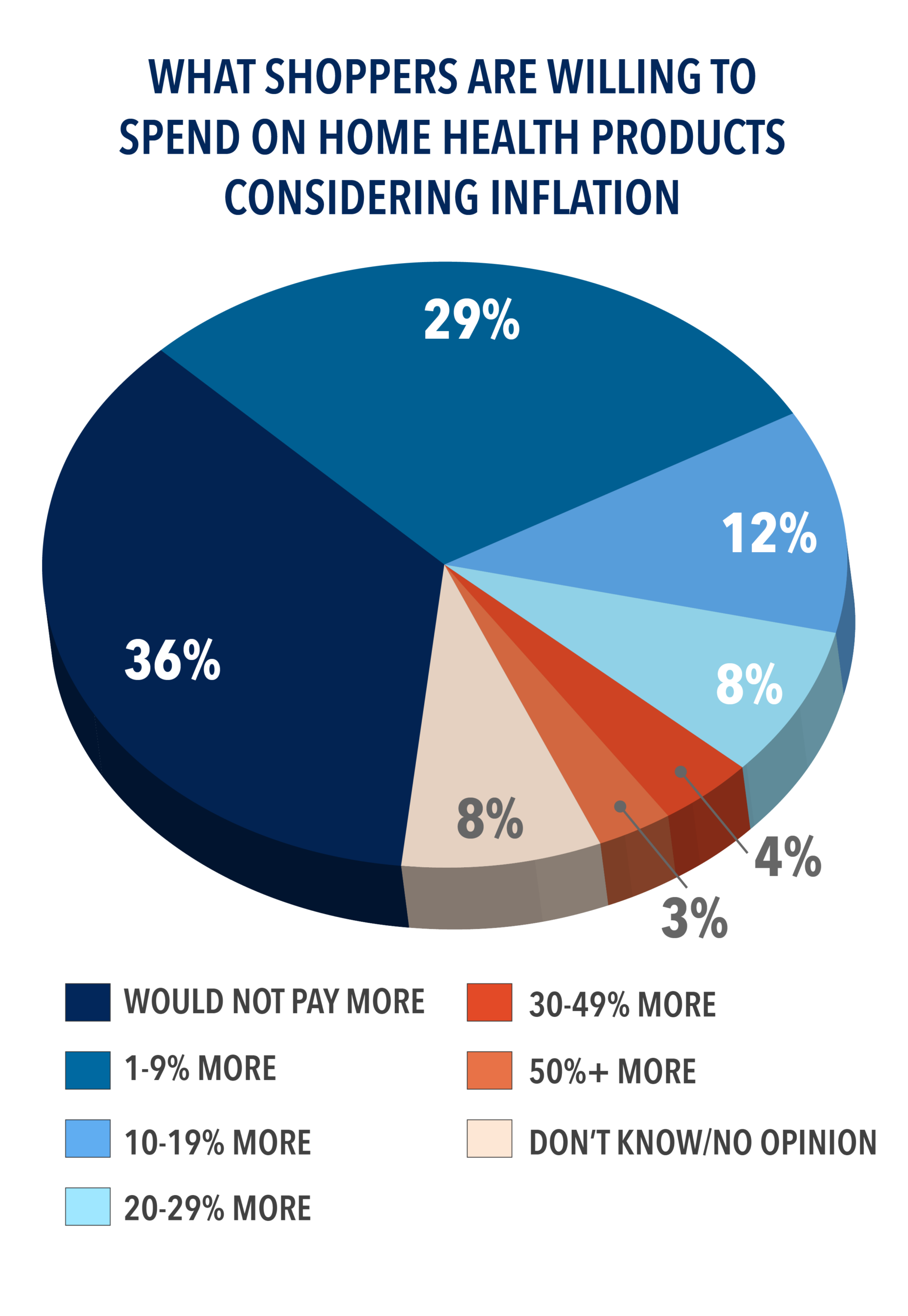
In the face of inflation, likely purchasers demonstrate higher willingness to pay more for outdoor living (66%), luggage and travel accessories (64%), home environment (63%), floor care electrics (63%) and kitchen electrics (63%).
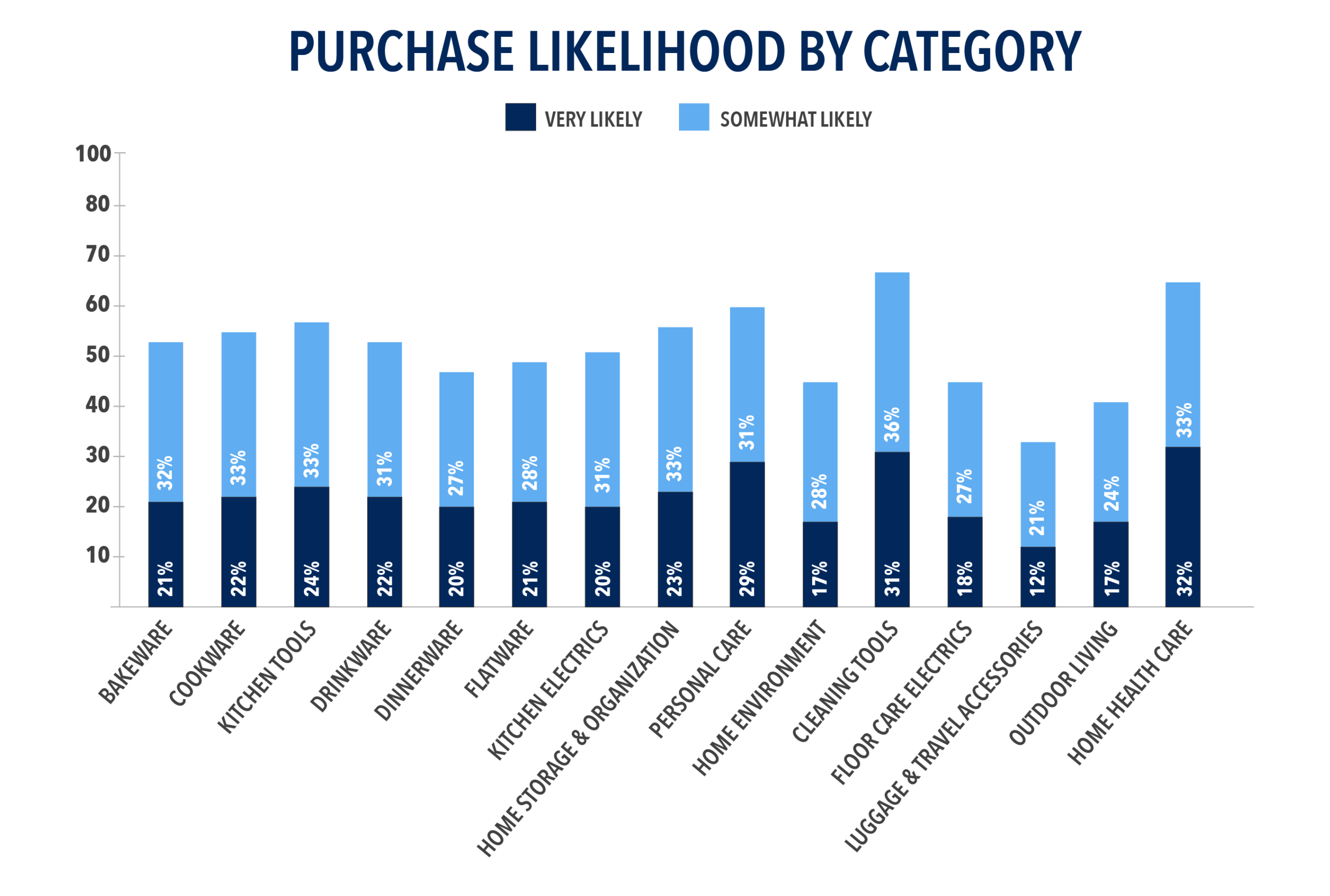
Wellness Categories Lead a Resilient Purchase Outlook
Most core housewares categories tracked in the survey indicate a combined “very likely/somewhat likely” to purchase score at or above 50%. This underscores home and housewares as a reliable general merchandise producer at retail, often resistant to and sometimes buoyed by inflationary pressure and economic uncertainty.
A notable health and wellness lifestyle influence is evident. In the next 12 months, cleaning tools (31% very likely/36% somewhat likely) and home health care products (32% very likely/33% somewhat likely) are the top housewares goods that adults plan to purchase, with grooming and beauty (29% very likely/31% somewhat likely) coming in third.
Purchase intent across houseware categories is higher among adults aged 18–44 than among those 45 and above.
In the face of inflation, likely purchasers demonstrate higher willingness to pay more for outdoor living (66%), luggage and travel accessories (64%), home environment (63%), floor care electrics (63%) and kitchen electrics (63%).
Replacement Needs Drive Purchases, but Innovation Matters
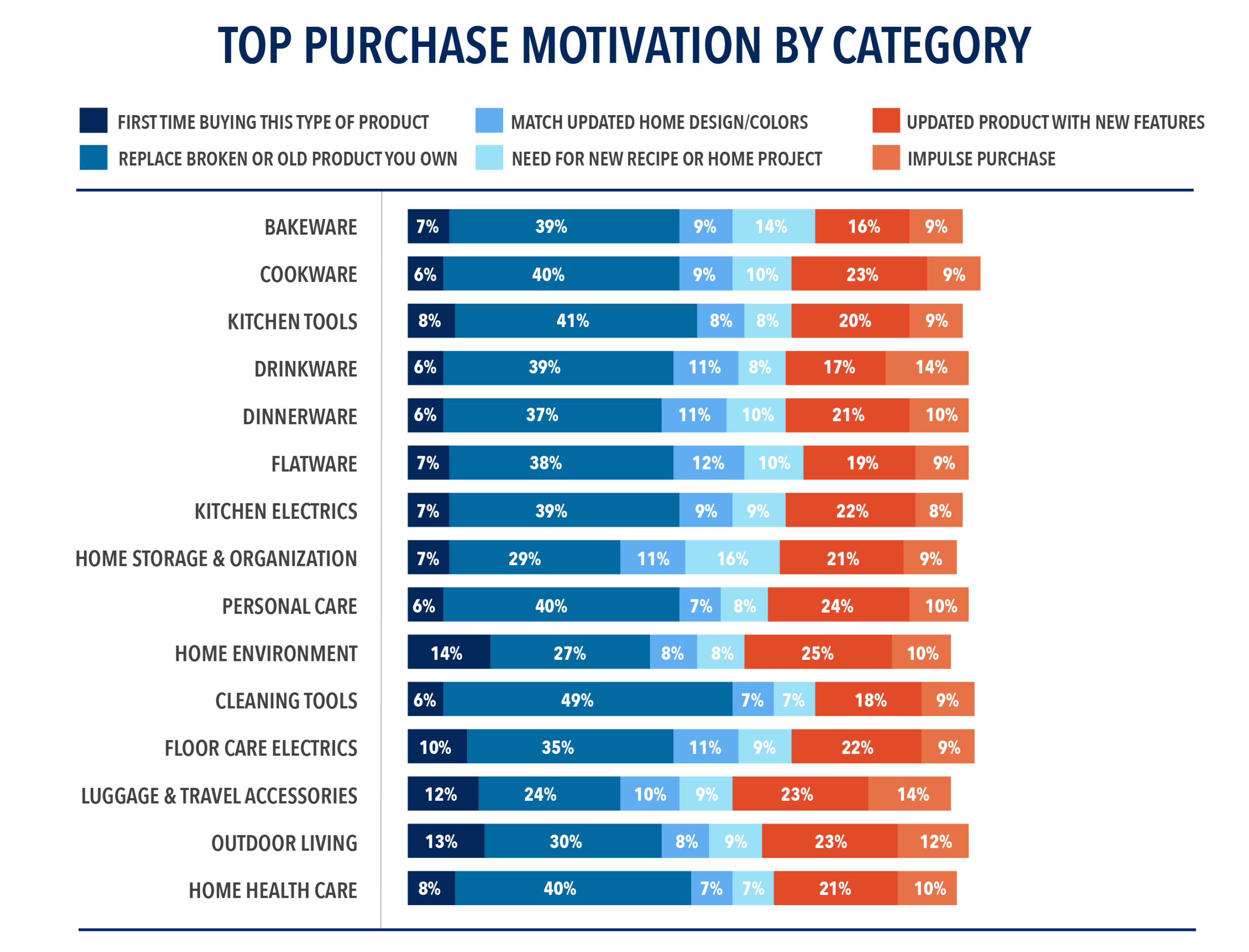
Replacement demand continues to anchor purchasing across the home and housewares market. Across every category measured, replacing a broken or aging product was the leading purchase motivation, reaching 49% in cleaning tools and 41% in kitchen tools. Interest in updated features also played a meaningful role in purchase decisions, particularly in personal care, home environment and cookware. The results indicate consumers remain concentrated on practical purchases but are willing to invest when new products offer improvements in performance, convenience or functionality.
Online Reviews Lead the Path to Purchase
As consumers evaluate home and housewares purchases, online product reviews are the most trusted source of information across categories. Reviews ranked as the leading source in every category measured, ranging from 20% of respondents in drinkware, flatware and cleaning tools to 27% in floor care electrics. Consumer ratings sources and recommendations from friends and family were also influential, while retailer advertising and product packaging ranked lower as decision-making tools.

Online Reviews Lead the Path to Purchase
As consumers evaluate home and housewares purchases, online product reviews are the most trusted source of information across categories. Reviews ranked as the leading source in every category measured, ranging from 20% of respondents in drinkware, flatware and cleaning tools to 27% in floor care electrics. Consumer ratings sources and recommendations from friends and family were also influential, while retailer advertising and product packaging ranked lower as decision-making tools.
Digital Research Helps Drive In-Store Purchases
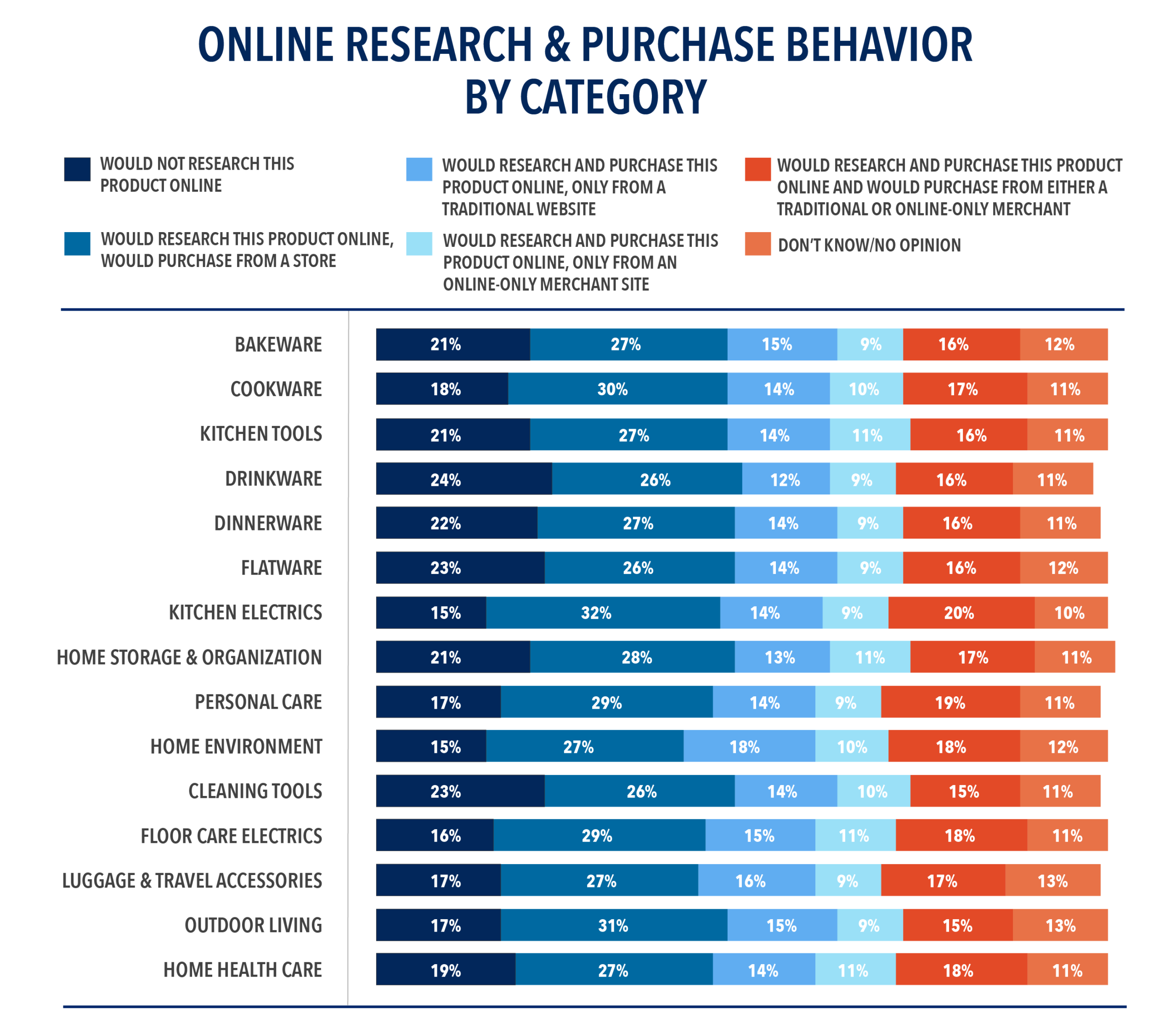
Consumers continue to blend online research with in-store purchasing. Across all categories measured, the largest share of shoppers said they would research products online before completing a purchase in a physical store. That behavior was especially evident in kitchen electrics, where 32% reported researching online and buying in-store, and outdoor living products, where 31% said the same. Home environment and floor care electrics shoppers also demonstrated relatively high levels of online engagement, with consumers more likely to research and purchase through digital channels than shoppers in many other categories. The findings stress the need to maintain a strong online presence even when purchases ultimately occur in stores.
Mass Merchants Lead an Omnichannel Marketplace
By now, omnichannel is commonplace across all home and housewares categories.
Online shopping, by most measures, continues to gain, and the influence of social and agentic commerce is growing in e-commerce. Meanwhile, some followers note the resurgence of in-store shopping in certain sectors, especially among younger generations.
Mass merchants continue to lead the preference rankings for in-store and online purchases, with roughly 4 in 10 selecting mass merchant for each (Amazon is included as a mass merchant among the online segment).
Among other channels selected, dollar stores and off-price stores each scored roughly the same for in-store and, surprisingly, online purchase intent. This may suggest these channels, historically more prone to physical shopping, face some runway for online growth with strategy and execution that can recreate the experiences and perceived advantages of their stores.
Relatively low in-store and online purchase likelihood results for home specialty stores might reveal a consumer base responding to the absence of Bed Bath & Beyond stores, more of which are set to come in partnership with The Container Store.
Department stores, which have seen continued volatility and downsizing, continue to cling to expected purchase intent in the 3-9% range in-store and online for such core-of-the-channel categories as kitchen electrics, cookware, bakeware, kitchen tools and tableware.
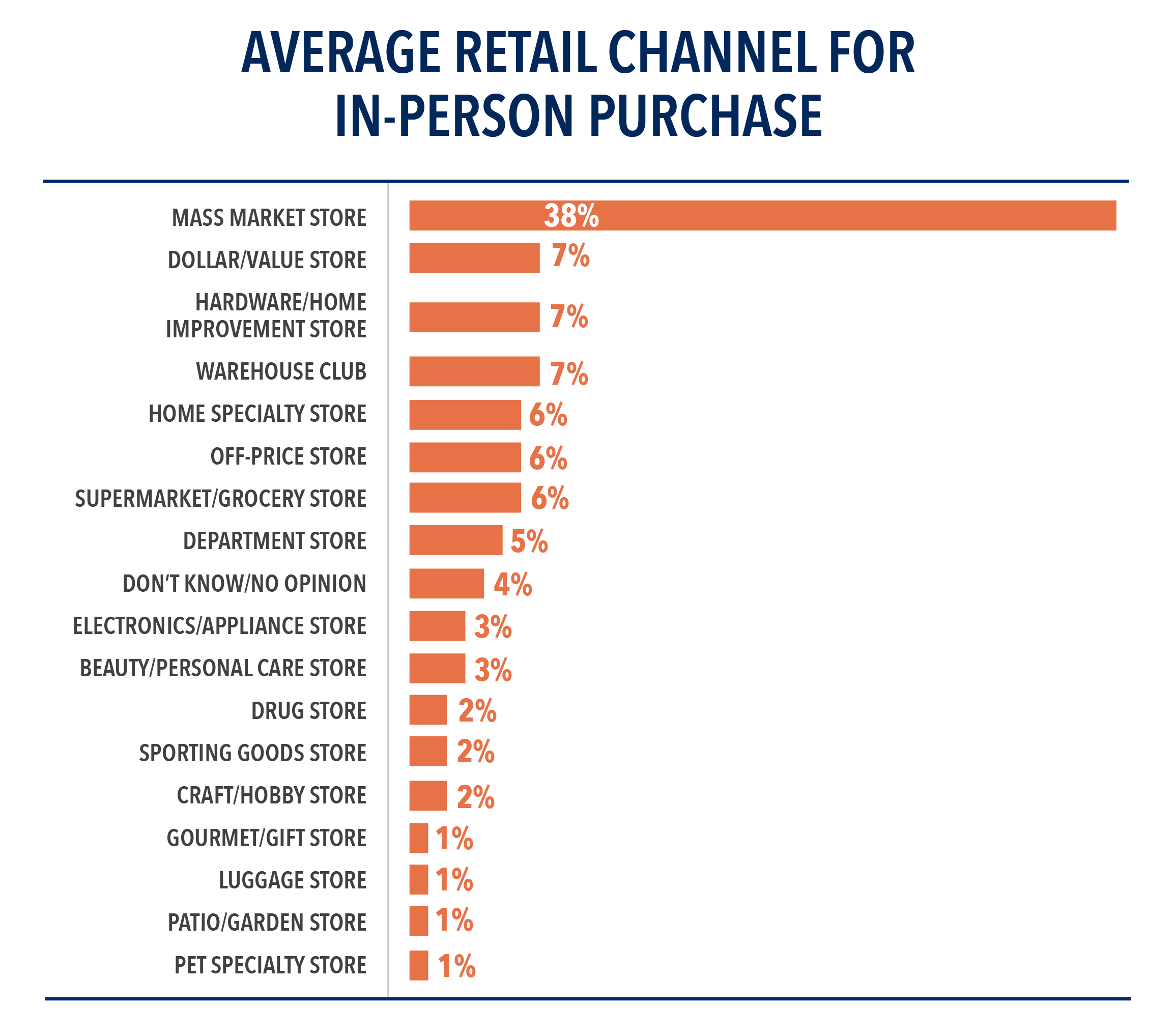

Charts above reflect average values across all product categories. View category-specific details.
Bakeware
Bakeware continues to benefit from consumers’ interest in cooking and baking at home, with replacement purchases and project-driven buying both adding to demand.
Replacing an existing product was the leading purchase motivation at 39%, while another 14% cited new recipes or home projects. Cookie sheets led planned purchases at 54%, followed by cake pans at 41% and roasting pans at 34%, suggesting consumers remain focused on core baking essentials.
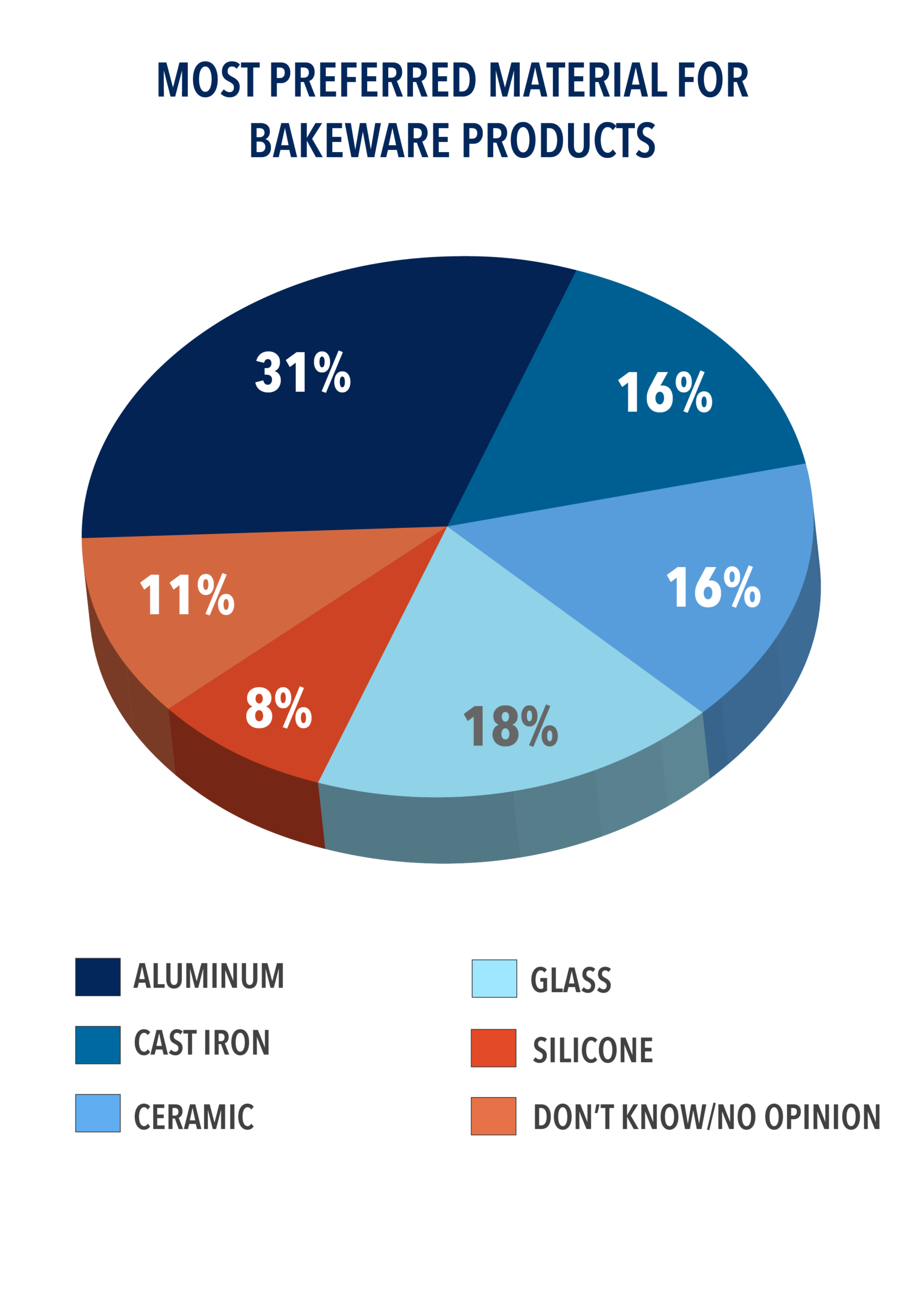
Aluminum remained the preferred bakeware material at 31%, although meaningful interest in glass (18%), ceramic (16%) and cast iron (16%) showcases consumers’ willingness to select materials based on specific cooking and baking needs.

Cookware
Cookware combines practical replacement demand with consumer interest in innovation.
While 40% of respondents cited replacing an existing product as their primary purchase motivation, 23% pointed to updated features – one of the highest rates among kitchen categories. Frying pans led planned purchases at 45%, followed by cookware sets at 38% and multi-purpose pans at 35%, reinforcing the appeal of versatile cookware.
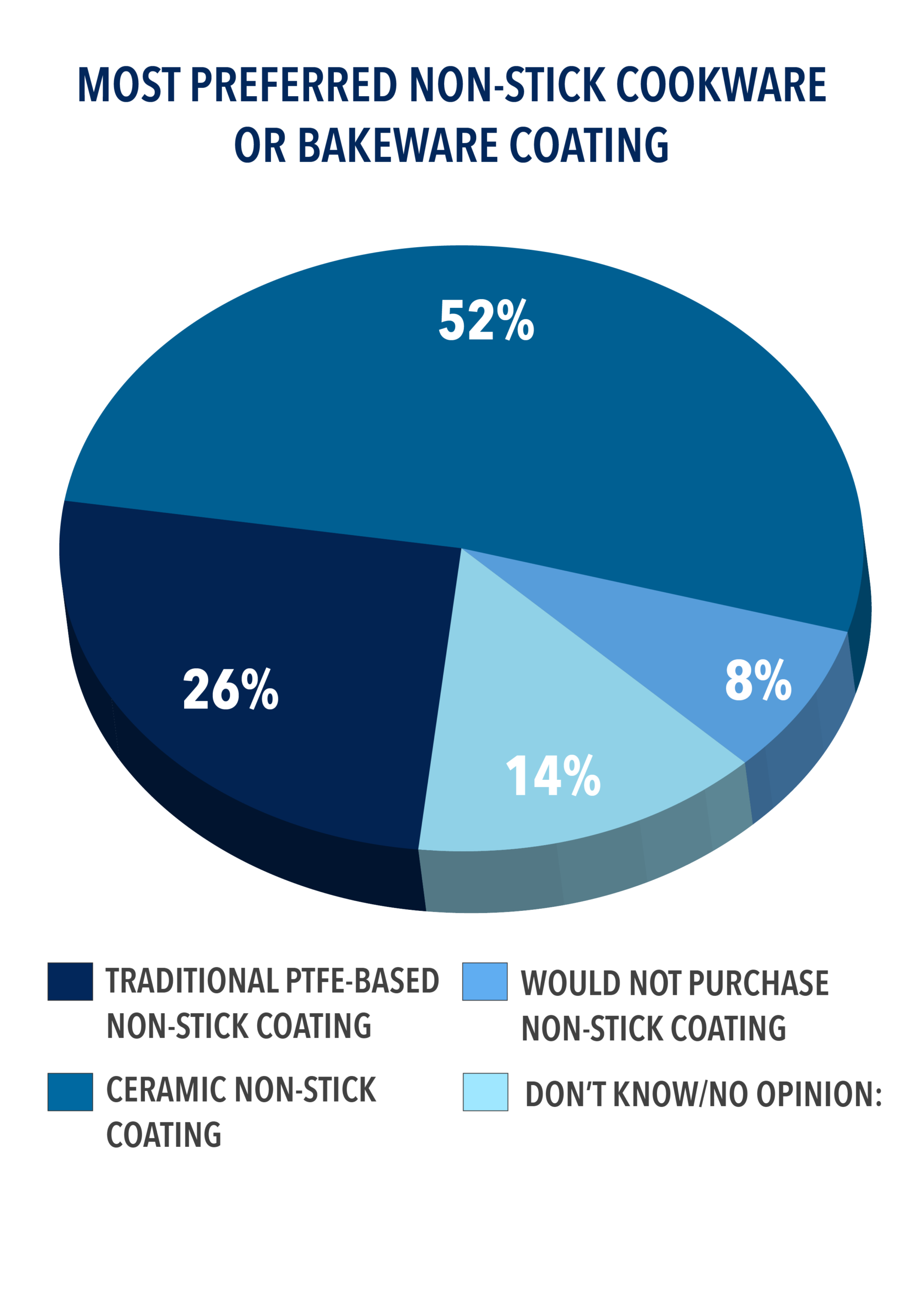
Non-stick aluminum was the most popular material among respondents, with 52% favoring ceramic non-stick coating compared and 26% preferring traditional PTFE-based non-stick coatings.


Kitchen Tools
Kitchen tools are one of the category groups most closely tied to everyday meal preparation.
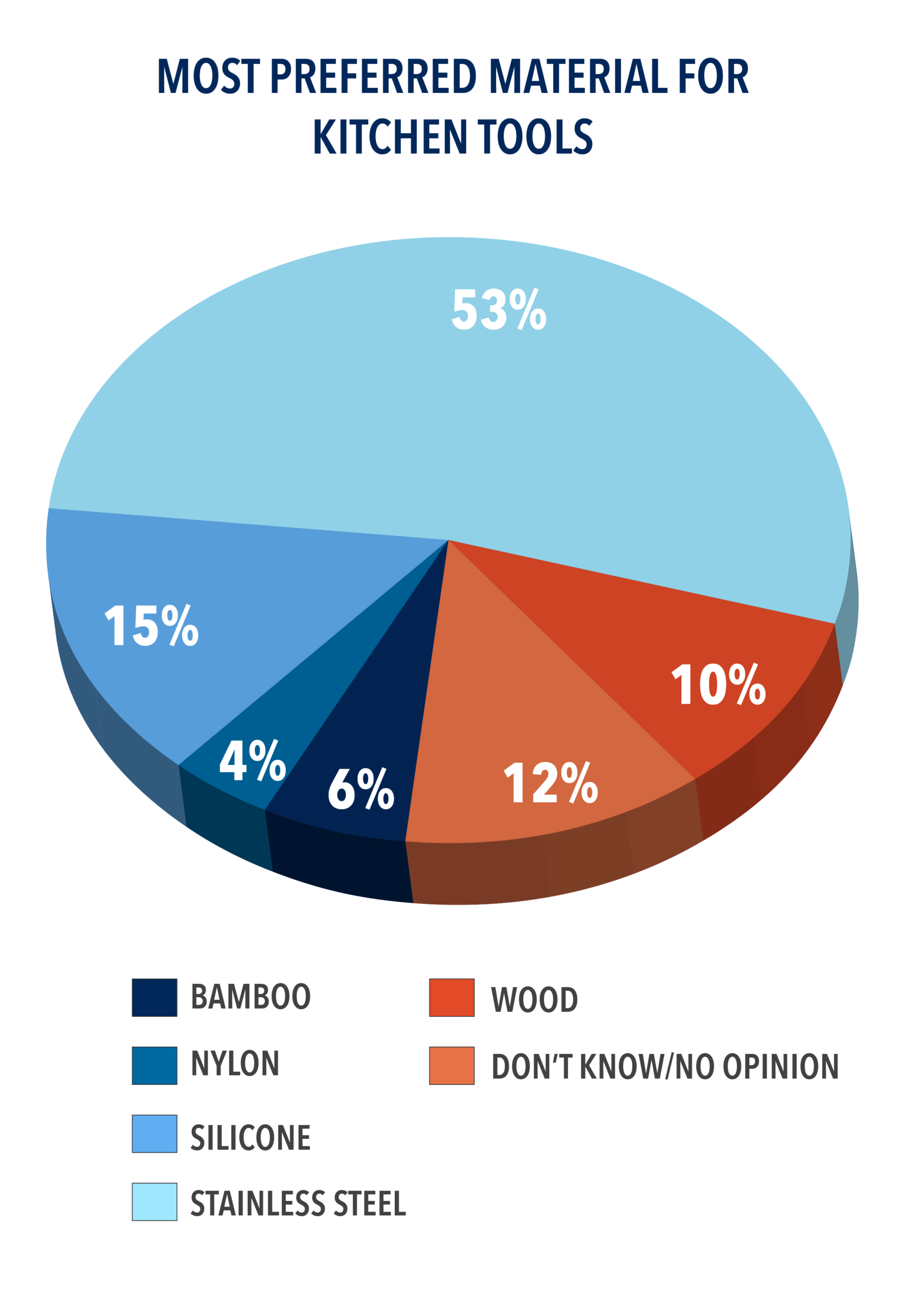
Replacement purchases led motivations at 41%, although 20% of respondents cited updated features, indicating shoppers continue to look for products that improve convenience and functionality. Can openers, tongs and measuring spoons topped purchase plans, while stainless steel dominated material preferences at 53%.
The combination of broad product choices and a preference for durable materials indicates consumers continue to prioritize value and usefulness in the category.


Drinkware
Drinkware remains one of the more style- and occasion-driven categories in housewares.
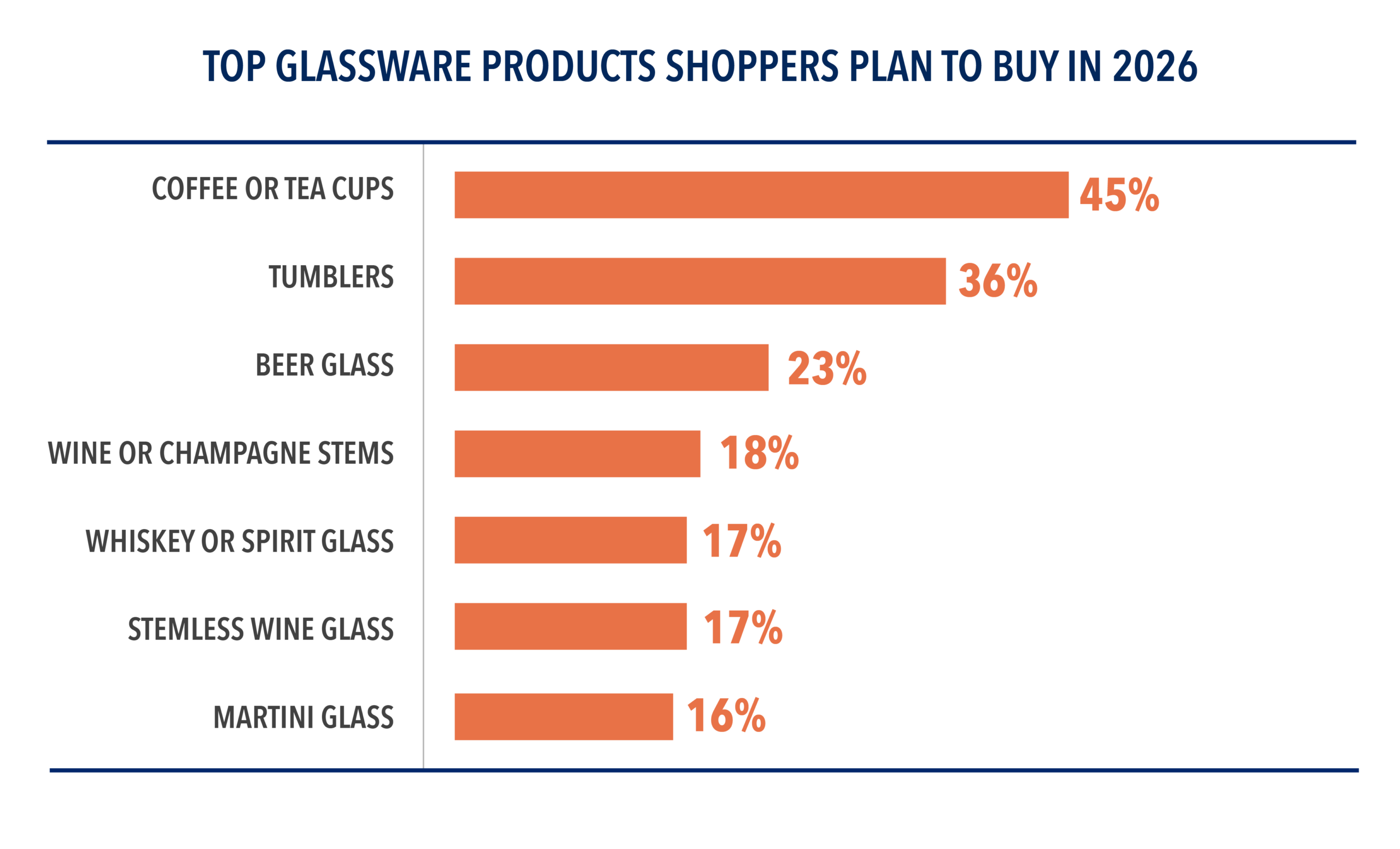
Although replacement purchases were the leading motivation at 39%, 14% of consumers cited impulse purchases – among the highest levels measured across the survey. Coffee and teacups led planned purchases at 45%, followed by tumblers at 36%, highlighting continued demand for products tied to daily beverage routines.
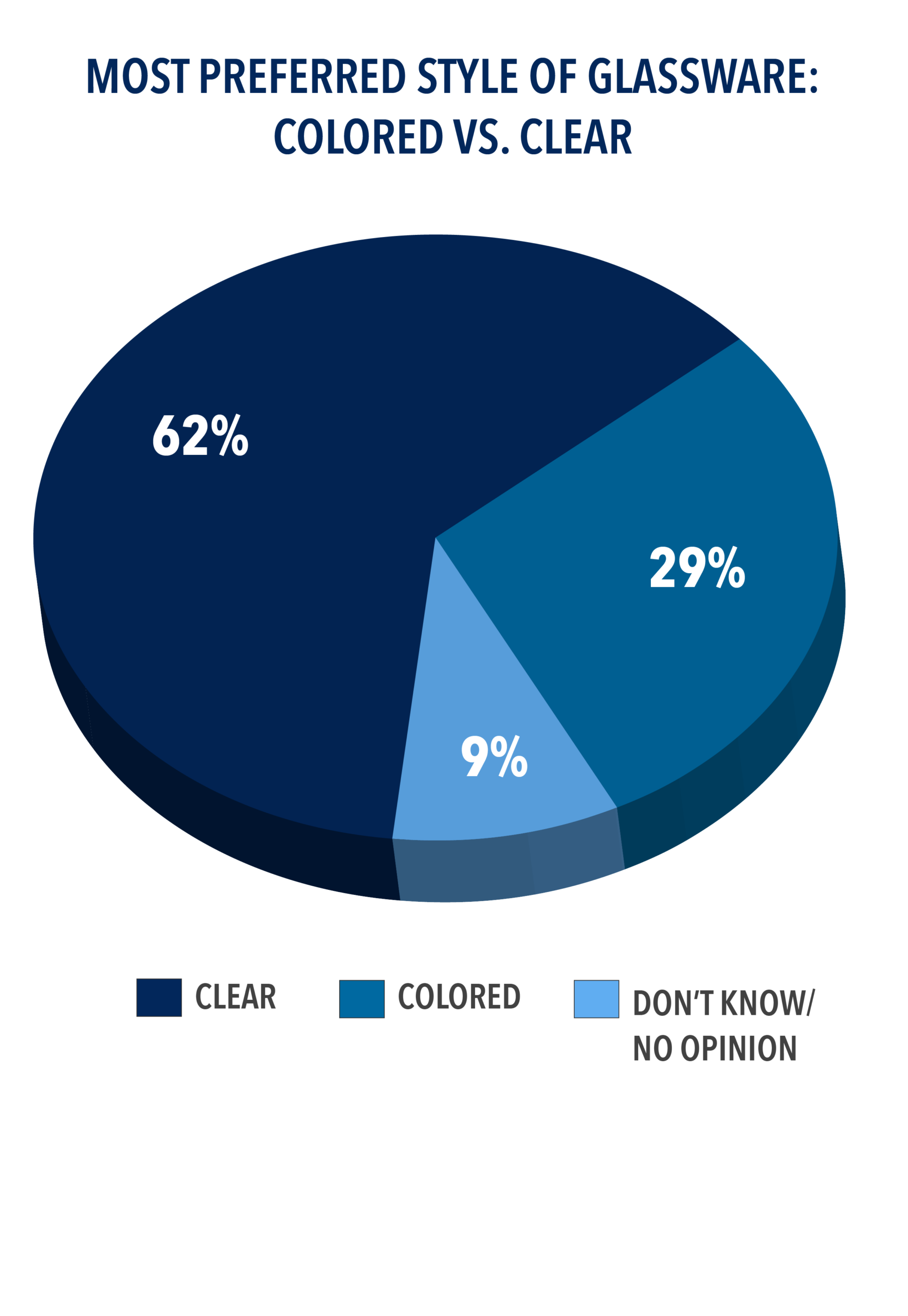
At the same time, consumers showed a strong preference for clear glassware over colored alternatives (62% to 29%), which points to versatility as an important purchase consideration.
Dinnerware
Dinnerware purchases balance replacement needs with the desire to refresh.
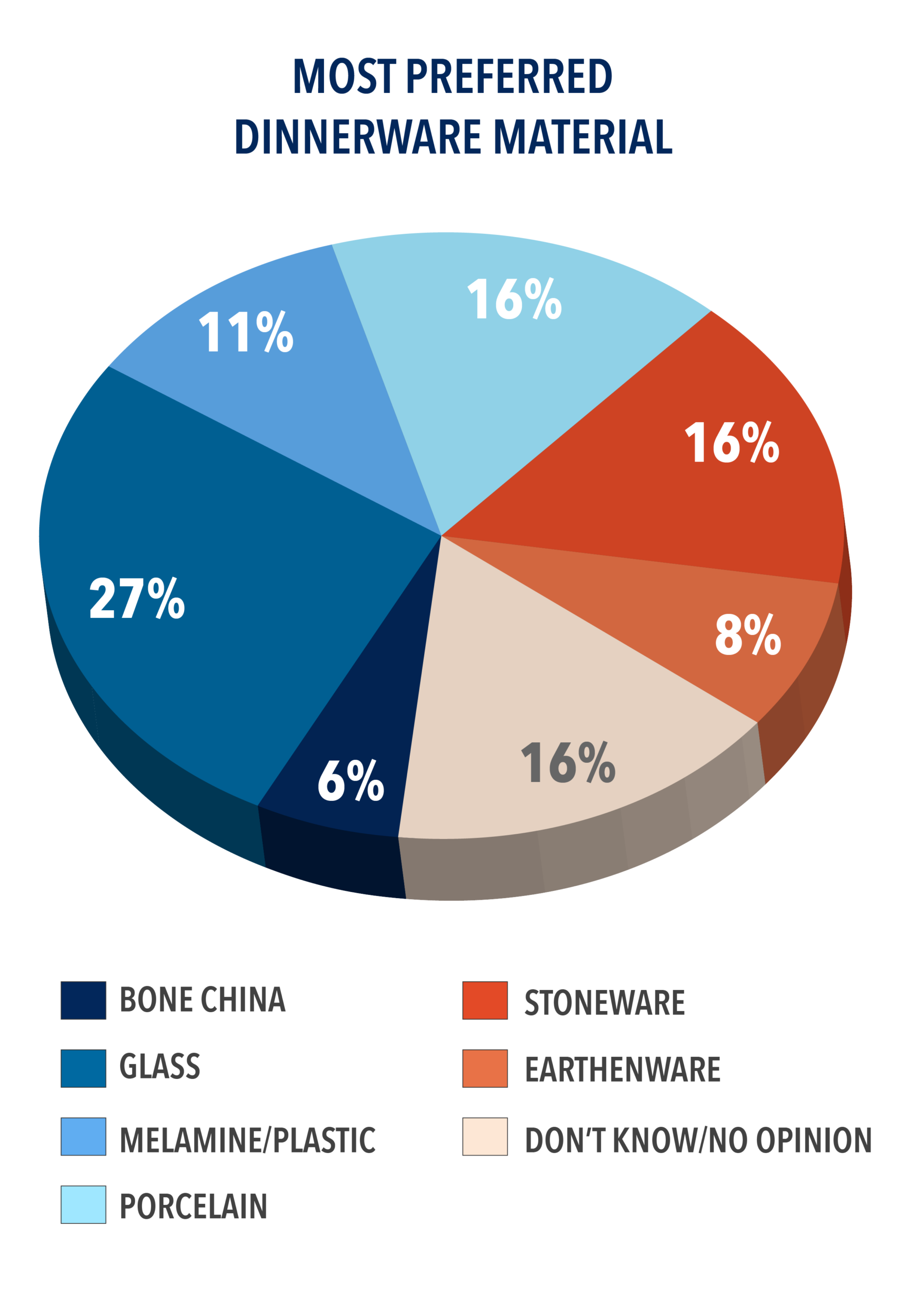
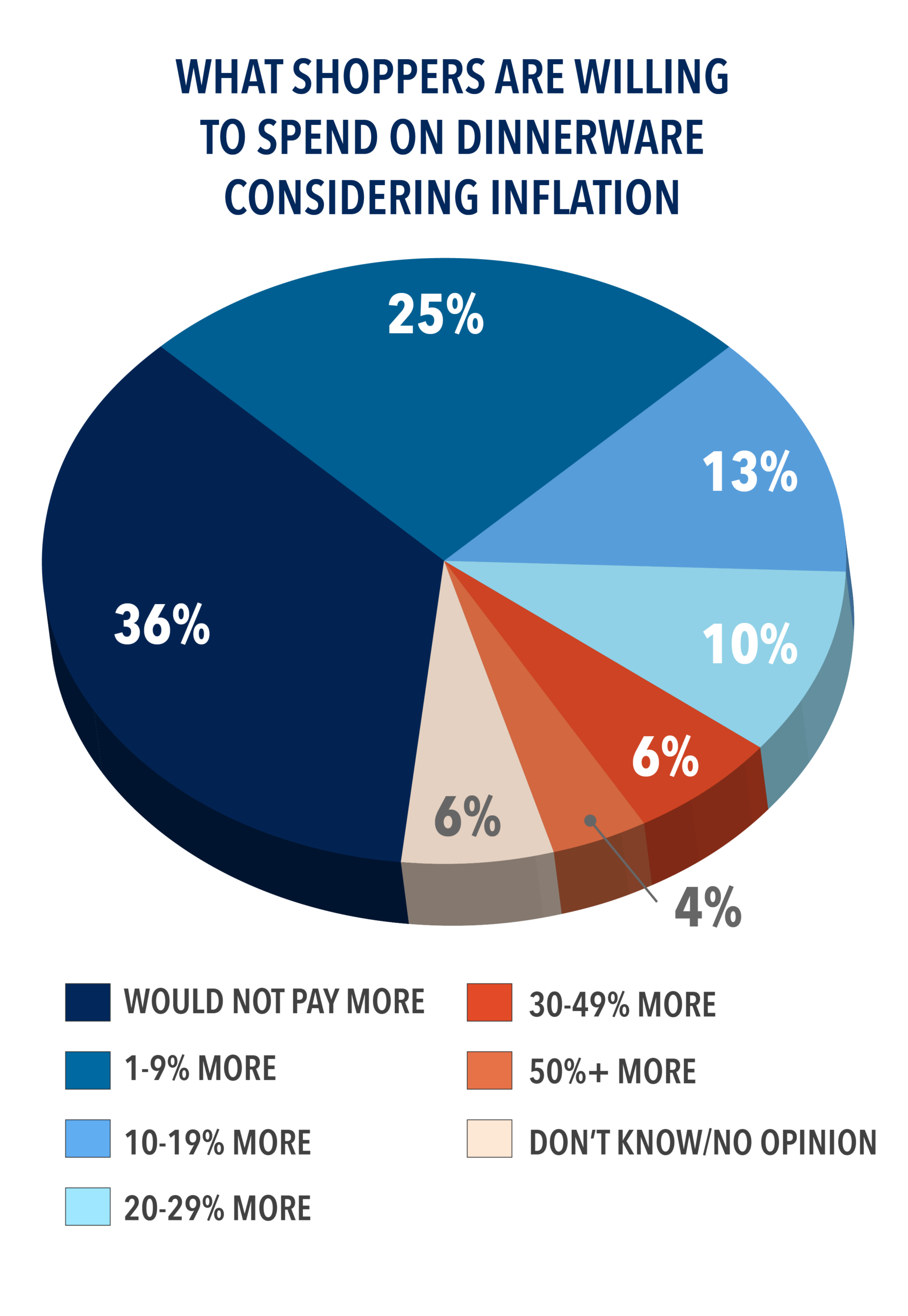
Replacing an existing product was the leading purchase motivation at 37%. In comparison, 21% cited updated features and 11% pointed to matching home design or colors. Glass ranked as the preferred dinnerware material at 27%, followed by porcelain and stoneware at 16% each.
The combination of functional and aesthetic purchases suggests consumers view dinnerware as both a practical necessity and an extension of personal style.
Flatware
Flatware purchases reflect a balance between function and design.
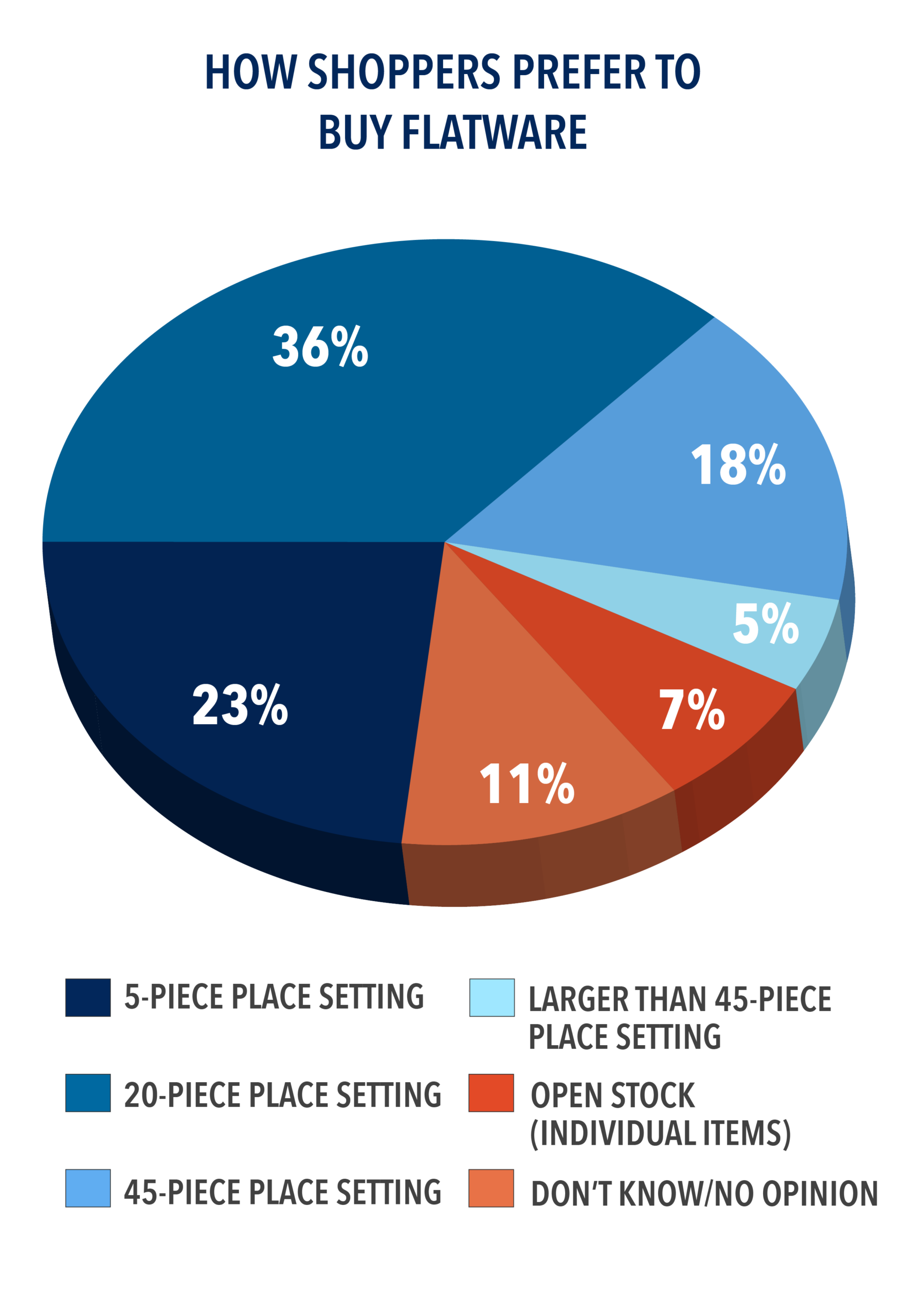
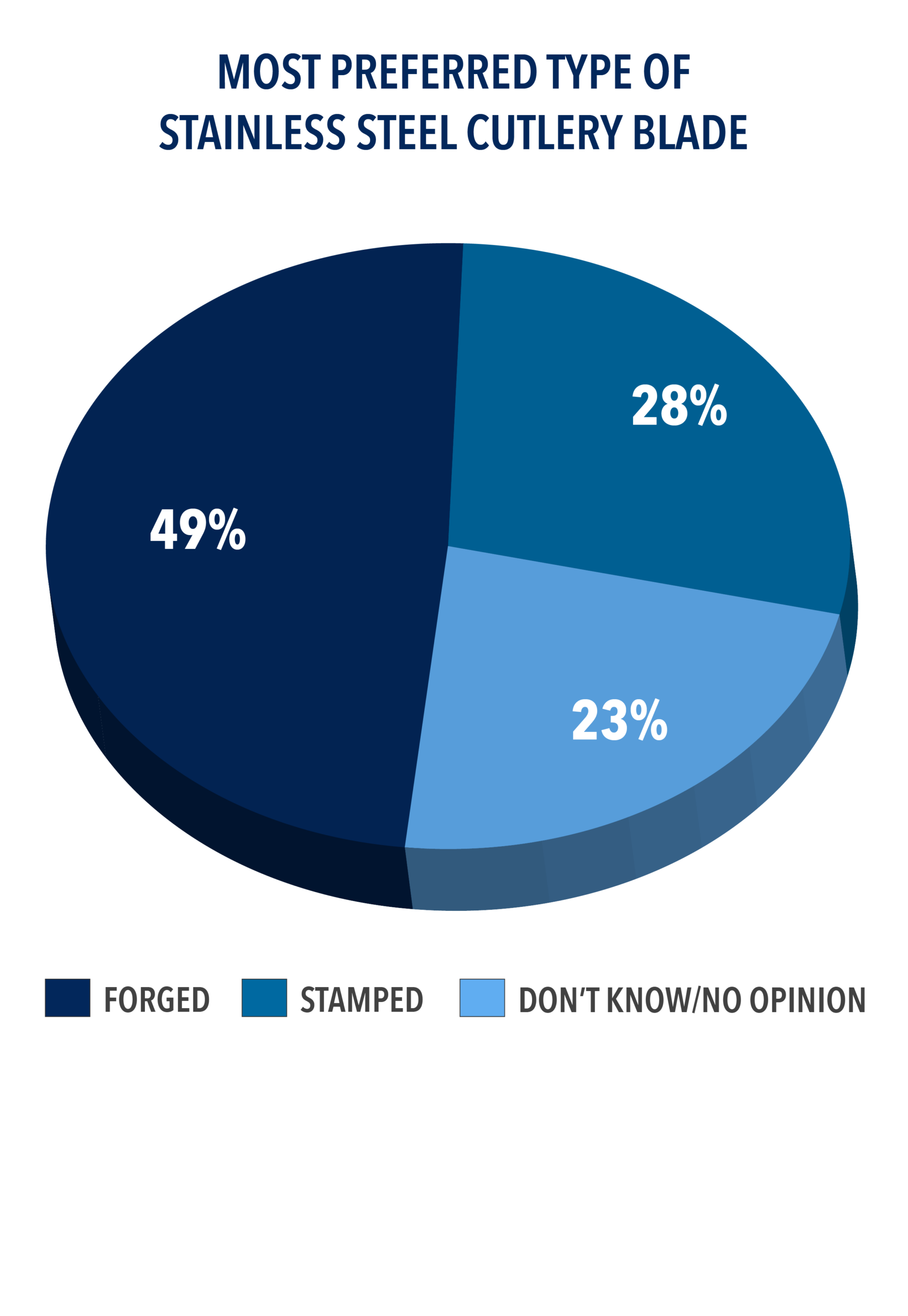
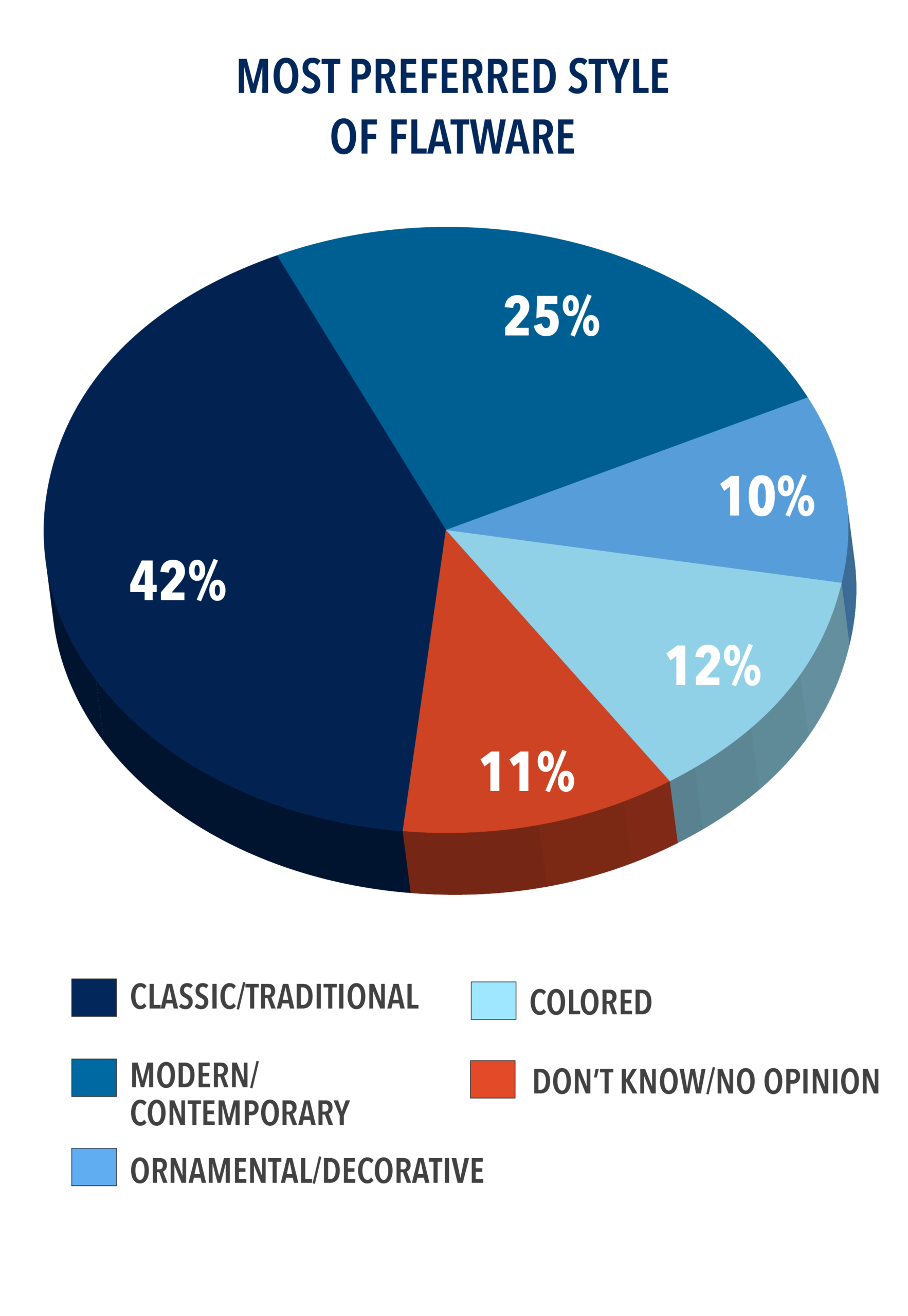
Replacing an existing product was the leading purchase motivation at 38%, while 19% of respondents cited updated features and 12% pointed to matching home design or colors. Consumers showed a clear preference for classic and traditional, selected by 42% of respondents, compared with 25% for modern and contemporary designs.
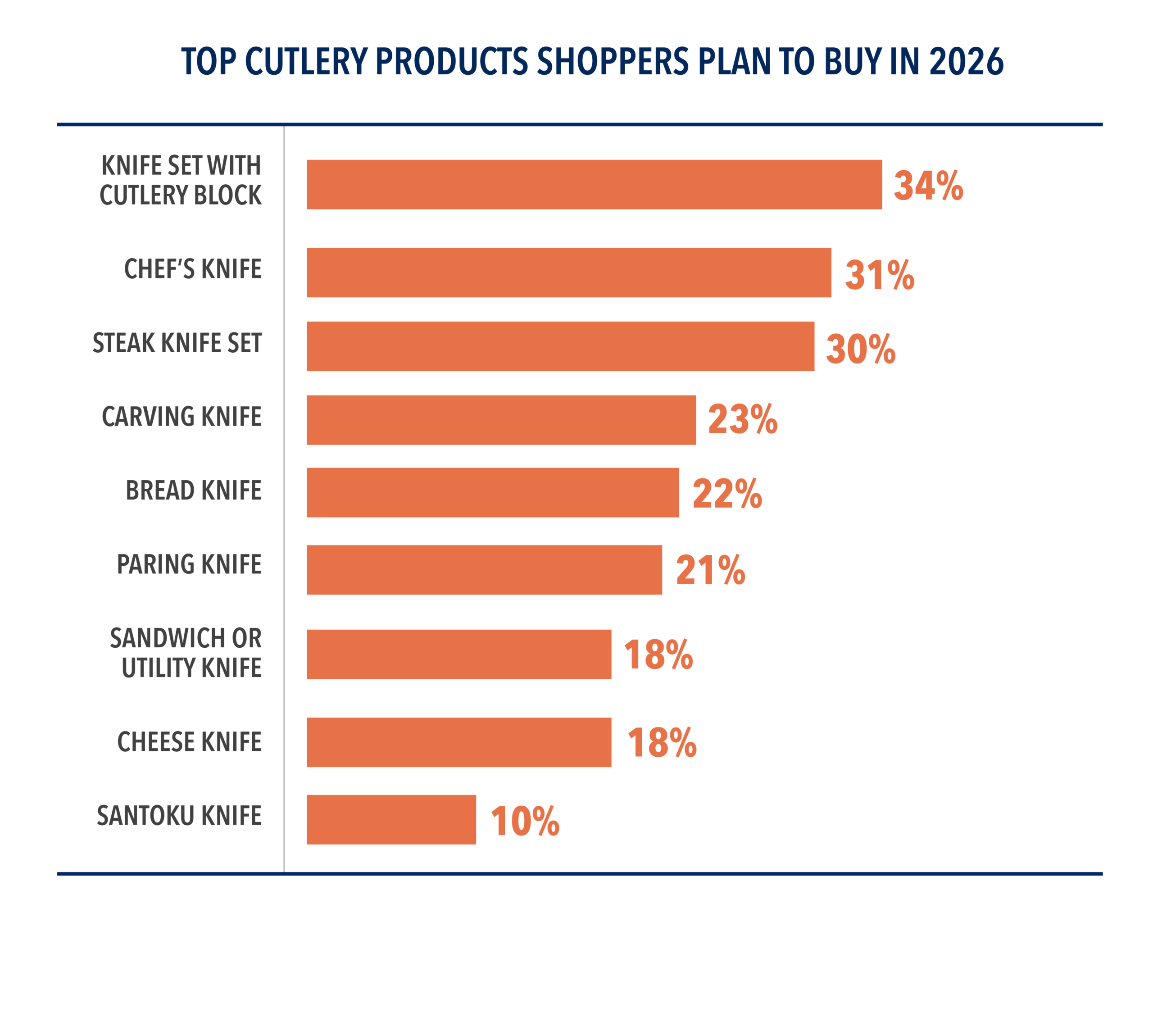
Interest in knife sets with blocks, chef’s knives and steak knife sets hints that shoppers continue to prioritize multipurpose products that support everyday meal preparation and dining occasions.
Kitchen Electrics
Kitchen electrics are one of the most feature-driven categories.
While 39% of respondents cited replacing an existing product as their primary purchase motivation, another 22% pointed to updated features. Air fryers led planned purchases at 35%, followed by toasters at 30% and blenders at 22%, reinforcing continued demand for products tied to everyday meal preparation.
Consumers also indicated a willingness to pay more for attributes such as performance, lower energy consumption and products made in America, suggesting value remains closely tied to functionality and not just aesthetics alone.


Home Storage & Organization
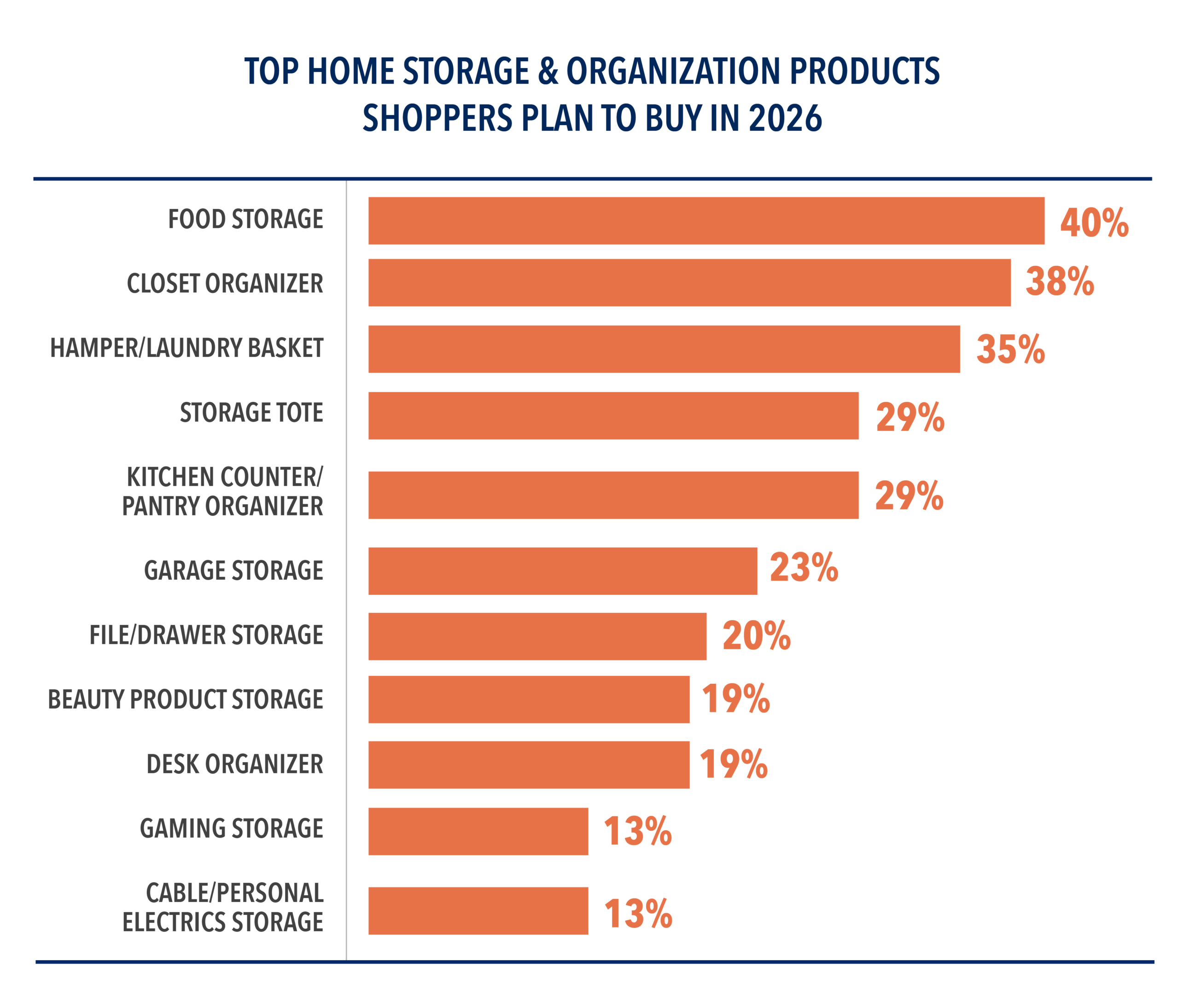
With multi-purpose households having become the norm, the need for storage and organization continue to evolve, inviting new solutions.
The survey once again demonstrated strong demand for closet organizers (38%), totes (29%), laundry storage accessories (35%), kitchen/pantry organizers (29%) and garage storage (23%).
With hybrid and remote-only work scenarios now the norm, desk organizers (19%) and file/drawer storage (20%) remain among the strongest purchase-intent segments.
Notably, with inflationary pressure driving up at-home dining frequency, food storage is at the top of the purchase intent list, cited by 40% of respondents.
Personal Care
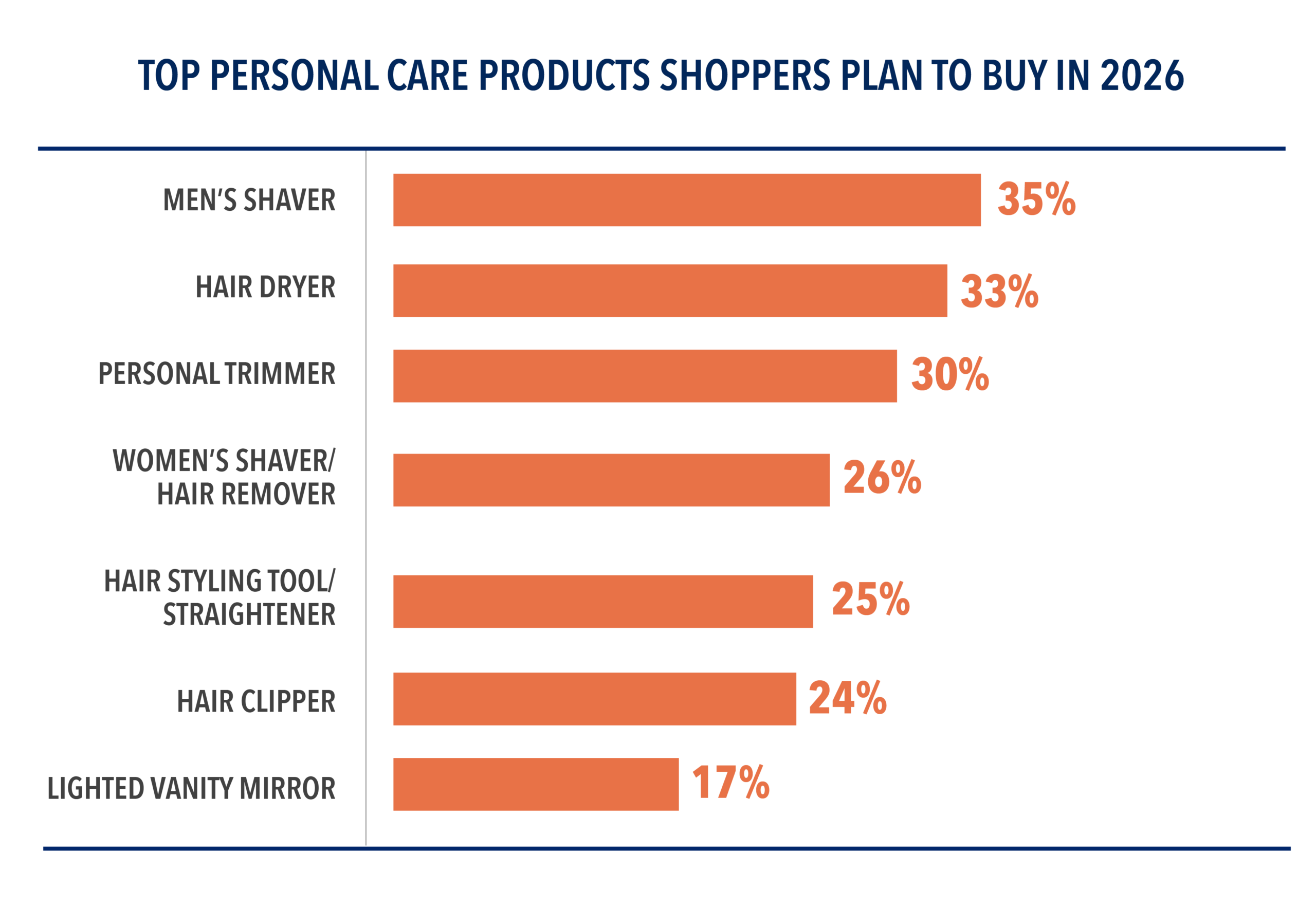
A wide range of hair care, beauty and grooming appliances are again in purchase plans because of the convenience and economy of at-home personal care.
Men’s grooming, fueled by the convergence of contemporary bald styling and the ongoing popularity of diverse classic beard and mustache styles, again gets a lot of attention. Some 35% of respondents expect to buy a men’s shaver, followed by 30% who expect to buy a trimmer and 24% who expect to buy a hair clipper.
On the women’s side, replacement cycles are driving hair dryer purchase expectations (33%), versatility is propelling styling and straightening tools (25%) and pain-free innovation is keeping demand for hair removal devices strong (26%).
Home Environment
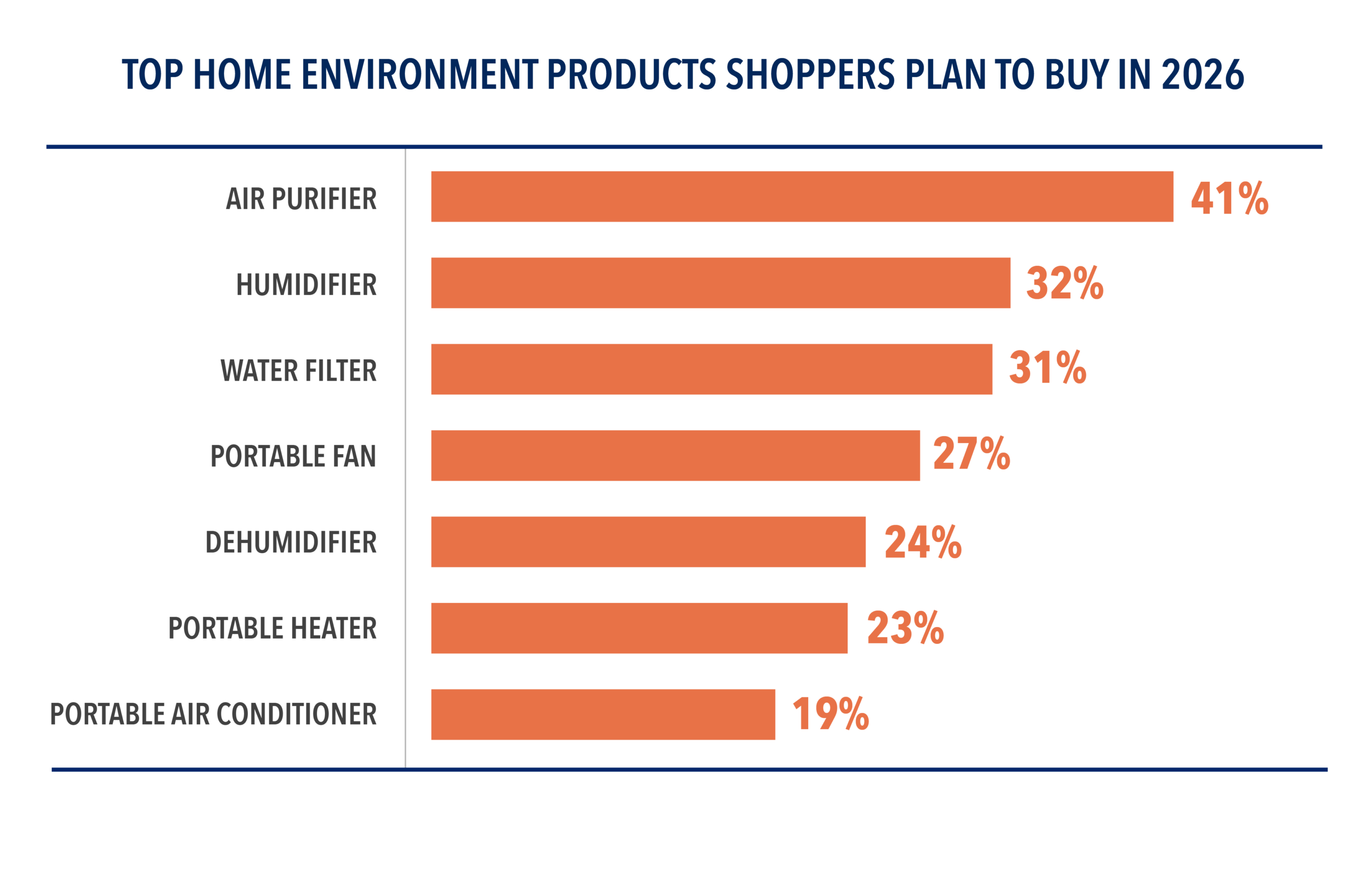
Wellness lifestyle influences are keeping air purifiers in the foreground, with 41% of respondents planning such a purchase.
After that, the home environment category sees relatively balanced and healthy demand rates across the board, from humidifiers to portable heaters, as consumers seek the convenience and economy of spot air comfort and quality control, as well as the combined health, environmental and cost-saving benefits of home-filtered water to stay and to go.
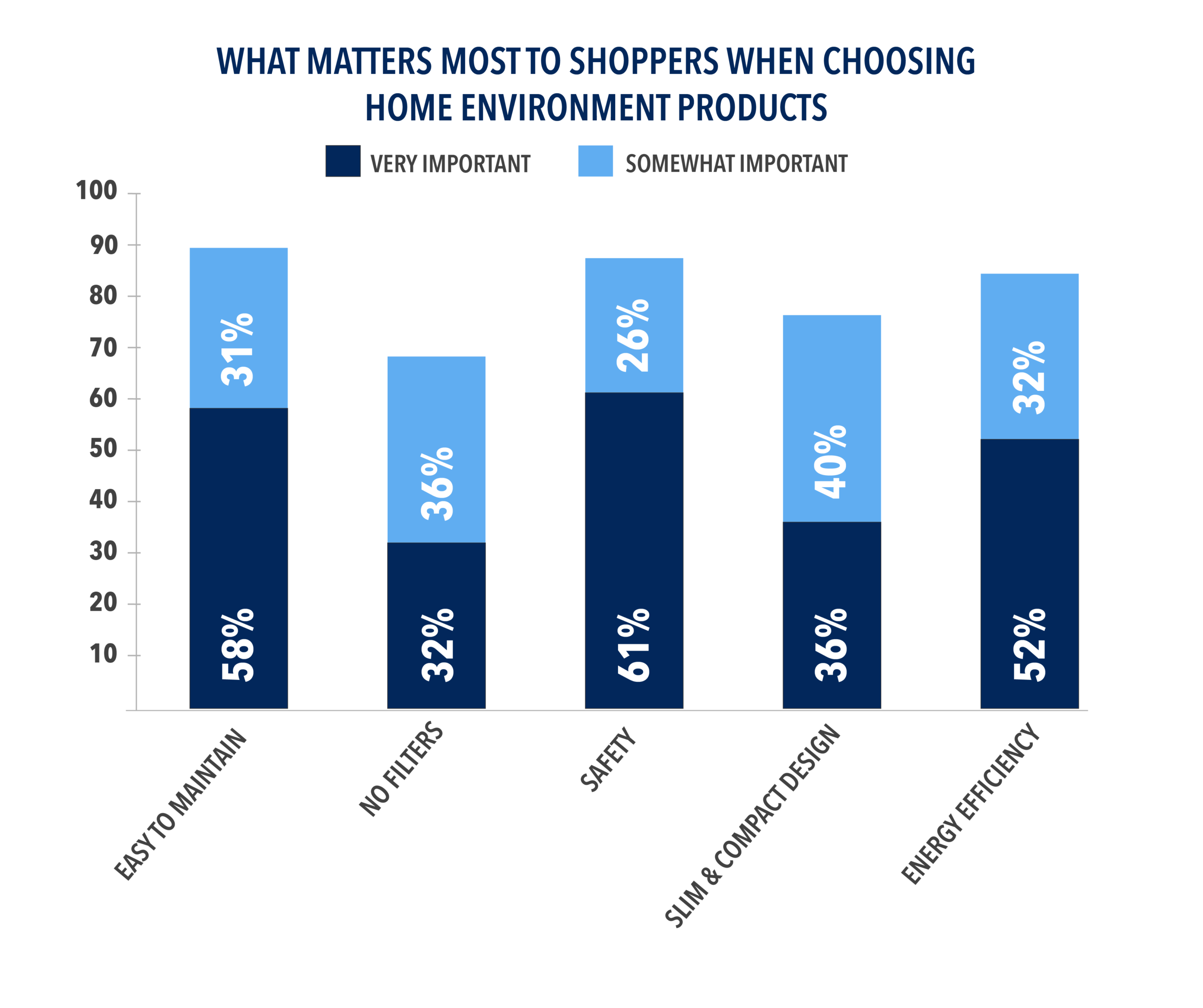
More than four in five likely home environment purchasers consider ease of maintenance, safety and energy efficiency important when selecting products. The convenience of space-saving design (36%) and no filters to replace (32%) remain compelling considerations.

Cleaning Tools
The household cleaning fever of the early 2020s might have subsided a bit, but consumer zeal for a clean, healthy home remains, as does their quest for products that remove much of the chore from such tasks.
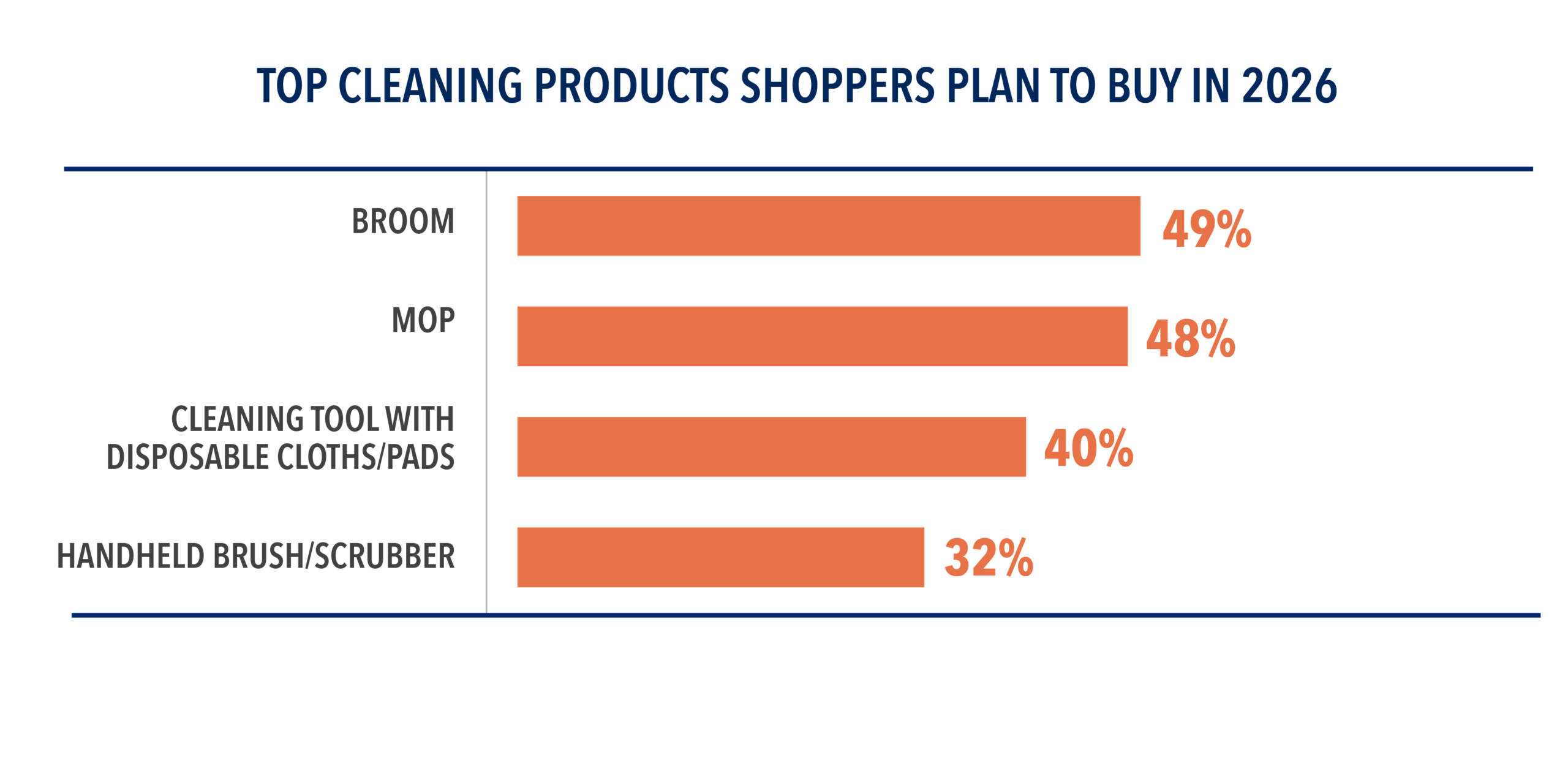
Recent innovation in mops and brooms is well positioned to serve high demand, (48% and 49%, respectively). It is noteworthy that spin mops, a segment backed by intensive development and marketing, lead all intended mop purchases (picked by 41% of respondents).
Despite the surge in environmentally friendly materials on many cleaning products, convenience still puts cleaning tools with disposable cloths on 40% of shopping lists.

Floor Care Electrics
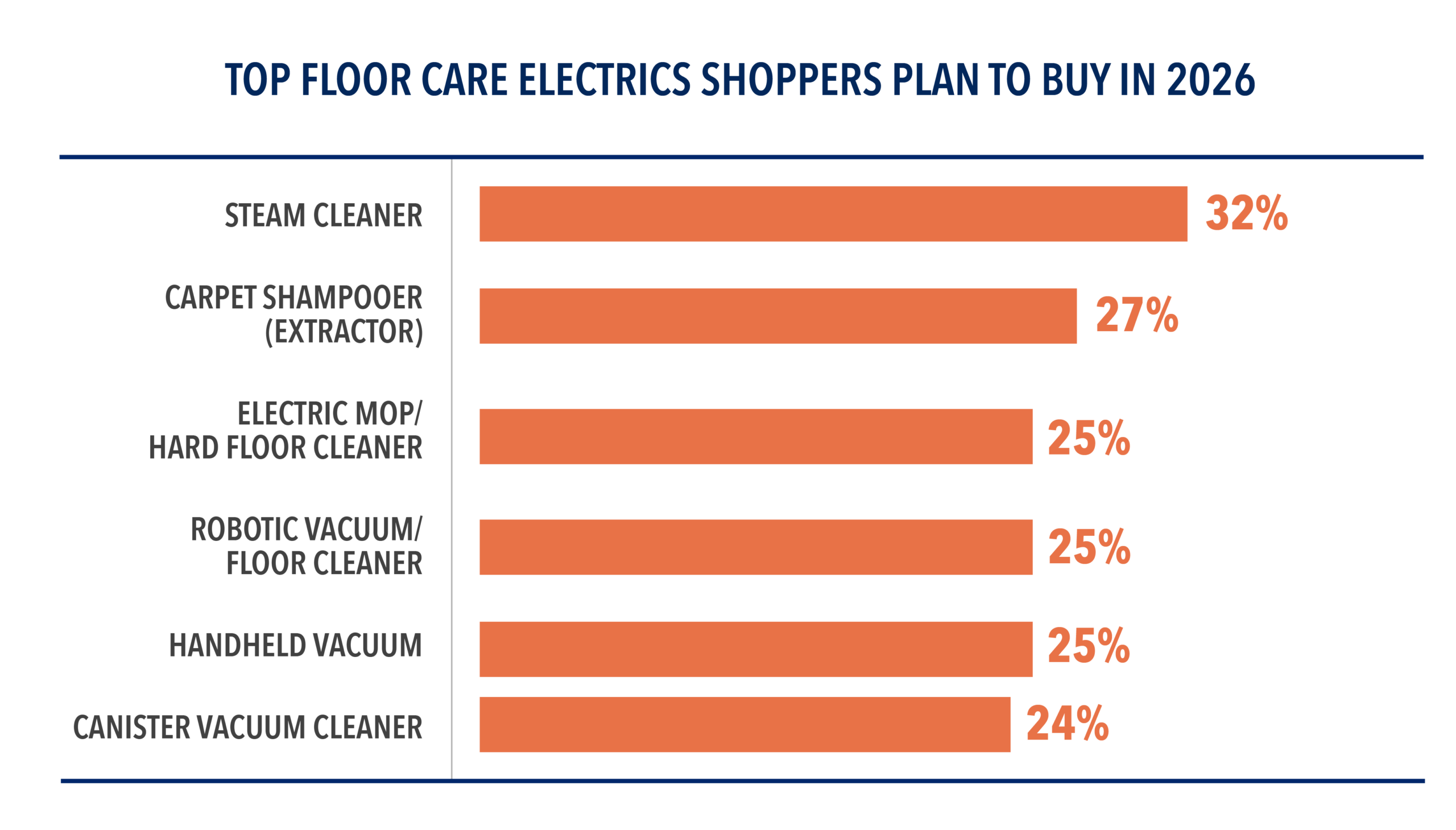
Fairly even purchase expectations across types of vacuum cleaners and other floor care appliances suggest this is another segment entering what could be a productive replacement cycle.
Moreover, it underscores the opportunity to sell consumers multiple types of cleaning electrics for different household surfaces and needs.
Steam cleaners hold a slight edge as the most preferred purchase choice at 32% of respondents. Other segments such as carpet shampooers, hard floor cleaners, hand vacs, robotic vacs, upright and canister vacs all fall within the expected purchase range of 24% to 27%. This may show that robotic vac demand is maturing against longstanding vacuum types that refuse to surrender their often fuller-featured, higher performance advantages.
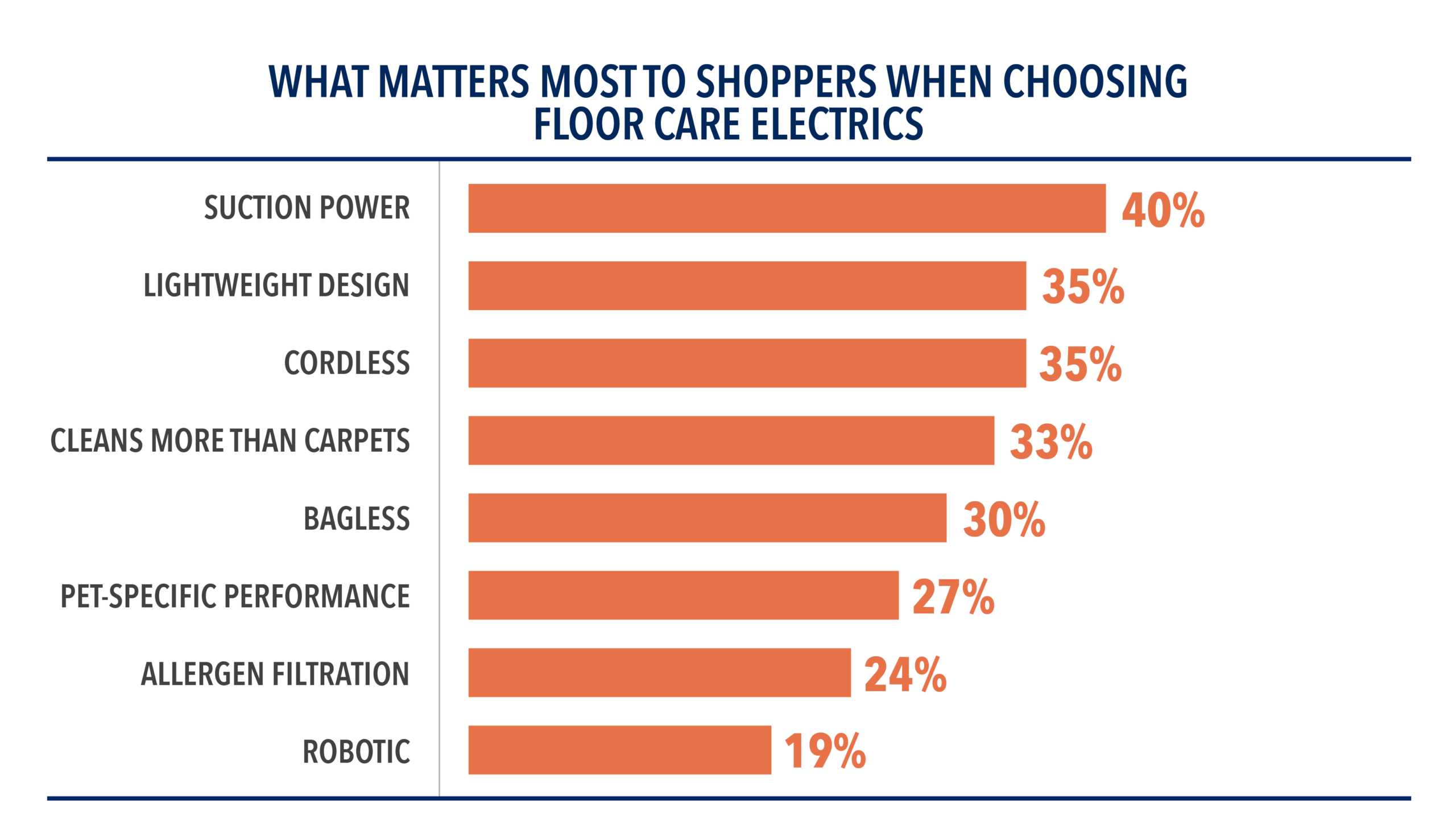
Suction power, indeed, ranks as the most preferred purchase consideration in the category (40%), followed by conveniences such as lightweight and cordless operation (both at 35%).
A widening array of new models with pet features and applications is serving a pet ownership boom in recent years, verified by the 27% of respondents desiring vacuums with pet-specific performance.
Luggage & Travel Goods
The travel sector has been on a bit of a turbulent ride the past few years through the ups and downs of pandemics and economic uncertainty.
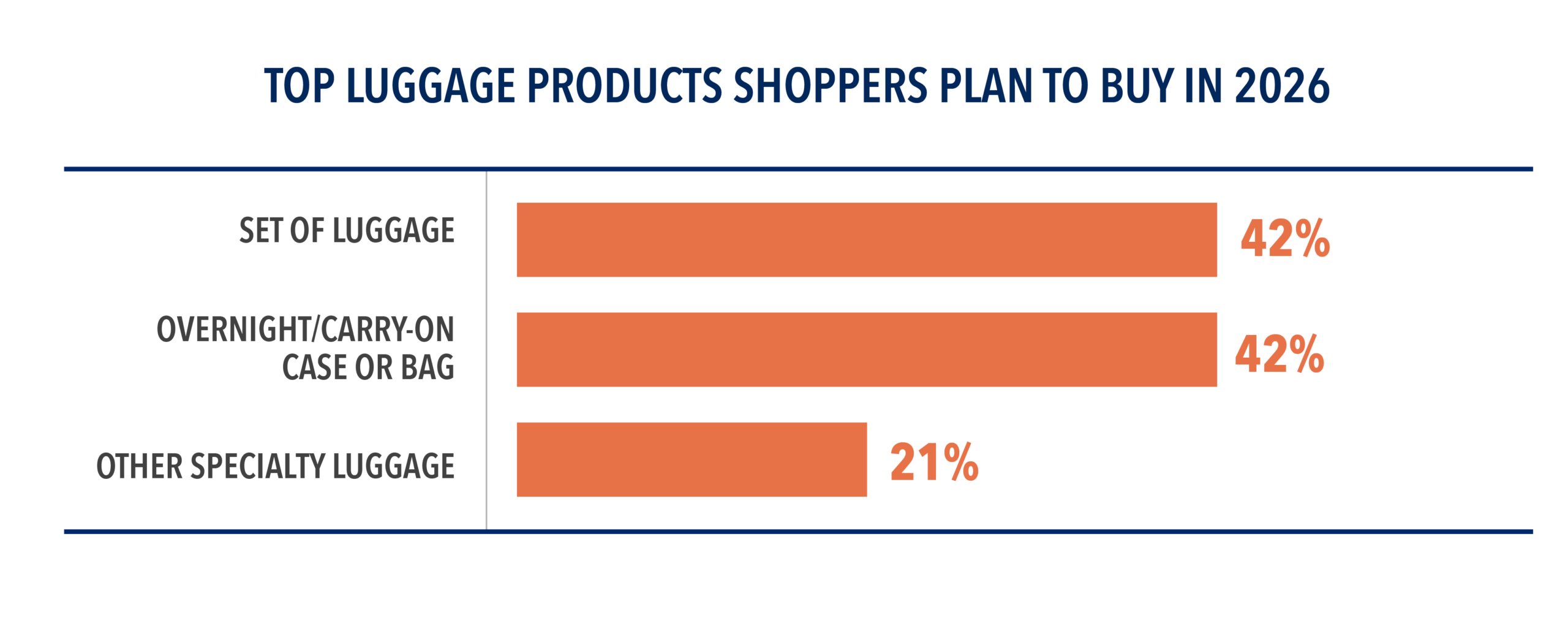
Travelers nonetheless present a balanced need for luggage to suit short and extended trips, with overnight/carry-on items and luggage sets each selected by 42% of expected purchasers. This underscores an opportunity for versatile short-trip solutions.
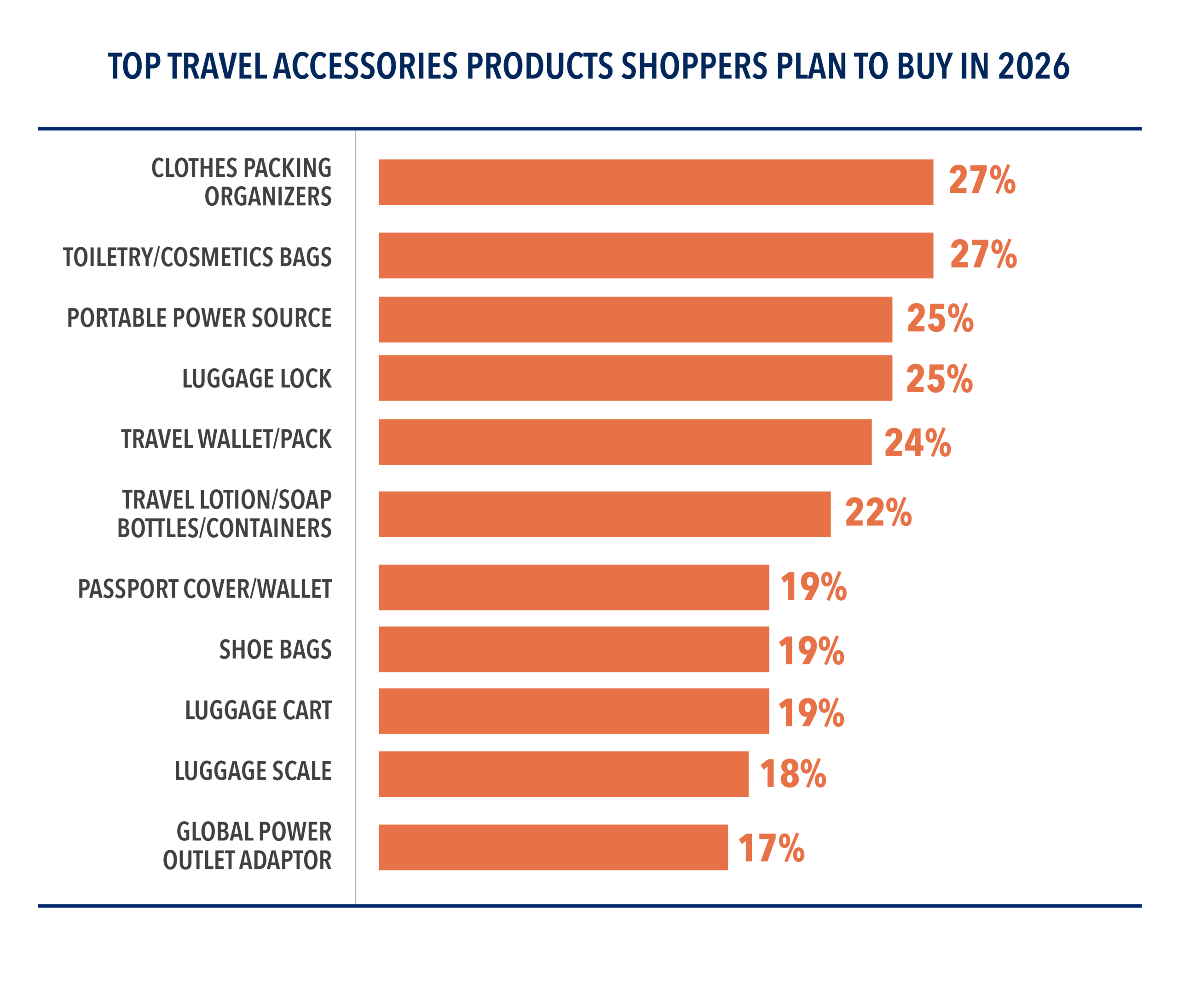
Meanwhile, consumers continue to seek accessories that make packing clothing (27%), toiletries/cosmetics (27%), shoes (19%), and various types of personal items more organized, space-efficient, and accessible. Meanwhile, portable power sources — which are becoming more commonly integrated into premium luggage — are gaining as a purchase preference (25%).
Outdoor Living
Consumers that turned their backyards into safe havens five years ago continue to equip their outdoor spaces as extensions of their homes when it comes to entertaining, cooking and dining.
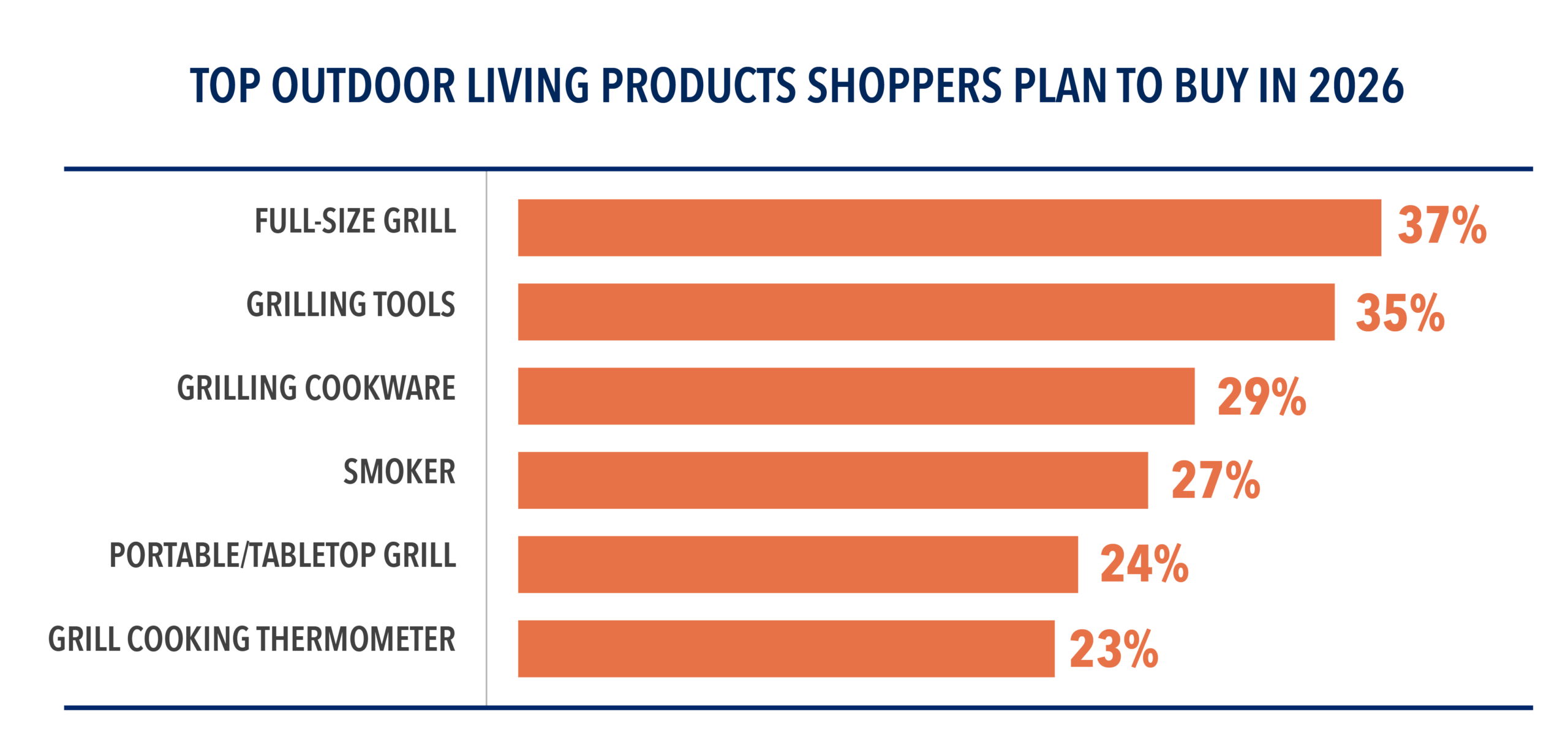
With full-size grills sought by 37% of prospective outdoor living shoppers, it’s no surprise a commensurate 35% plan to purchase grilling tools, 29% want specialized grilling cookware, and 23% are looking for grill thermometers, a segment buoyed by Wi-Fi-enabled digital models.
Solid interest continues for smaller tabletop outdoor grills (24%) to facilitate activities such as tailgating, camping, and even smaller at-home gatherings. The popularity of different, sometimes specialized outdoor grill types has fueled multiple-unit ownership as many users have increased their outdoor grilling frequency and skills.
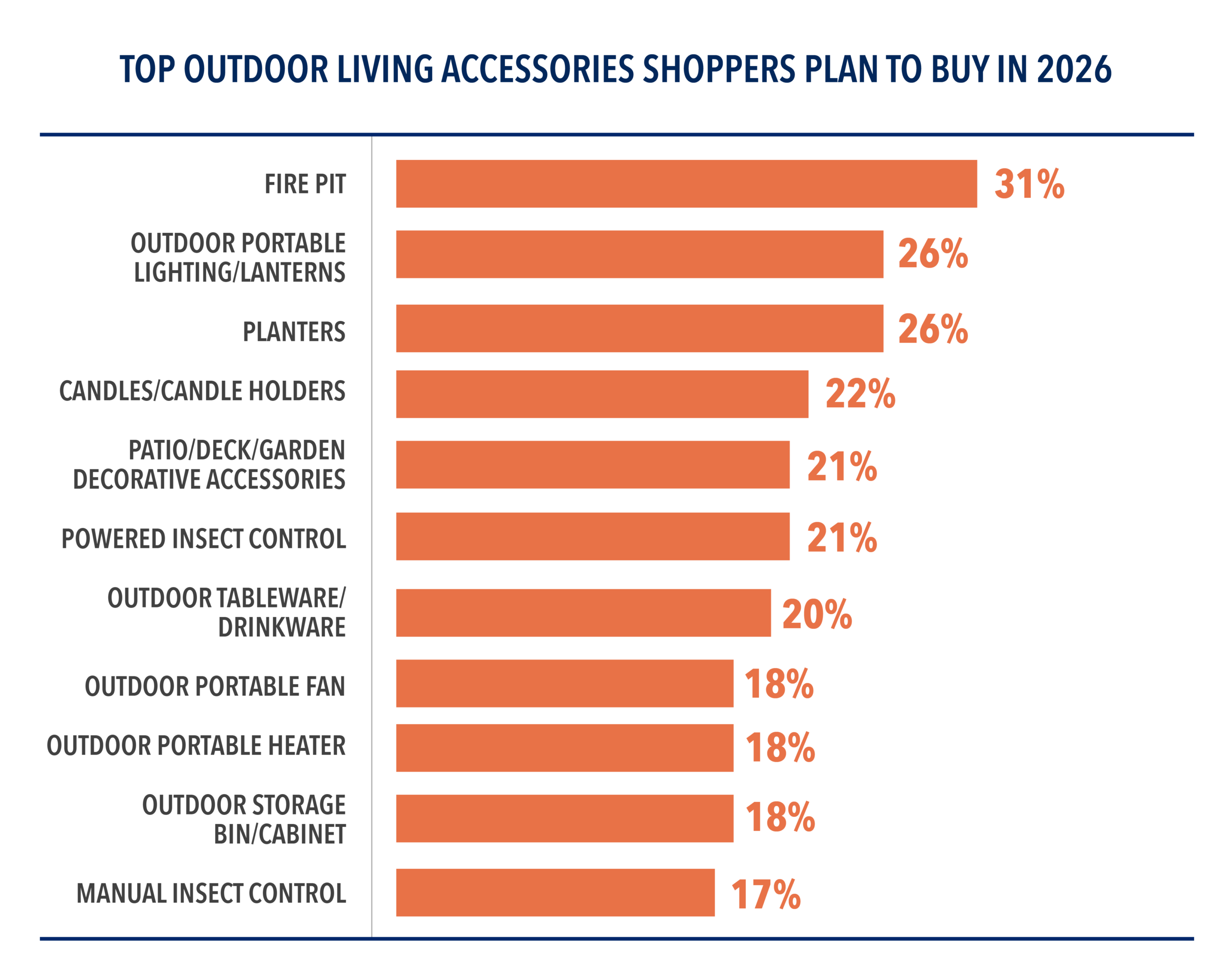
The outdoor living trend also supports a wide range of accessories — including candles (22%), tableware (20%), storage products (18%) and portable comfort electrics (18%) — designed to bring added function and style to more frequently used outdoor spaces.
Home Health Care
At the core of a health and wellness trend that transcends the home and housewares business is a longstanding home health care appliance segment that has evolved from more clinical self-care roots to be an anchor of general wellness lifestyles.
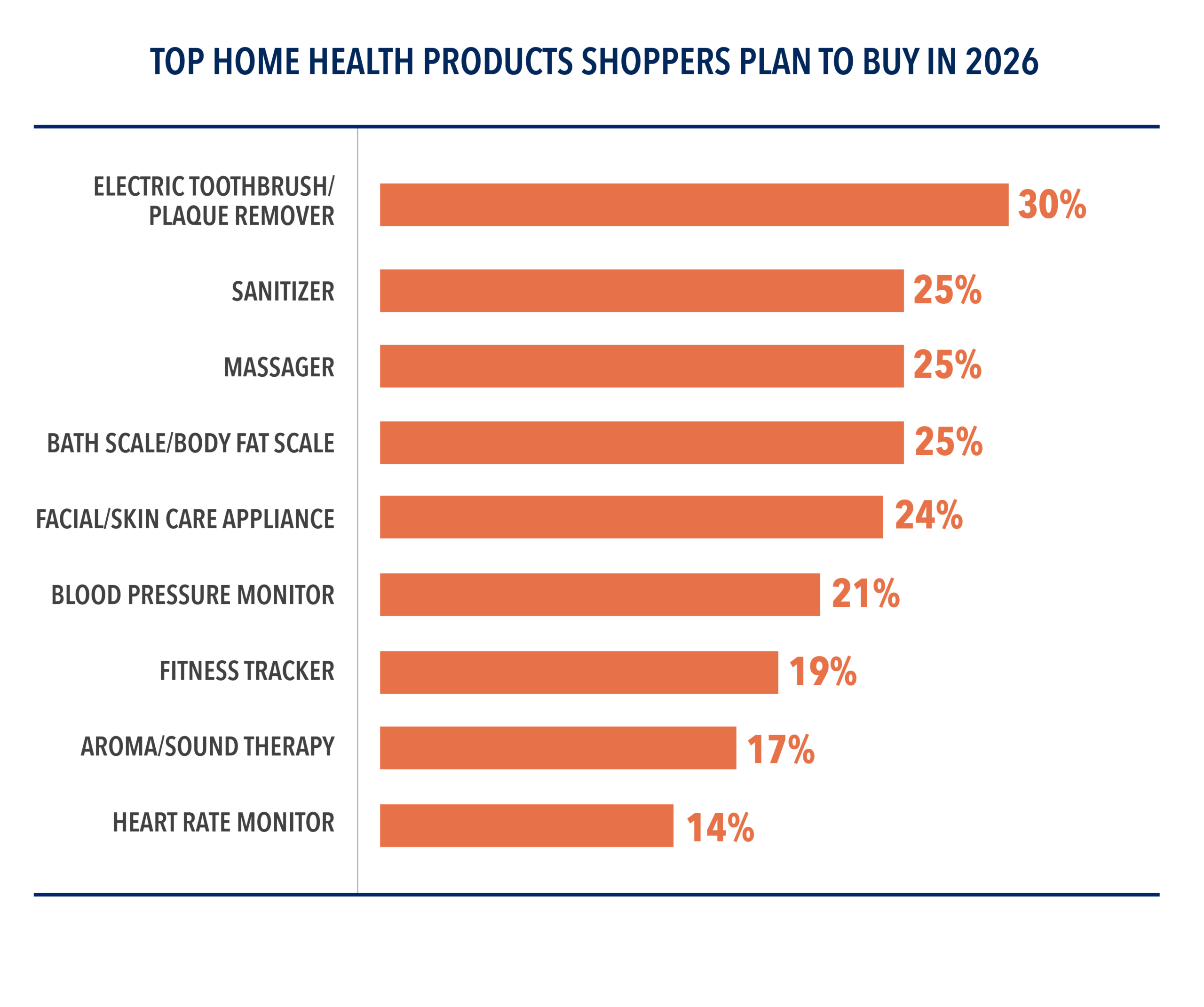
Comparable purchase intent for body fat scales (expected to be purchased by 25% of prospective health care buyers), massagers (25%), blood pressure monitors (21%) and fitness trackers (19%) in part reflects an aging population intent on being more active and fit.
That electric plaque removers (30%) and facial/skin care appliances (21%) top the preferred purchase list presents a compelling case for the convergence of health and beauty as a one-two merchandising punch across age demographics.
Other State of the Industry Installments: