


How Consumers Are Redefining Value in Home + Housewares
How Consumers Are Redefining Value in Home + Housewares
The third installment of the 2026 International Housewares Association (IHA) State of the Industry — MarketWatch — provides an in-depth look at how consumers define value when shopping for and purchasing home and housewares products.
MarketWatch presents exclusive research and analysis from the 2026 Value Equation Index, conducted by Springboard Futures for IHA to explore how consumer expectations continue to evolve.
The findings show that value extends beyond price and product functionality and encompasses a broader range of considerations tied to quality, trust, convenience and consumers’ lifestyles and priorities.
MarketWatch is presented in two segments: Decision Drivers and Truth & Transparency.
The results provide directional insight that can help home and housewares suppliers and retailers guide product development, marketing and merchandising.
HomePage News is the official media partner of the IHA State of the Industry.
Click charts to enlarge.
Generations Shape the Value Equation
Different life stages, spending power and emotional priorities provide important context for how consumers define value.
Millennials and Gen X form the core revenue engine for home and housewares, accounting for 60-70% of category spending. Millennials, now the largest home-buying generation and in prime home formation years, represent 35% to 40% of category spending. Gen X accounts for an estimated 25% to 30%, with consumers in peak earning and spending years and the highest spend per household.
Boomers represent an estimated 20-25% of category spending. They purchase less frequently but favor higher-ticket, quality-driven products. Gen Z accounts for 10-15%, a small but fast-growing share, exerting influence on color, aesthetics, social-driven discovery and brand expectations.
Decision Drivers: The Evolving Factors Behind Consumer Choice
What defines value continues to expand beyond price, product features and benefits.
Trust has become even more important to purchase decision. Eighty-one percent of consumers consider trust in a retailer or brand very or extremely important when choosing a home or housewares product, compared with 75% in the previous Value Equation Index from 2025.
Trust extends beyond whether a company will deliver a product as promised. The Value Equation Index defines it through credibility, reliability, intimacy and self-orientation, using considerations such as honesty, dependable action, sincerity and customer focus.
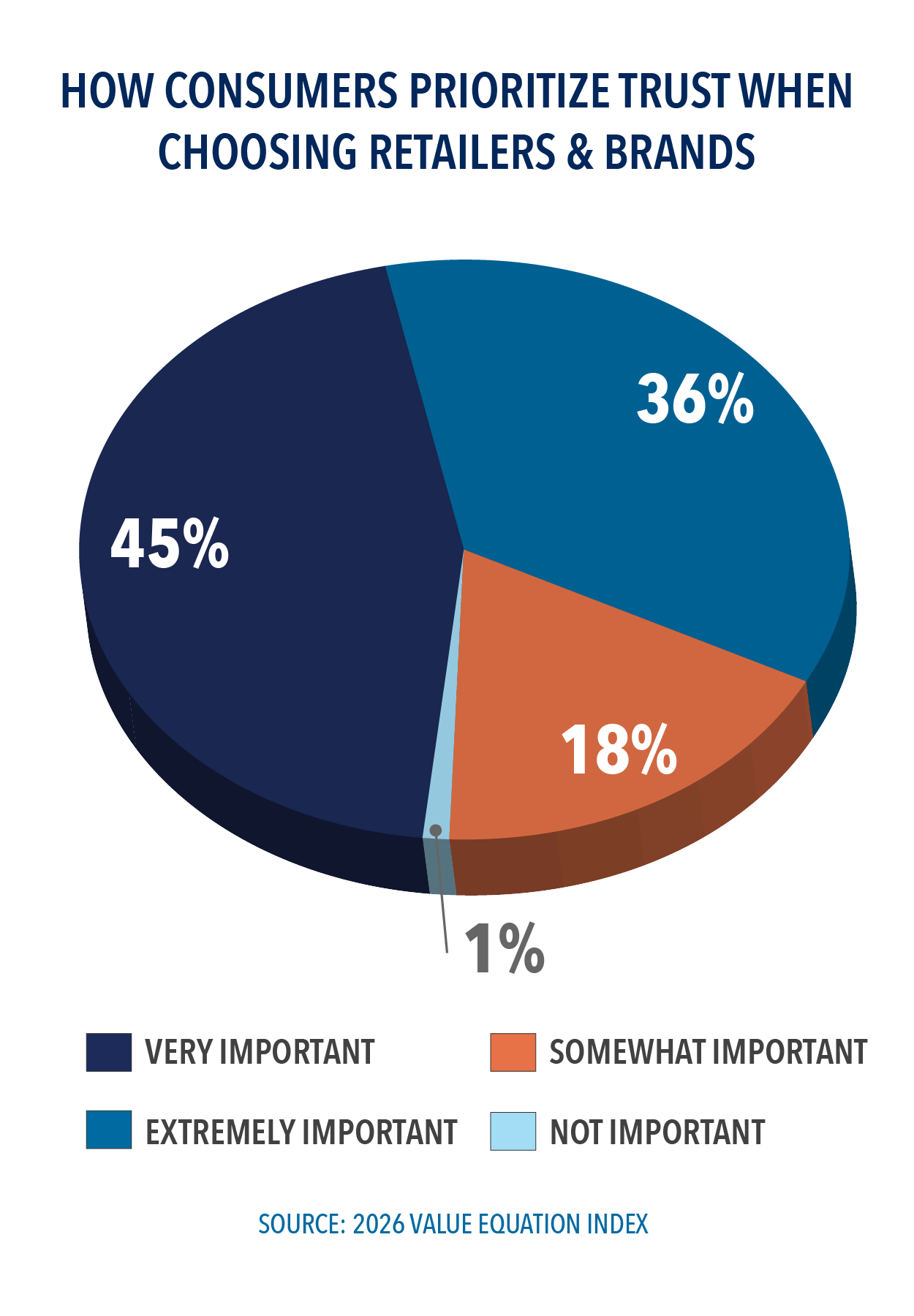
Trust has become even more important to purchase decision. Eighty-one percent of consumers consider trust in a retailer or brand very or extremely important when choosing a home or housewares product, compared with 75% in the previous Value Equation Index from 2025.
Trust extends beyond whether a company will deliver a product as promised. The Value Equation Index defines it through credibility, reliability, intimacy and self-orientation, using considerations such as honesty, dependable action, sincerity and customer focus.
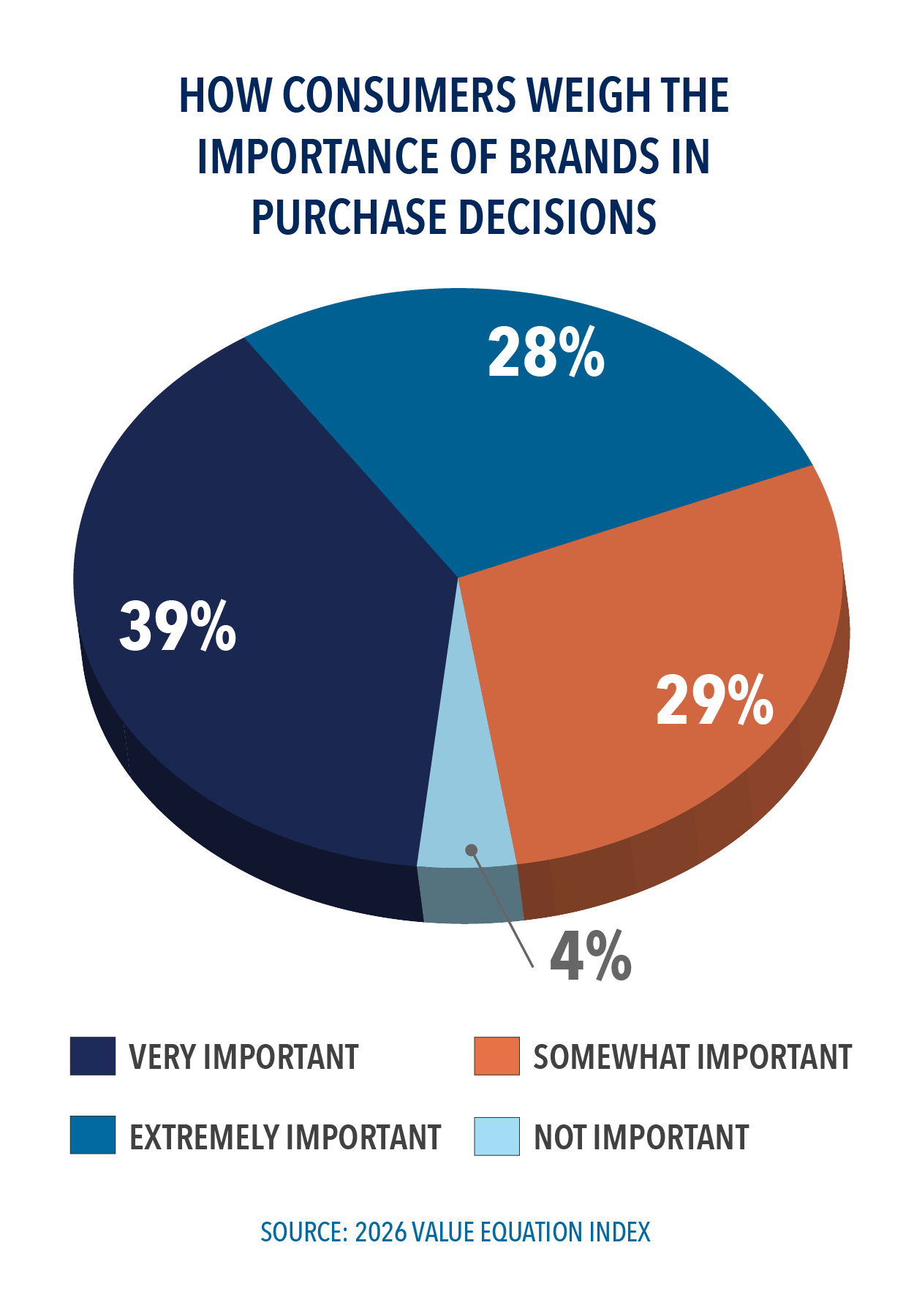
Brands are also gaining influence. Sixty-seven percent of consumers consider brands very or extremely important when shopping for home and housewares, compared with 50% in the previous index. Brand importance is particularly pronounced among Millennials, of whom 78% consider brands very or extremely important.
Quality is at the top when consumers consider the full range of purchase drivers.
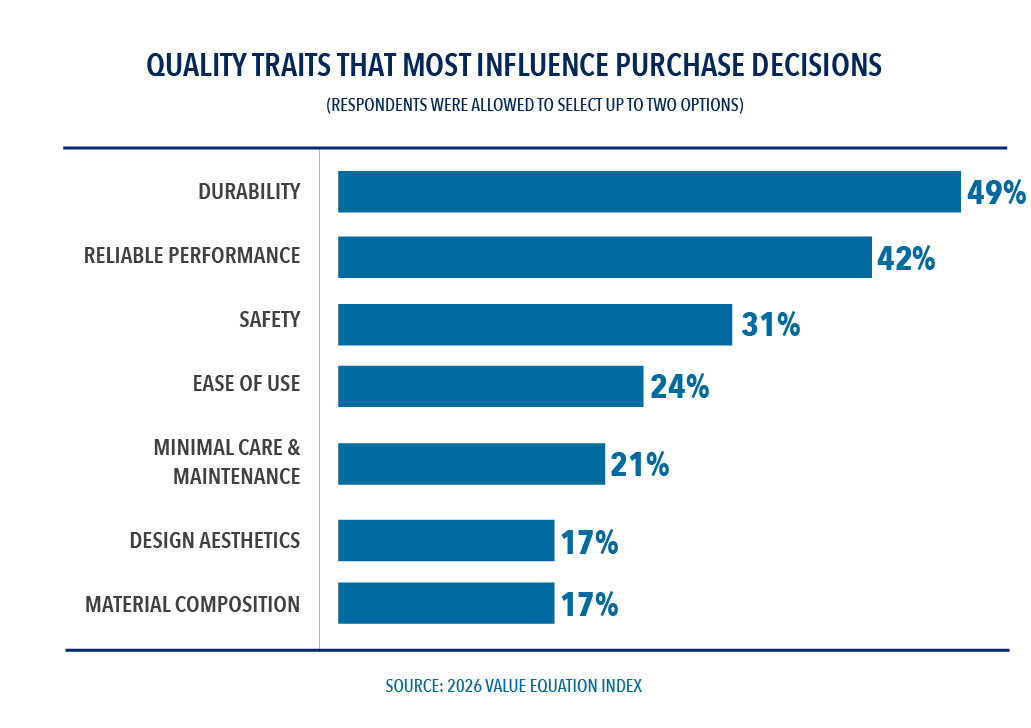
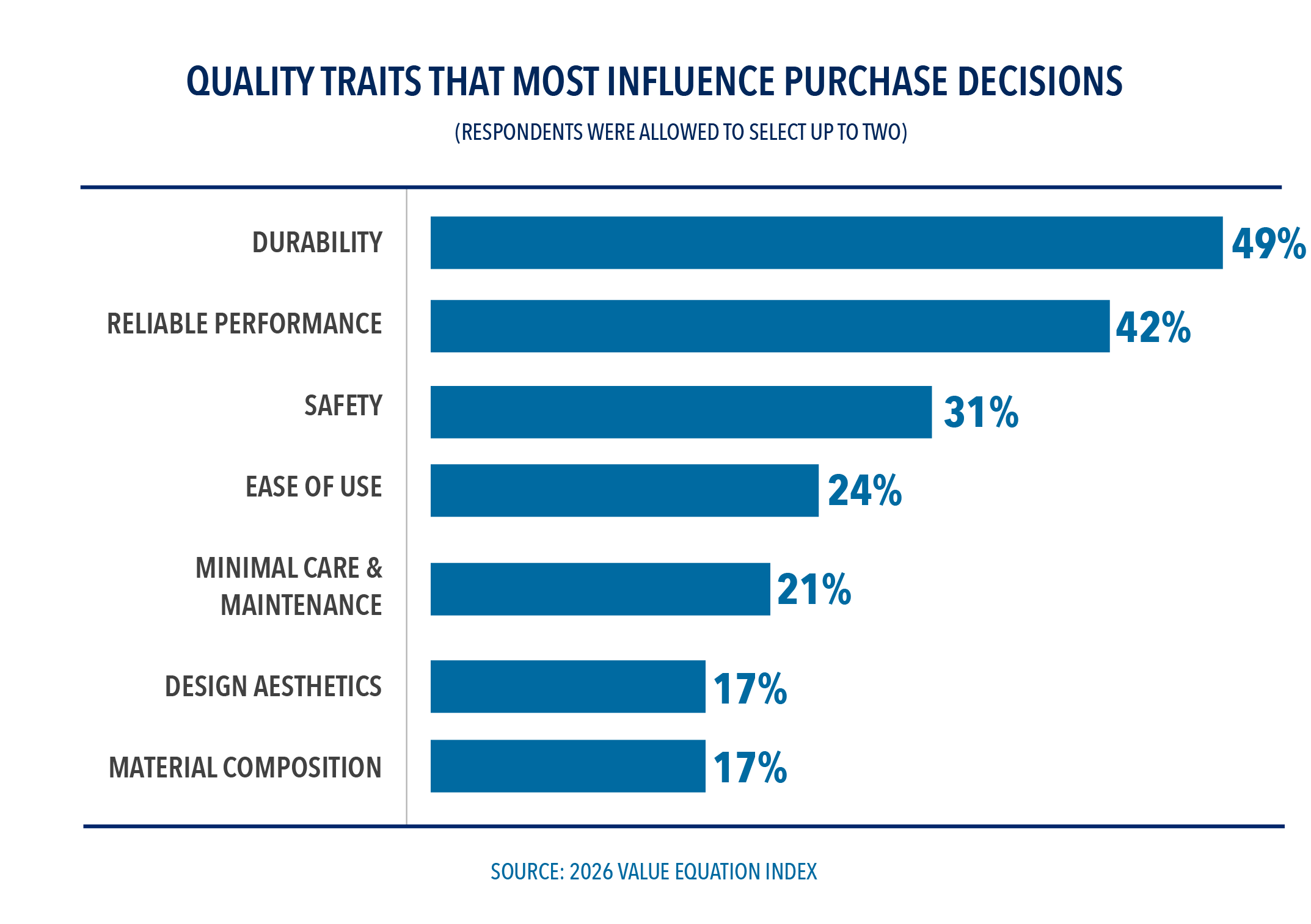
Durability leads among specific quality traits influencing purchase decisions, selected by 49% of survey respondents, followed by reliable performance (42%) and safety (31%). Demand for minimal care and maintenance reinforces the value consumers place on time. Safety has increased in the past 18 months, driven by Millennials, while durability is particularly important to Gen Z. Boomers place a greater emphasis on reliable performance.
Quality is at the top when consumers consider the full range of purchase drivers.
Durability leads among specific quality traits influencing purchase decisions, selected by 49% of survey respondents, followed by reliable performance (42%) and safety (31%). Demand for minimal care and maintenance reinforces the value consumers place on time. Safety has increased in the past 18 months, driven by Millennials, while durability is particularly important to Gen Z. Boomers place a greater emphasis on reliable performance.
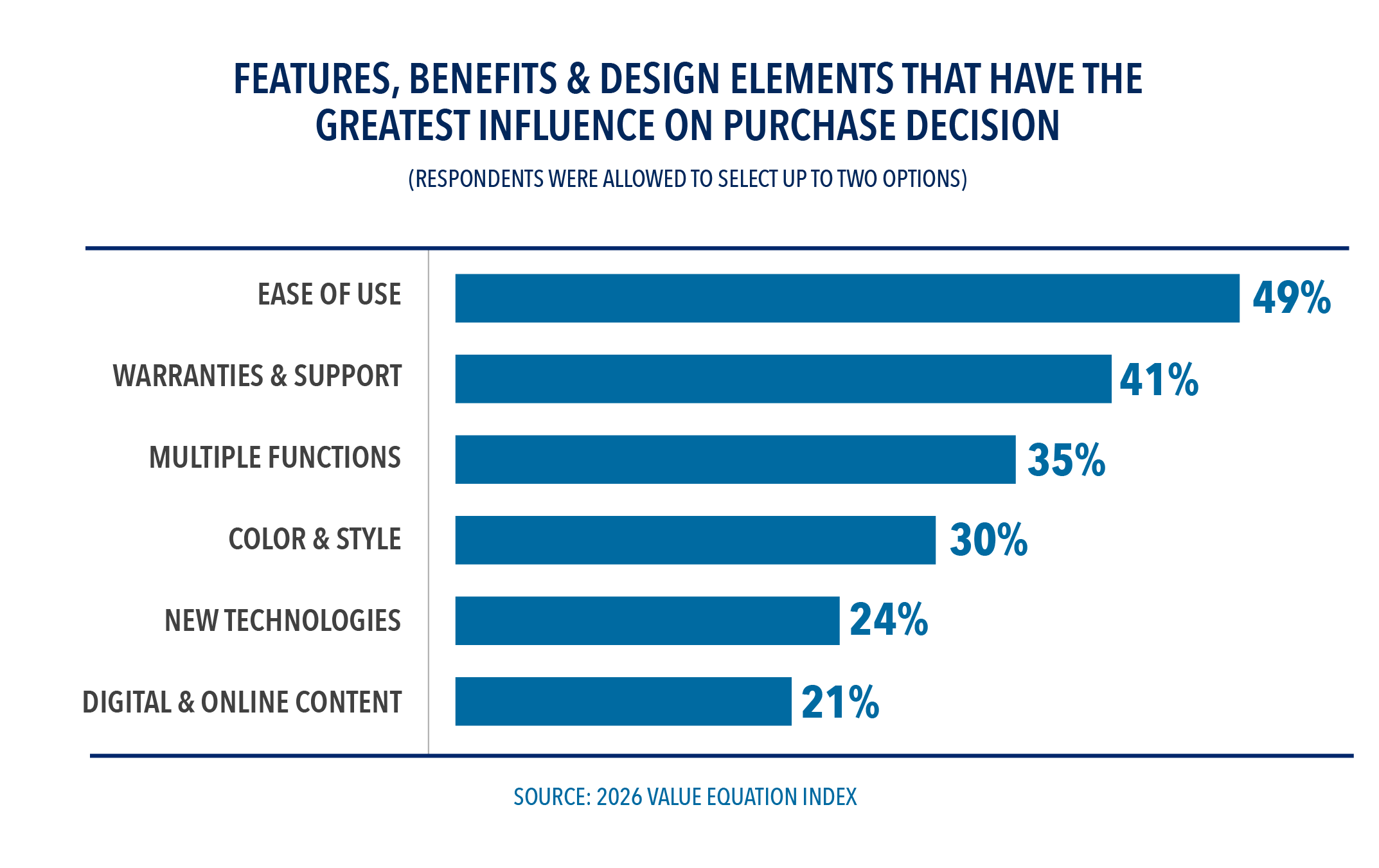
Ease of use, selected by 49%, leads among product features, benefits and design elements influencing purchase decisions, followed by warranties and support (41%) and multiple functions (35%).
Technology-related considerations are also gaining ground. The influence of digital and online content has increased 24% during the past 18 months, while new technologies have increased 15%.
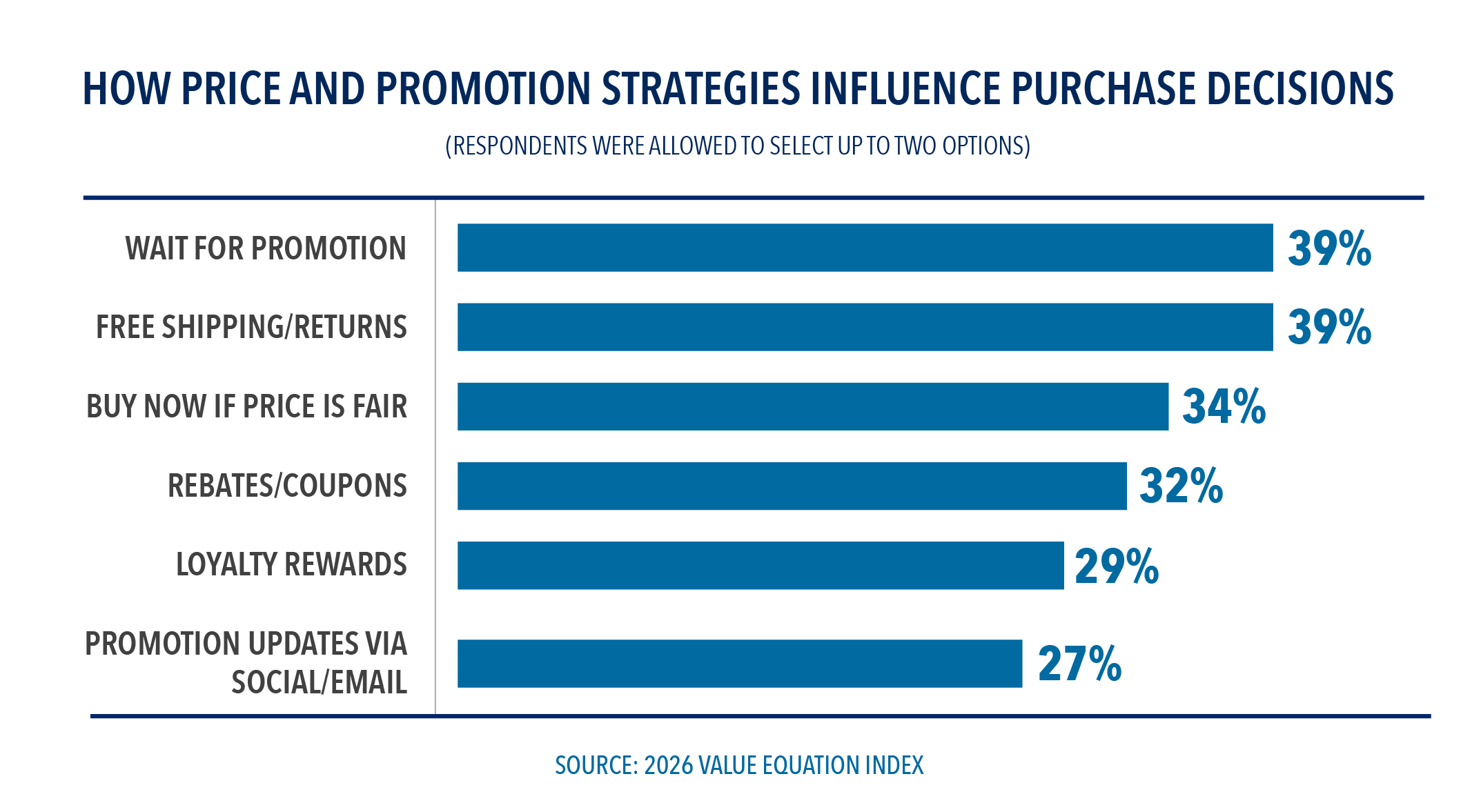
While price remains an important part of the equation, consumers are evaluating price in the context of the overall value they receive.
Thirty-nine percent of respondents indicated they will wait for a promotional period or seasonal sale before purchasing, while the same percentage prefers free shipping and returns even if an item’s price is slightly higher. Another 34% will purchase without spending significant time searching for promotions if the price seems fair.
Buying during promotional periods is the leading pricing behavior among Millennials. Free shipping and returns are a priority for Gen Z, while Gen X and Boomers are more likely to purchase without extensive comparison shopping when they believe the price is fair. The influence of promotional updates delivered through social media or email has increased 25% during the past 18 months.
While price remains an important part of the equation, consumers are evaluating price in the context of the overall value they receive.
Thirty-nine percent of respondents indicated they will wait for a promotional period or seasonal sale before purchasing, while the same percentage prefers free shipping and returns even if an item’s price is slightly higher. Another 34% will purchase without spending significant time searching for promotions if the price seems fair.
Buying during promotional periods is the leading pricing behavior among Millennials. Free shipping and returns are a priority for Gen Z, while Gen X and Boomers are more likely to purchase without extensive comparison shopping when they believe the price is fair. The influence of promotional updates delivered through social media or email has increased 25% during the past 18 months.
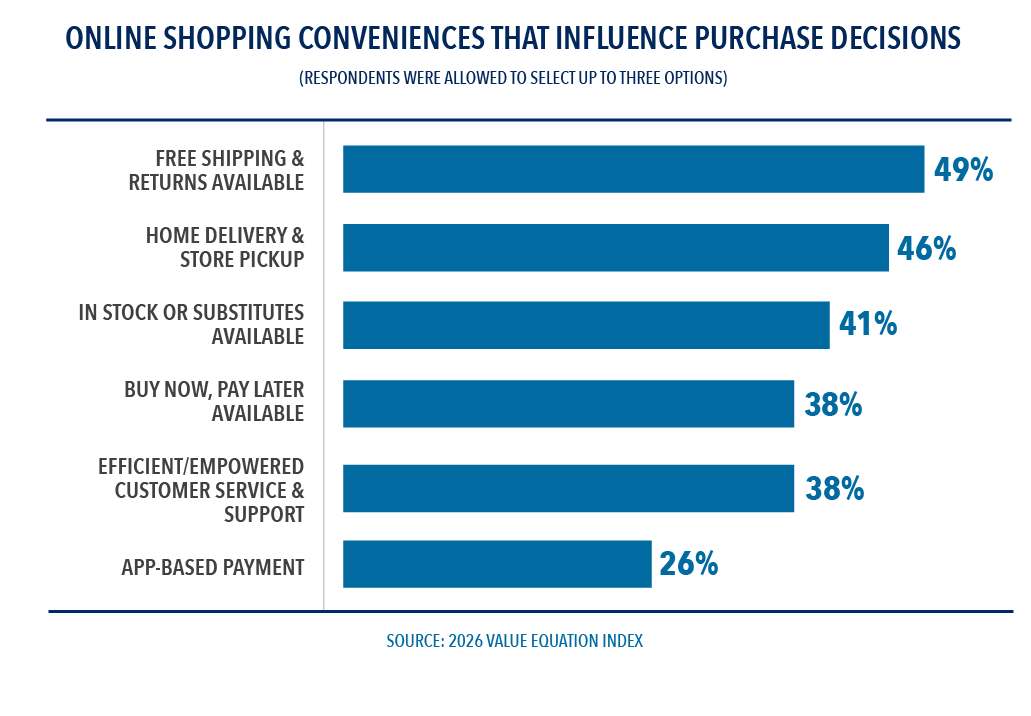
Convenience continues to expand beyond simply finding a product online. Free shipping and returns, selected by 49%, lead among online shopping conveniences influencing purchase decisions followed by home delivery and store pickup (46%) and in-stock products or available substitutes (41%).
Extended payment options and efficient customer service and support each influence 38% of consumers. Customer service is especially important to Millennials, ranking as their top convenience consideration and running 20% ahead of other generations.
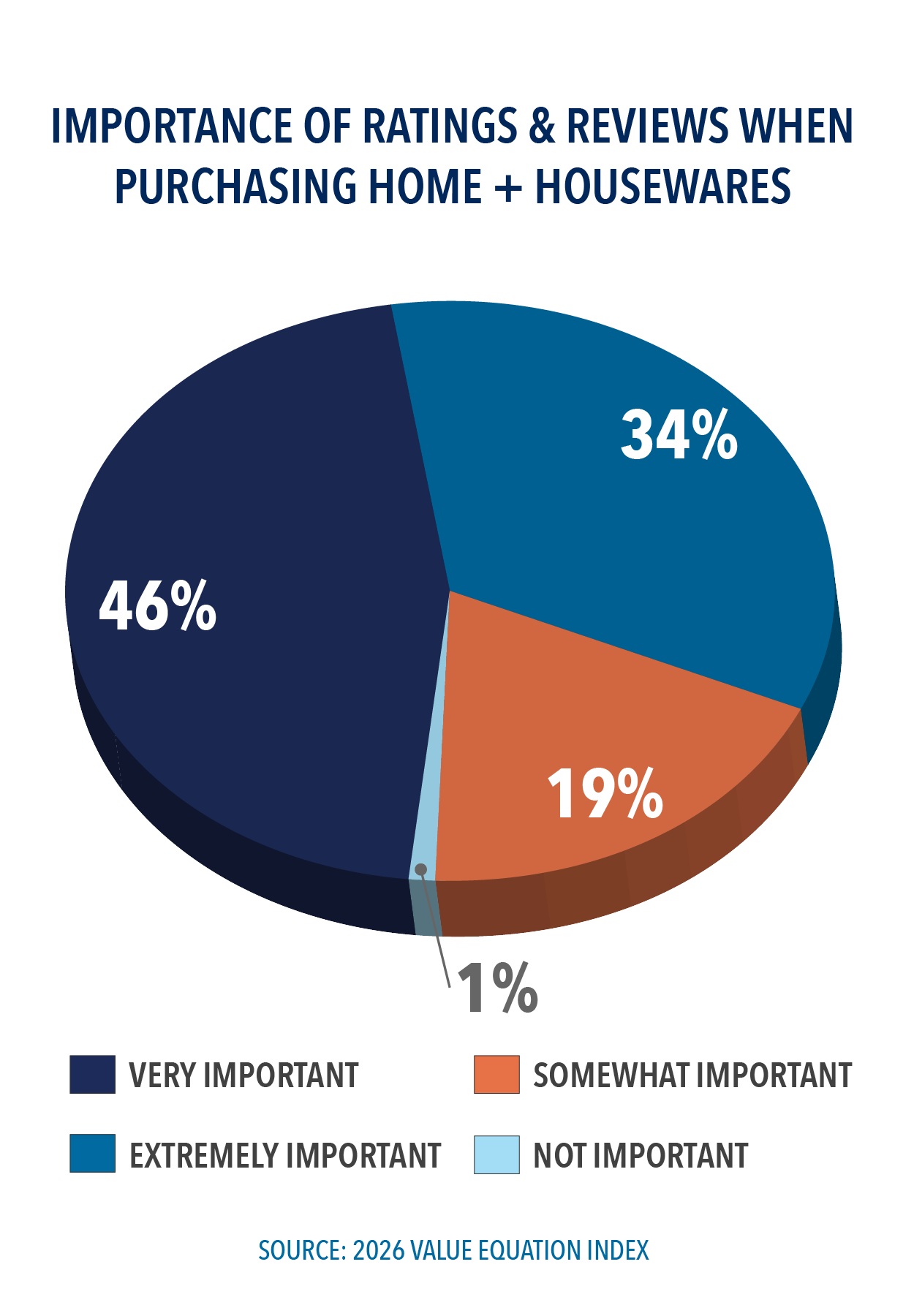
Ratings and reviews have gained influence as consumers seek reassurance before purchasing. Eighty percent consider ratings and reviews very or extremely important when purchasing home and housewares products, including 88% of Millennials. Overall, the importance of ratings and reviews has increased 12% during the past 18 months.
Ratings and reviews have gained influence as consumers seek reassurance before purchasing. Eighty percent consider ratings and reviews very or extremely important when purchasing home and housewares products, including 88% of Millennials. Overall, the importance of ratings and reviews has increased 12% during the past 18 months.
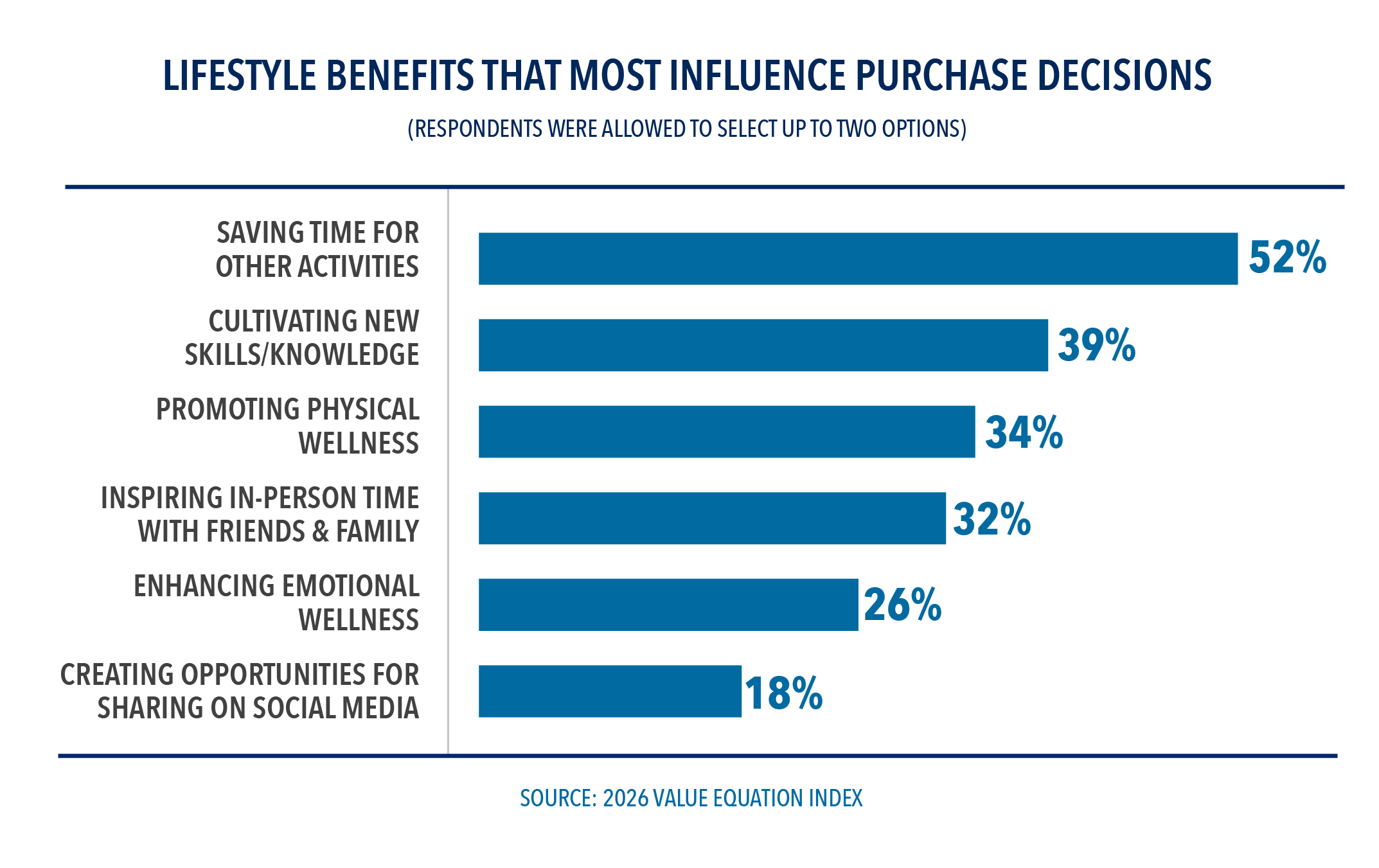
Consumers are also considering what a product can deliver beyond its primary function.
Saving time for other activities is the leading lifestyle benefit influencing purchase decisions, selected by 52% of consumers. Cultivating new skills and knowledge follows at 39%, while 34% cite promoting physical wellness, and 32% cite inspiring in-person time with friends and family.
Saving time is the leading lifestyle driver across generations, with Boomers outpacing other generations by 35%. Meanwhile, Millennials are 20% ahead of other generations when prioritizing products that inspire in-person time with others. Creating opportunities for sharing on social media ranks lowest on the listed lifestyle benefits at 18%.
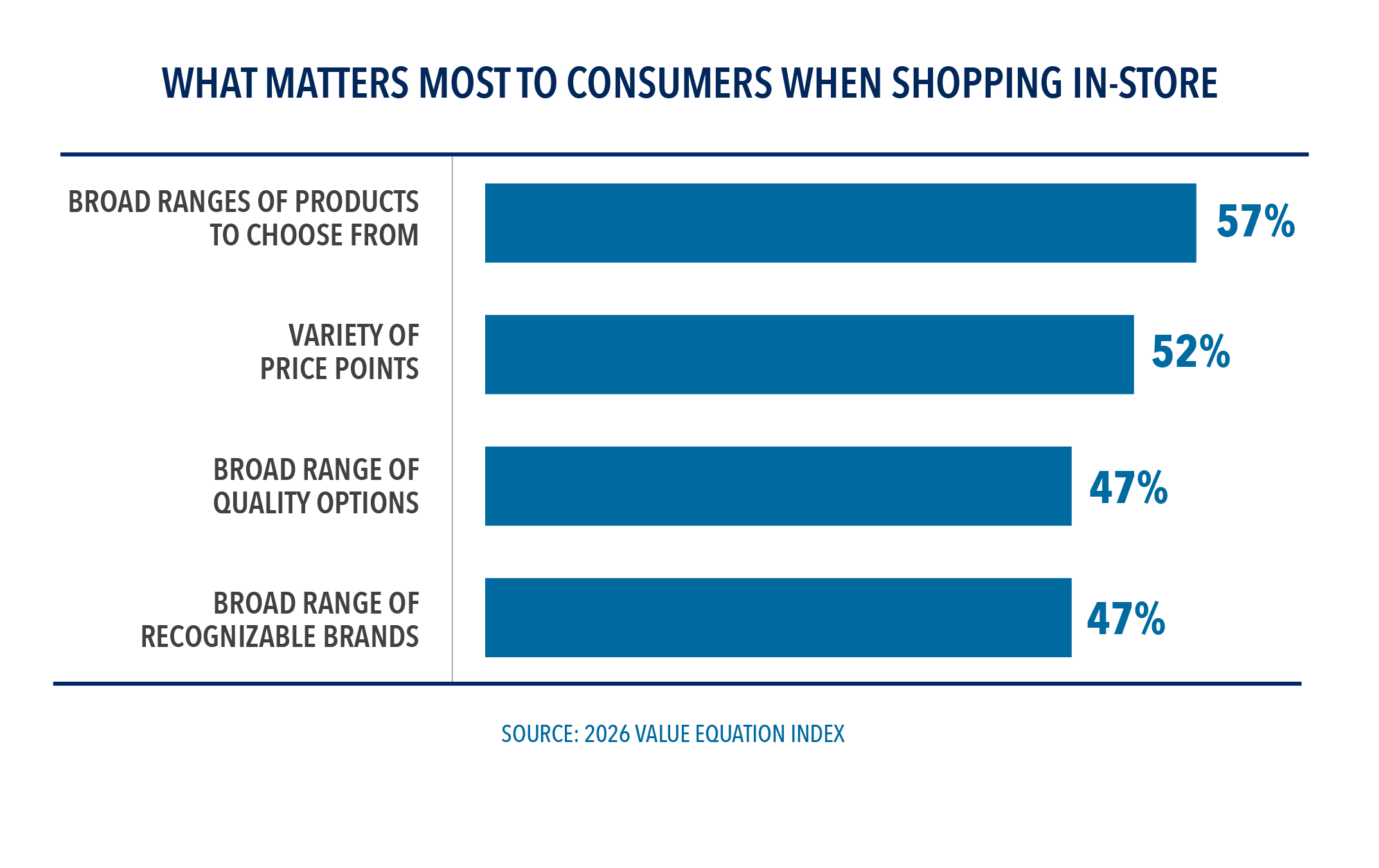
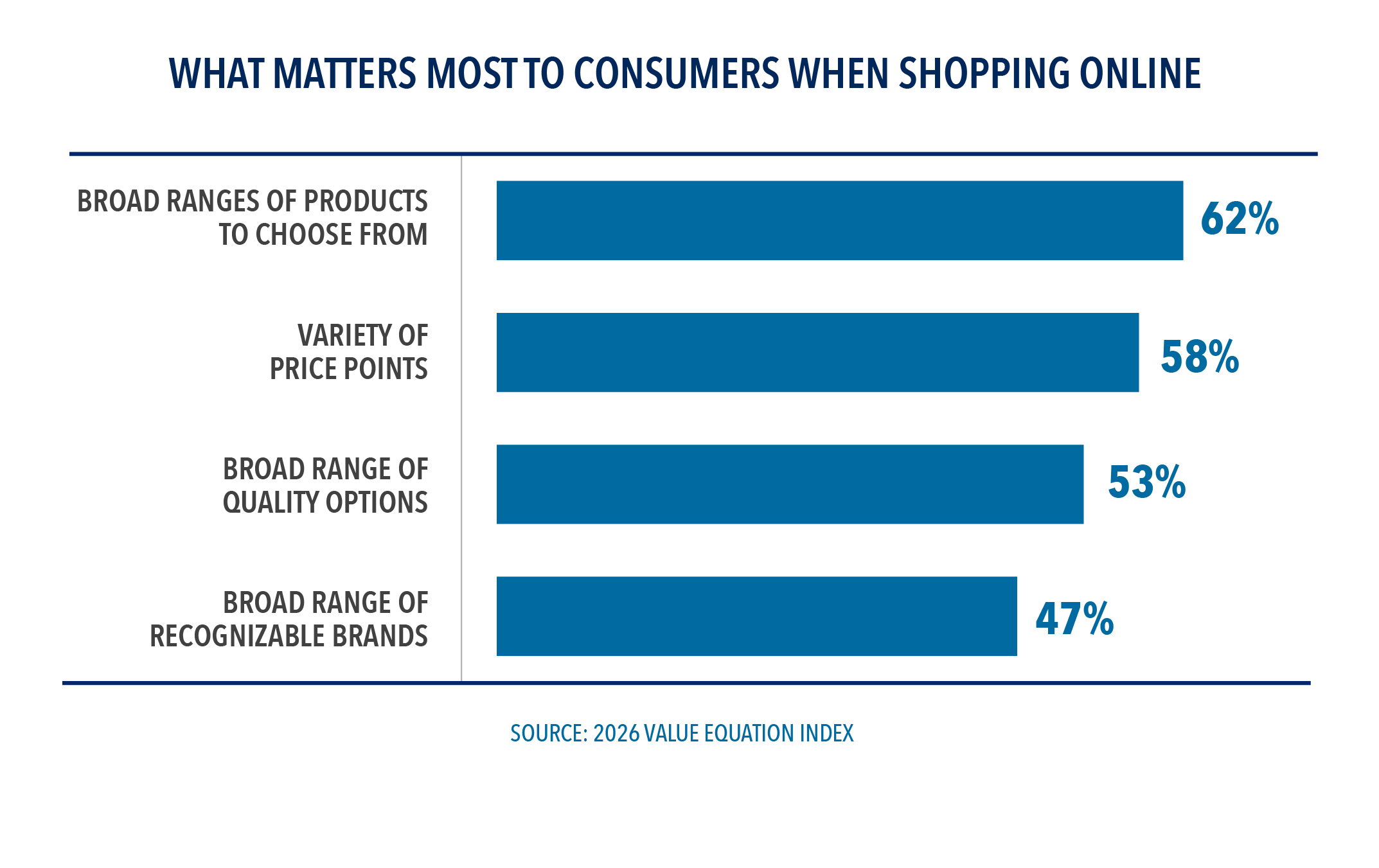
Selection remains a key part of the shopping experience whether consumers shop in-store or online.
A broad range of products leads in both, selected by 57% of consumers for in-store shopping and 62% for online shopping. Variety of price points follows at 52% for in-store and 58% for online, while a broad range of quality options was selected by 47% for in-store and 53% for online. Recognizable brands influence 47% of consumers in both environments.
Truth and Transparency: Consumer Expectations Extend Beyond the Product
Social and environmental responsibility continues to gain relevance as consumers consider what retailers and brands represent alongside what their products deliver.
The social responsibility of a retailer and a brand is very or extremely important to 62% of consumers surveyed, compared with 50% in the 2025 Value Equation Index. The figure rises to 77% among Millennials in this year’s index.
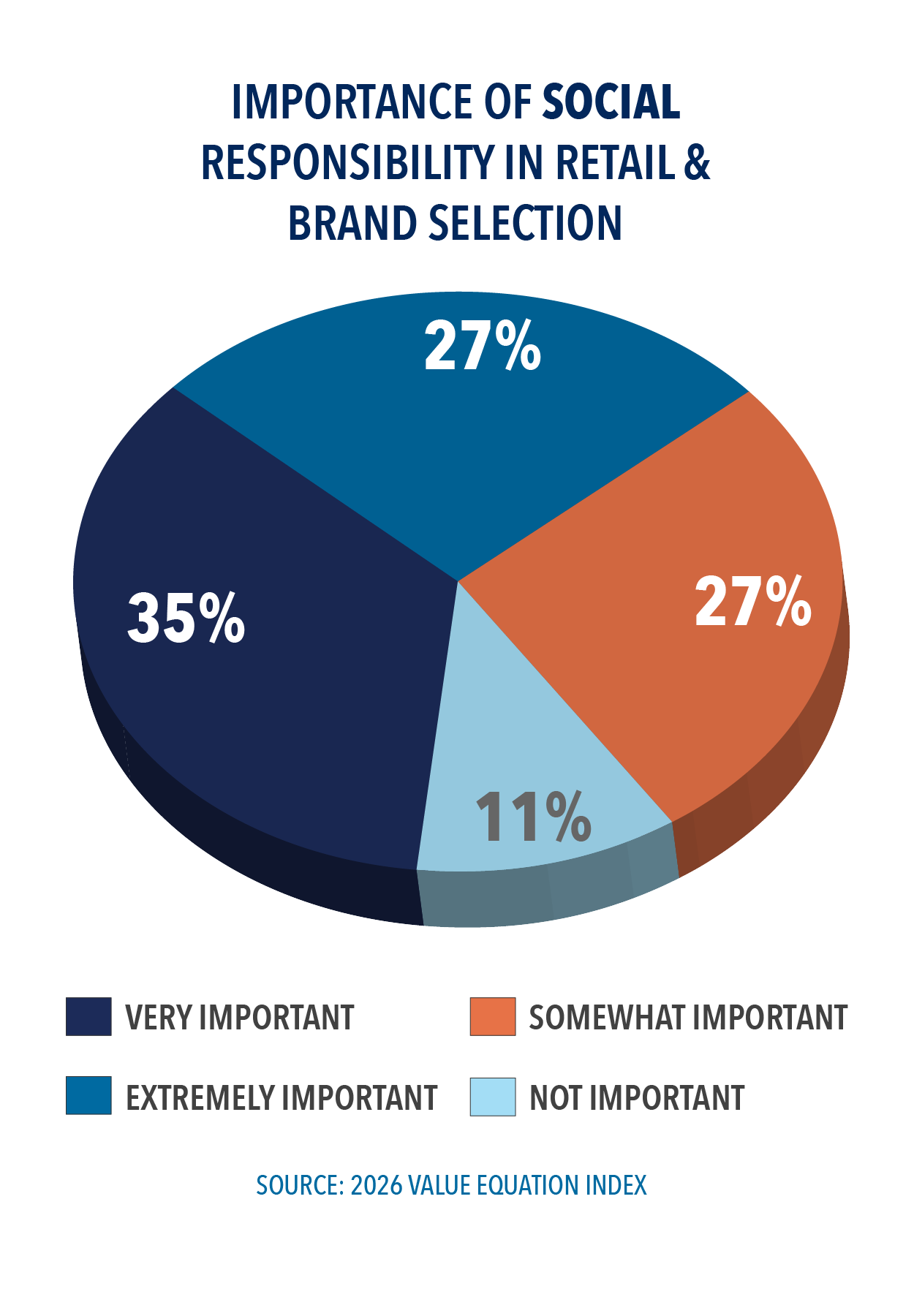
The social responsibility of a retailer and a brand is very or extremely important to 62% of consumers surveyed, compared with 50% in the 2025 Value Equation Index. The figure rises to 77% among Millennials in this year’s index.
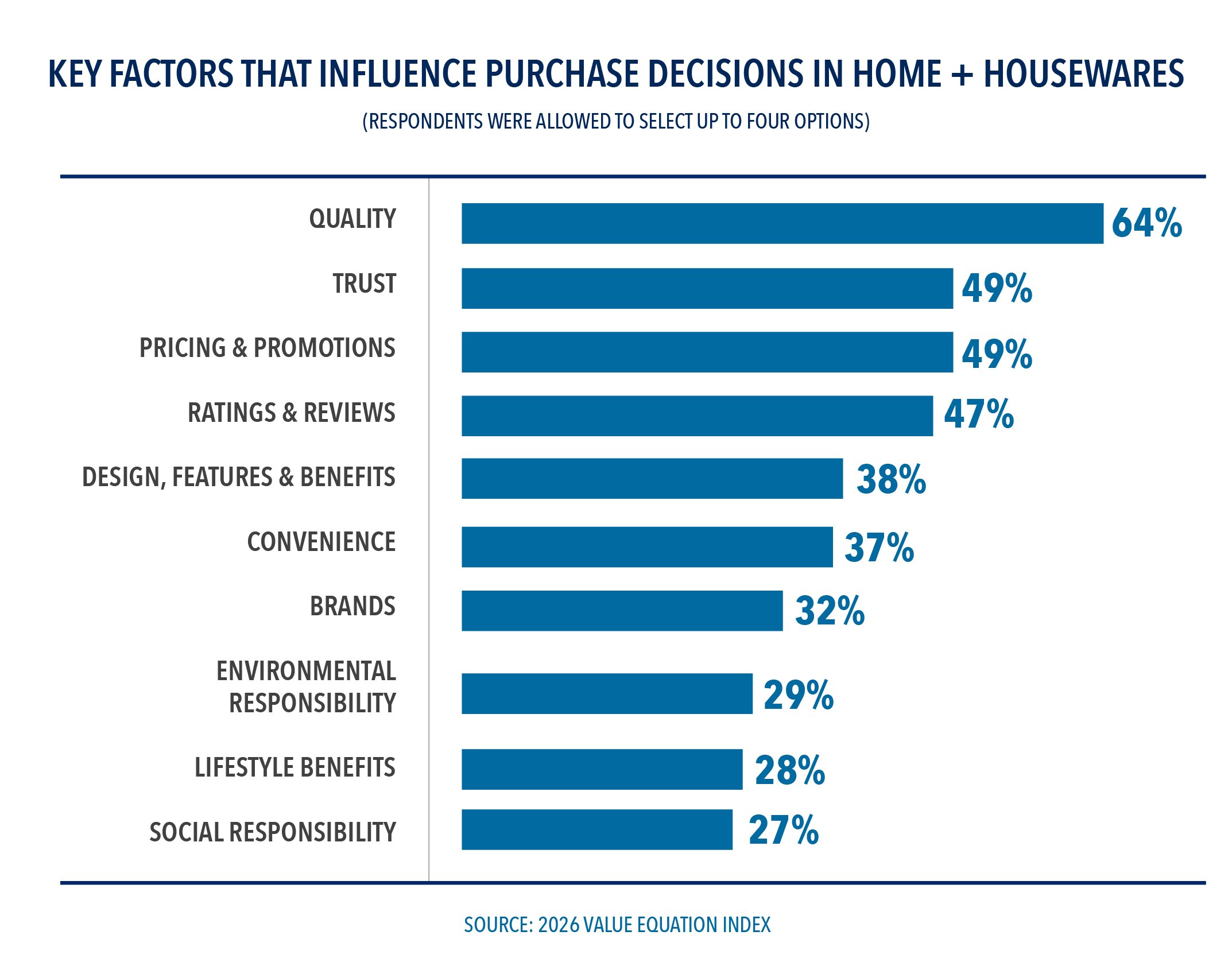
When consumers consider the complete value equation, quality is the leader, selected by 64% as one of the most important factors when deciding to purchase home and housewares products.
When consumers consider the complete value equation, quality is the leader, selected by 64% as one of the most important factors when deciding to purchase home and housewares products.
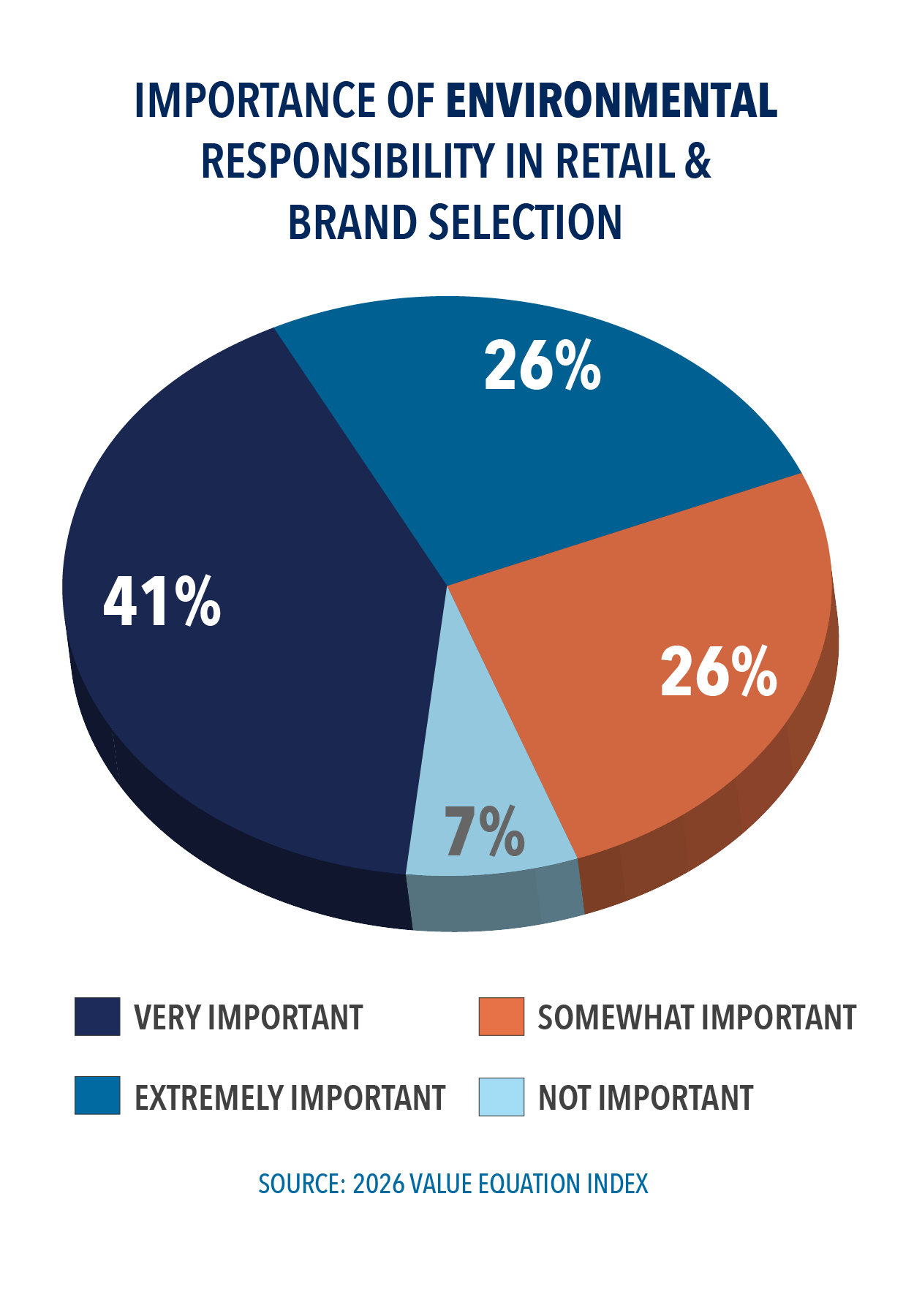
Environmental responsibility carries even greater weight. Sixty-seven percent of consumers consider a retailer or brand’s position on environmental responsibility very or extremely important, compared with 58% in the previous Value Equation Index. Among Millennials, the number reaches 79% in this year’s index.
Pricing and promotions and trust follow at 49% each, with ratings and reviews close behind at 47%. Design, features and benefits are selected by 38%, followed by convenience at 37% and brands at at 32%. Environmental responsibility, lifestyle benefits and social responsibility round out the list at 29%, 28% and 27%, respectively.
Quality remains the top purchase driver across generations, while the priorities that follow shift by generation.
The findings underscore how perceptions of value can change with consumers’ life stages, needs and priorities. For home and housewares suppliers and retailers, understanding those differences can help inform product development, marketing and merchandising strategies.
Value Equation Index Methodology: The 2026 Value Equation Index is a national survey of primary home and housewares product purchasers. The survey comprised 38 questions and garnered 950 qualified responses from U.S.-based consumers, aged 18 to 78. Respondents were screened to include primary household decision-makers for groceries, personal care, home maintenance, furnishings, supplies and services. The final sample reflected a gender-balanced mix (30% male, 70% female), calibrated against national statistics for household purchase influencers, and encompassed household incomes ranging from $50,000 to $200,000. Regional representation encompassed all U.S. regions, without any specific geographic balancing. Basic census balancing was applied to adjust the age distribution. The estimated margin of error is ±3% at a 95% confidence level.
View Other State of the Industry Installments: