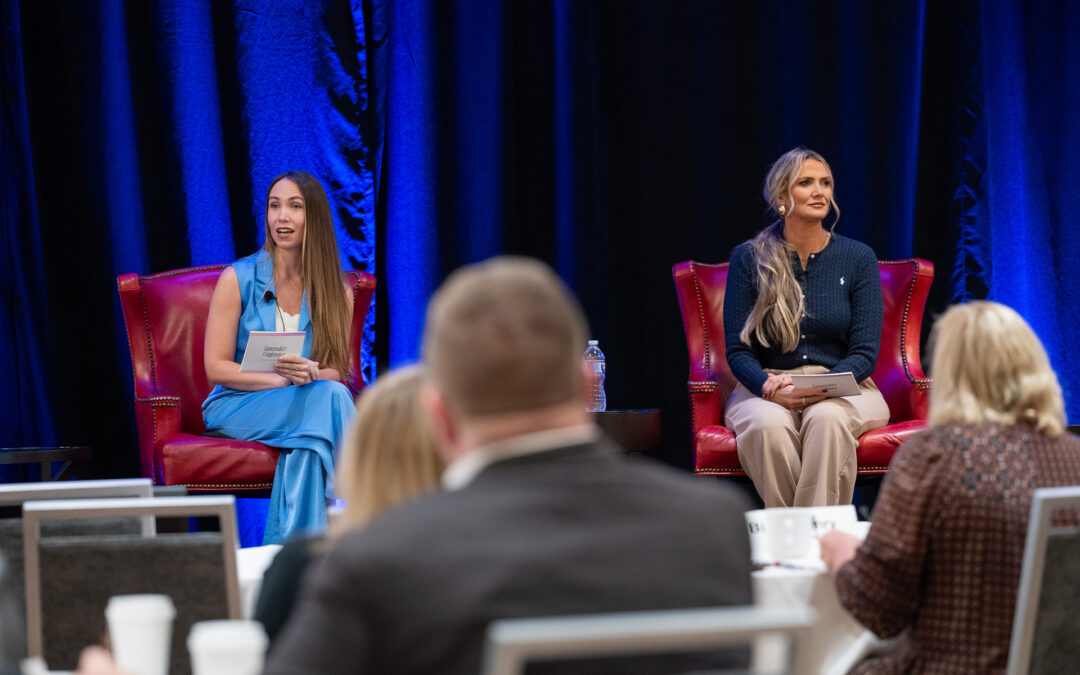
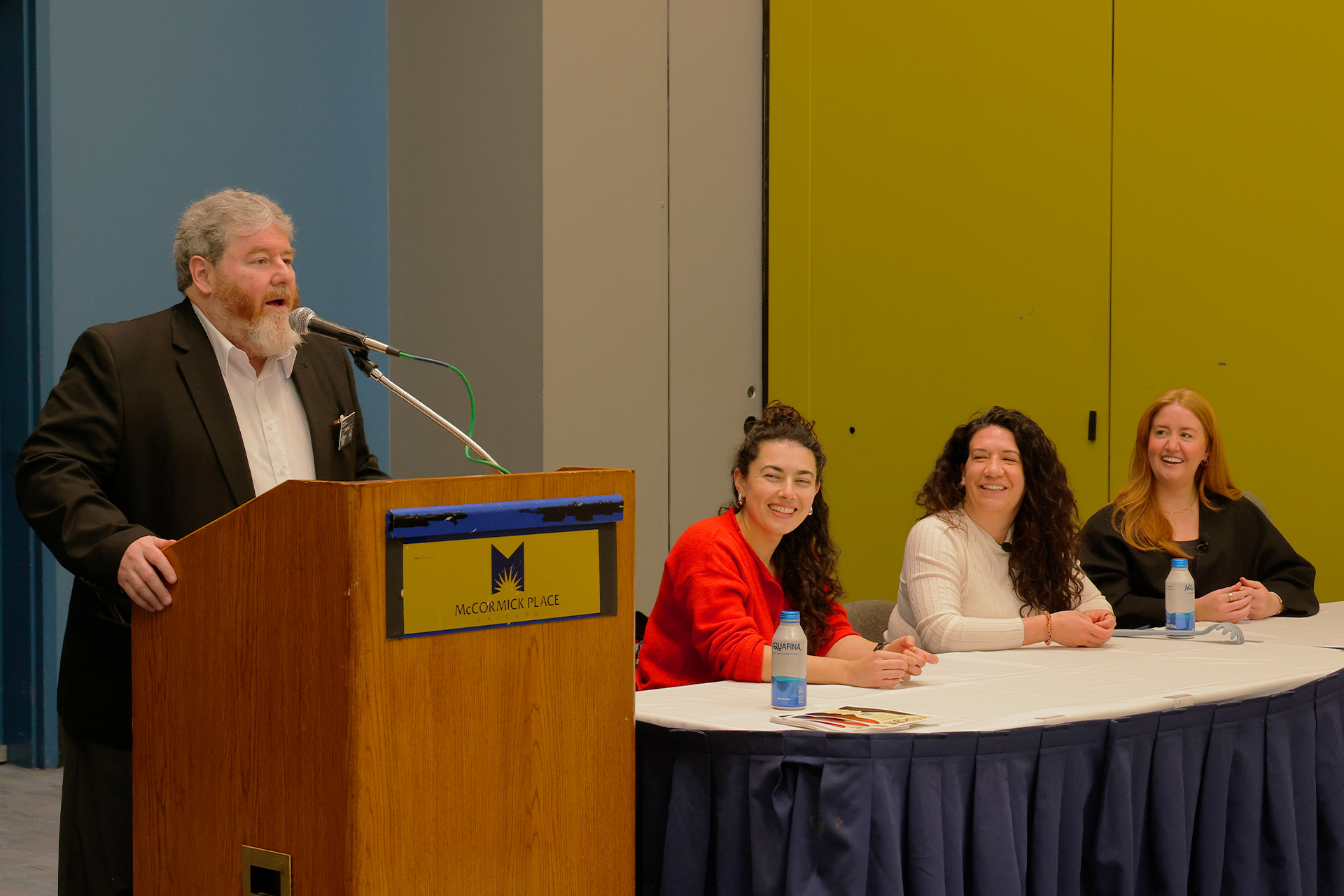
Sessions in the Inspiration Theater at The Inspired Home Show 2026 explored several forces shaping how home and housewares companies operate and grow, from leveraging lifestyle trend intelligence and navigating the evolving editorial commerce landscape to managing leadership challenges during periods of expansion and understanding best practices in brand licensing partnerships.
The discussions highlighted how businesses across the home sector can sharpen strategy, build stronger media relationships and position their organizations for growth through clearer leadership structures and new collaboration opportunities.
Earned Media Meets Editorial Commerce
In the Inspiration Theater session, “Drive Growth at the Intersection of Earned Media and Editorial Commerce,” Jessica Dodell-Feder (above seated left) of Yahoo Shopping, Nicole Papantoniou (seated middle), Director, Kitchen Appliances & Innovation Lab, Good Housekeeping Institute and Katie Maguire (seated right), Director, Shopping Content Strategy, Apartment Therapy Media, provided a view on the changing mediascape and the various vehicles it offers on the editorial and advertising side, in its various modern manifestations.
Dodell-Feder is a Yahoo Shopping category expert, one of a group with deep knowledge of specific topic areas, which, in her case, involves home and home-related topics. Yahoo category experts write about and review various products.
Papantoniou heads up the kitchen and cooking lab at Good Housekeeping. The cooking lab operated by Good Housekeeping covers everything related to food prep, eating, drinking, tabletop, large and small, and Papantoniou ensures that all the testing is done methodically, with the science facts before results get written up, writing in that reviews as well as in magazine contributions to the print and digital as well as social media.
At Apartment Therapy Media, which includes several publications, including the namesake operation, in addition to The Kitchn, Cubby, and Dorm Therapy, Maguire is director of shopping content strategy across the brand spectrum. In her job, she helps guide the strategy, working closely with editorial teams on best practices.
Dodell-Feder noted that Yahoo’s home page has 190 million unique visitors every month. Many consumers are already familiar with Yahoo Finance and its news and weather offerings, but it also publishes original content, which we share.
“That’s what I work on,” Dodell-Feder said. “Because it is also a tech company, we have the benefit of having powerful AI tools and powerful product tools to build a website and build a user experience that feels really personal.”
Good Housekeeping takes an approach to content that extends from its magazine traditions. Today, the content continues to include links and stories that engage people with Good Housekeeping where they want to be. However, it engages in affiliate marketing, providing links to various partners. The Good Housekeeping Seal is a widely recognized part of the overall operation.
“It’s a licensing partnership,” Papantoniou said. If a brand comes to us and says they want the Good Housekeeping seal, they can’t just get it, no matter how much they pay. It really needs to live up to our testing standards, because we actually put a warranty behind it ourselves.”
Once obtained, companies can use the seal in their advertising, marketing and packaging.
“Then, our award program is another way that you can submit your product to get tested,” she says. “If your product wins, you have the opportunity to license that also.”
Authenticity is an important factor in Apartment Therapy’s approach to media, which the company leverages in its operations.
“I was brought in to drive revenues because literally all my goals were in revenues,” Maguire said. “But, at the end of the day, we can’t be pushing products that don’t connect to our audience, so providing the best options for them. Because I have a pretty small team that just does commerce, and we’re working with the editorial team, who are really chasing traffic, so it’s a balance of making sure that they want to cover something. organically and editorially, but finding that way in for revenue.”
Even as ways of working with media evolve, editorial remains an opportunity, with content developed not to directly generate revenue but to support a company’s outreach to both specific and general audiences.
To get an editor’s interest, an appropriate pitch is critical.
Maguire said pitching has changed over the years, but a good pitch needs to be straightforward in intent. Editors get deluged with pitches, so it’s important that what’s on offer aligns with the editorial mission. In many cases, a product comes with a pitch so the editor can evaluate it individually or through a test process. Products also have an advantage if they’re consistent with trends that engage audiences. Of course, the advertising side of the business is interested in products that will get attention, but if a product isn’t consistent with the media channel, it won’t get the most positive reception.
When it comes to media pitches, Dodell-Feder said it’s important to build relationships, which can be facilitated by working through public relations professionals who are dedicated to creating those connections. But, critically, it’s important to understand the publication that’s the pitch target.
“I also think being thoughtful about the kind of information you send in a pitch is useful,” she said. “So what do I want to know as an editor: I want to know how much something costs, is it actually new or is it a new colorway? That might be fine, but I actually want to know what about this product is new, what makes it special. I want to see what it looks like.”
It’s important that images are clearly identified and illustrate the product. Photo dumps are rarely attractive to editors.
“Those are the things we want to know about,” Dodell-Feder. “When is it available? Is it available now, is it coming out in Q3 so we can’t write about it yet because we can’t link to it. So things like that, basic bits of information, are really helpful just when you get so many emails. What is relevant to me?”
Papantoniou added, “Making it as personal as you can is helpful at the same time we take our time reading these emails. Don’t pitch me fashion because fashion, then don’t follow up about it five times. That’s so frustrating. Also, keywords in your emails so we can search our inboxes, your brand and email signature that will show up in a search, which is really important.”
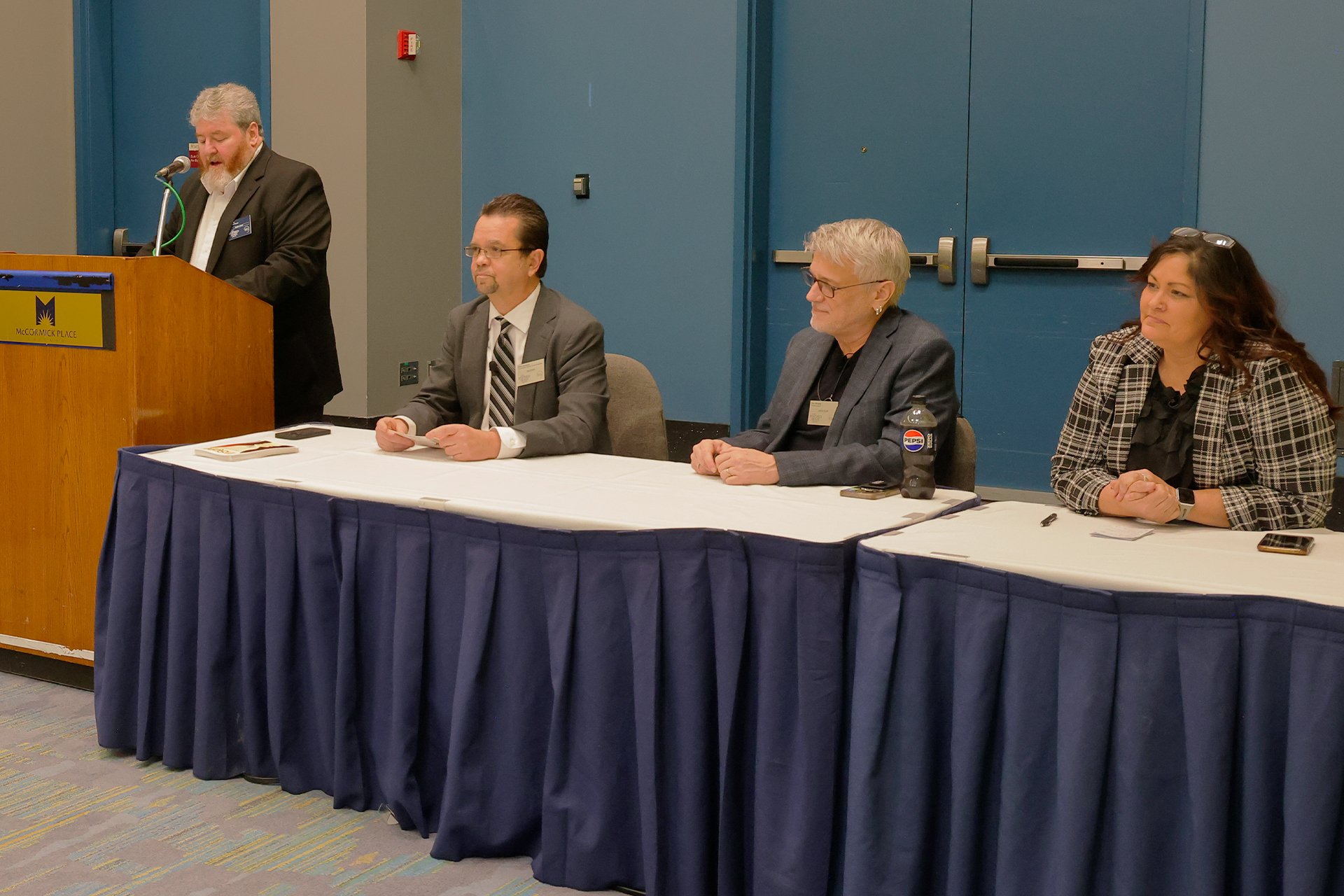
Peter Giannetti, Editor in Chief, HomePage News (seated left); Tom Mirabile, Prinicipal, Springboard Futures (seated middle); Dawn Evans, Creative Director, HomePage News InSight Trend Index (seated right)
Inside the InSight Trend Index: Turning Trend Intelligence Into Action
In the Inspiration Theater session, “Inside the HomePage News InSight Trend Index: A Curated Review of Home & Housewares Lifestyle Influences,” Tom Mirabile, of Springboard Futures, Dawn Evans, of the HomePage News InSight Trend Index, and Peter Giannetti, editor-in-chief of HomePage News, outlined how the InSight Trend Index can become a tool businesses can apply to get a broad view of developments in the market they can use to enhance engagement and differentiate their product assortments.
With trend highlights as examples, the panel discussed how the Insight Trend Index is presented and regularly updated on HomePage News as new themes emerge. Trends are continually evolving and shifting and playing out, and InSight will provide intelligence about where things are going throughout the year.
Giannetti said, “What separates InSight is its meaningful, actionable trend guidance. Action is the key here. If all we do is give you ideas, but you really don’t have a way of implementing them, then it doesn’t work.”
InSight, the panelists agreed, can help businesses develop concepts that quickly deliver products and programs aligned with what’s happening in the marketplace right now.
“It’s just important that people understand that no trend happens without a reason,” Mirabile said. “There are lifestyle cycles behind absolutely every style you’ve seen. Even nostalgia happens for a reason; if you see it, it’s new to the younger generations and it’s comforting to the older generations. The idea behind InSight is to look at trends that are going to be important for at least the next year. We wanted to put together something that had a lifespan to it.”
Giannetti noted, “I grew up in a marketplace that focused on features and benefits. And it was very transactional, especially features. How many buttons could you put on a blender? That had nothing to do with trend. It had to do with manufacturers attempting to add value by putting more features in a product or whether you need those buttons. We evolved to more of a benefits-focused conversation. Not too long ago, benefits were good, but benefits are also a narrow scope of the kind of utilitarian benefit of a product.”
The evolution has reached a point where consumers now have a level of exposure unlike any before, in the age of the endless aisle of goods and the tidal wave of influences.
“As an industry, we have to think, maybe stop thinking of just the features, just the benefits, and more of the story, that full story may include the features and benefits, but there has to be more to it. It has to be for me, for that individual person. They want to know that you’re tapping into what matters the most to them, and that’s the lifestyle approach to trend.
Business is looking for an opportunity in a challenging market where they’ve been hit with all sorts of hurdles along the way,” Giannetti continued. “How to create value is to start talking about their products a little differently and finding those paths to grow, having keen insight to trend, and being able to apply that and be able to see that in action, that’s what these companies should be taking away from it. That’s how it converts to dollars.”
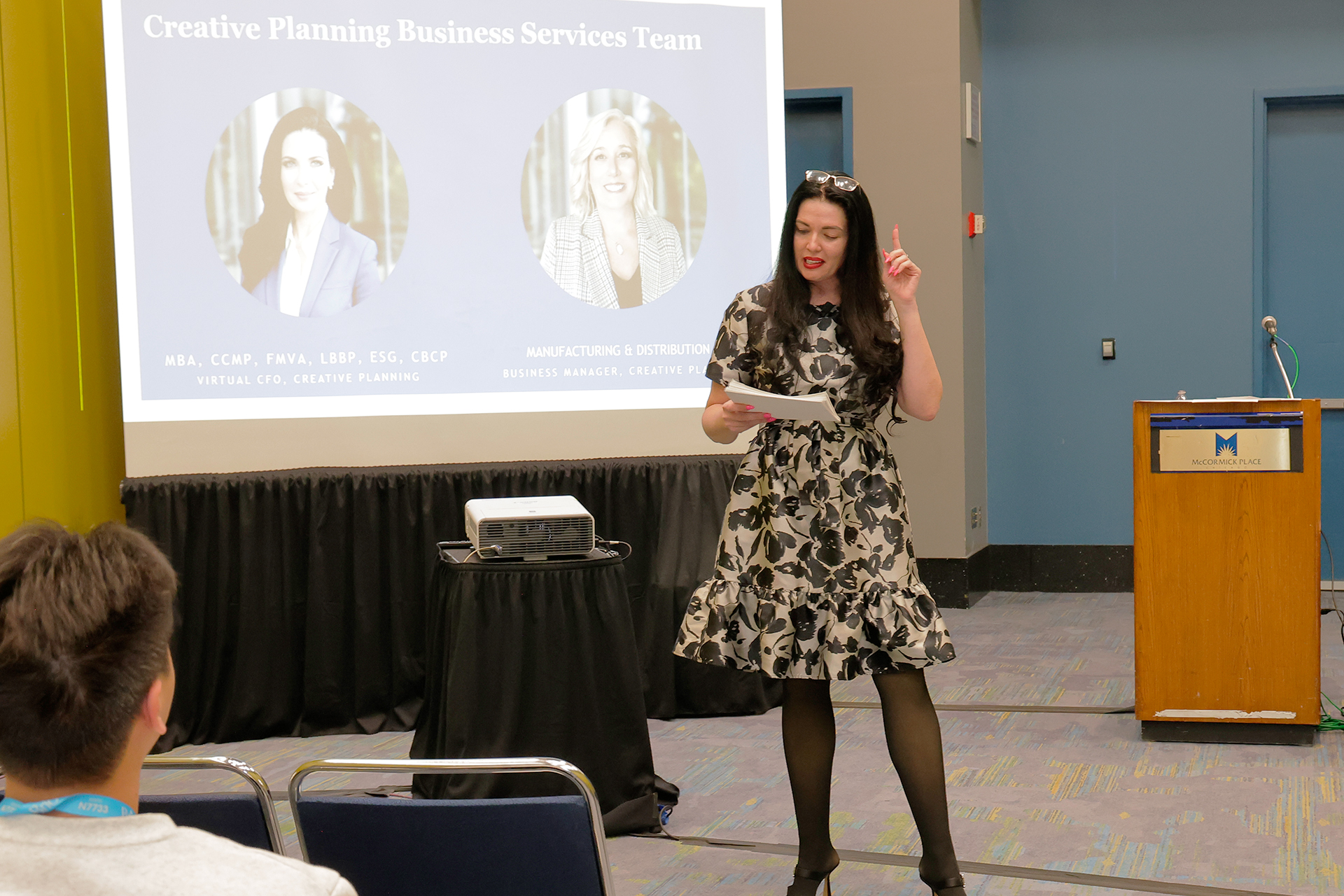
Kristie Sams, Creative Planning Business Services
Leadership Challenges When Companies Grow
In the Inspiration Theater session, “When Growth Breaks Leaders: The Invisible Leadership Failure Point and How to Get Ahead of It,” Kristie Sams of Creative Planning Business Services discussed how executives can struggle as operations grow and how to address the issue. In her Creative Planning role, she works with organizations, including the International Housewares Association, to support business. With the IHA, Sams is conducting an Operating Leaders Cohort for managers and directors to help them more effectively deal with growth issues, including rising cost pressures, tighter margins, execution risks, and related leadership challenges.
Sams makes the point that leadership development breakdowns can occur long before financial results show stress, so operators need to recognize early warning signs and respond to maintain decision quality and execution. The session explored what happens when growth strains and an organization struggle to advance.
“Growth rarely collapses because demand disappears,” she pointed out.
Rather, and even before it begins to show in financial results, leadership has begun to strain as it deals with the increased decision load that comes with an expanding business, which places greater demands and requires more and more timely decision-making from executives. During the session, Sams looked at decision weight and how it increases in a growing business.
She said businesses have to redesign leadership systems as they grow to distribute rather than centralize the pressure of decision-making.
“This is not about motivation,” she said. “This is about architecture. If your revenue is expanding, the real question is whether your decision structure is expanding with it.”
Sam’s said signs that leadership is being overwhelmed include having to repeatedly answer the same operational pressures, as more decision-making travels upstream, even as pressure on margins builds, yet it seems difficult to pin down. In addition, cash questions appear without an evident cause even as top leadership, including founders and CFOs, make more and more calls about the business themselves.
To come to grips with the situation, growing companies should define acceptable working capital bands, channel margin floors, set a promotional risk standard, establish a hiring trigger tied to gross contribution, and a debt tolerance range. These are among the topic areas that the six-month Operating Leaders Cohort, in collaboration with IHA, will address.
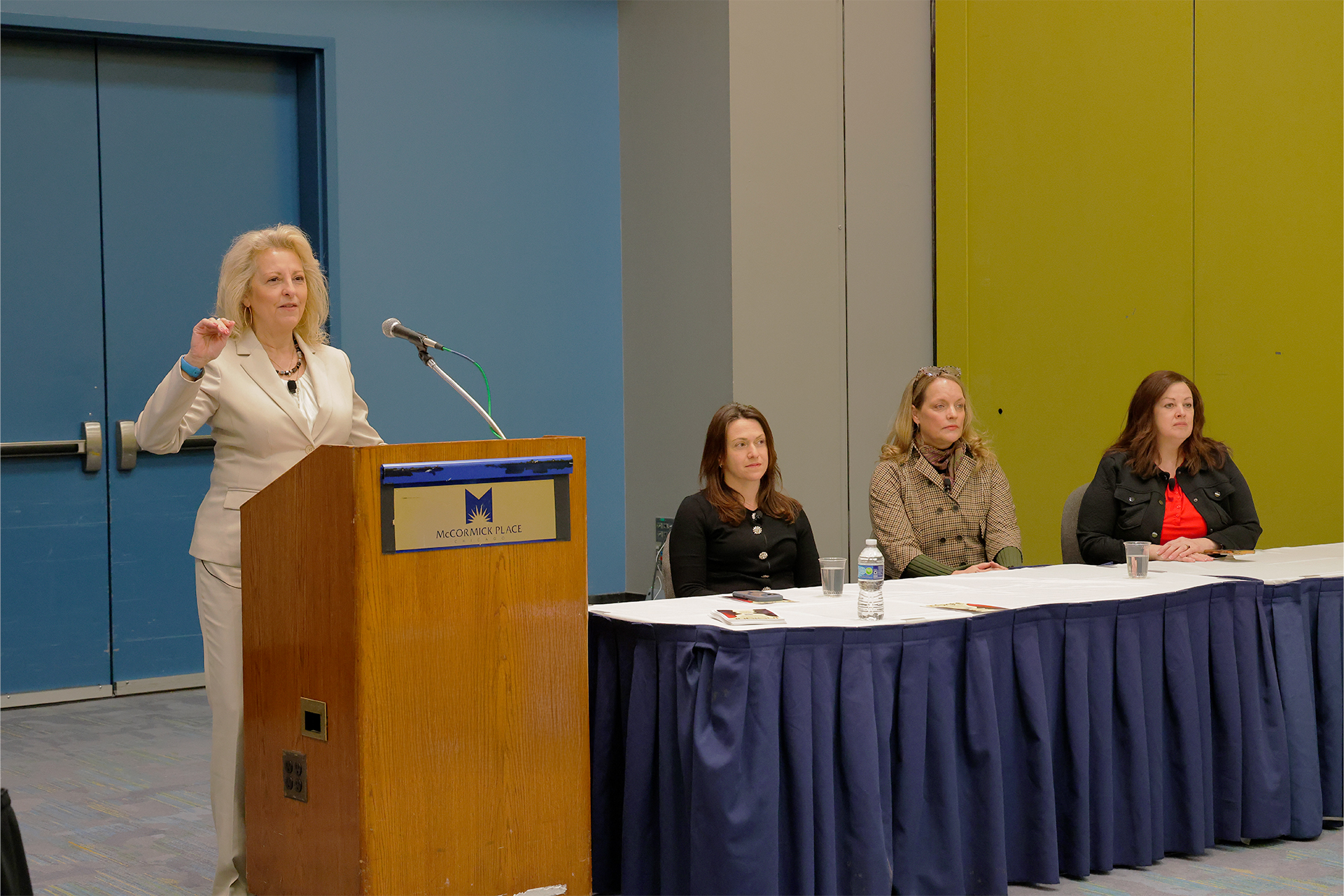
Kimberly Kociencki, CEO of SPLiCE (left); Karen Dertinger, managing director of licensing at The Ohio State University (right); Daniela Fleig, director of appliances brand licensing at Philips (middle left); Lori Murphy, vice president, SVP Worldwide (middle right)
Becoming License-Ready in Home + Housewares
The Inspiration Theater session, “Welcome to License-Ready: Best Practices for Winning Home + Housewares Partnerships,” took a view on the use of intellectual property and the opportunities and challenges that come with it.
The session ran as the SPLiCE Licensing Hub made its debut at the Inspired Home Show. A partnership between the International Housewares Association and the Society of Product Licensors, Committed to Excellence, the hub was designed to connect retailers and product suppliers with brands interested in licensing deals.
The session included moderator Kimberly Kociencki, CEO of SPLiCE, and panelists Karen Dertinger, managing director of licensing at The Ohio State University; Daniela Fleig, director of appliances brand licensing at Philips; and Lori Murphy, vice president, SVP Worldwide. They discussed how retailers and brand owners can better understand what it takes to be license-ready. With that, they can prepare to turn licensing from an interest into a business that generates repeatable deal flow.
Licensors have a strong sense of what makes for a good deal for the provider and the firms they work with as partners. Dertinger said Ohio State has a core licensing business in apparel and footwear, and she noted that the opportunities are broader, with incremental partnerships outside that core attractive.
“It’s really not doing any of our partners well if we just keep continuing to add the same types of licensees and products, Dertinger said. “We’re really looking at what’s incremental, and it could be new retail, distribution, it could be new products, it could be a branded experience.”
Murphy said she looks for companies that already have strong products and a passion for their brands, strong financial health, the ability to live up to the licensor’s brand standards, and a deep understanding of their own businesses. SVP Worldwide includes such banners as Singer, Husqvarna, Viking and Pfaff in its portfolio.
“Knowing your products and knowing your customers, that’s where the strength comes in with licensees that we don’t have,” Murphy said, “which is why we’re licensing in that space.”
For her part, Fleig said that at Philips, she’s looking for alignment.
“We are looking for an extension of the brands,” she said. “For us, our licensing is not an opportunistic, transactional experience, but it is long-term alignment. It needs value; it needs to be an extension of our core values. And, with the financials and core competencies in place, we can begin a partnership to deliver new propositions and value to customers. In our experience, that’s core for success.”
For Ohio State, the key to licensing is lifestyle and how people passionate about the school can bring that feeling home beyond gameday. As such, Dertinger is looking for licensees in segments such as kitchen and baking. Philips wants to consider product categories related to its core, Fleig said, which can include electronics, home and health.
At SVP, fabric care is an area viewed as ripe for licensing, as well as major appliances, such as washers and dryers, in addition to textiles, furniture, small appliances and crafting.
Kociencki said SPLiCE can work with companies new to licensing to help them determine what might fit and be advantageous.
“SPLiCE is a non-profit trade association,” she said. “We are not brokering deals. We are not looking for any royalties, any percentages. We are truly vested in building the licensing community. We’re very purpose-driven to continuously improve brand licensing, collabs and LTOs, which are limited-time offerings. What we want to do is build the overall ecosystem.”