Bed Bath & Beyond executive chairman Marcus Lemonis announced in a letter to shareholders that he is assuming the role of CEO as he laid out a larger strategy for the company that includes financial and home-building ties, as well as the possible pursuit of acquisitions.
Now executive chairman and CEO, Lemonis’ previous designation was executive chairman and principal executive officer. He recently stepped away from the leadership role at Camping World, which he co-founded, although he remains an active investor in the firm.
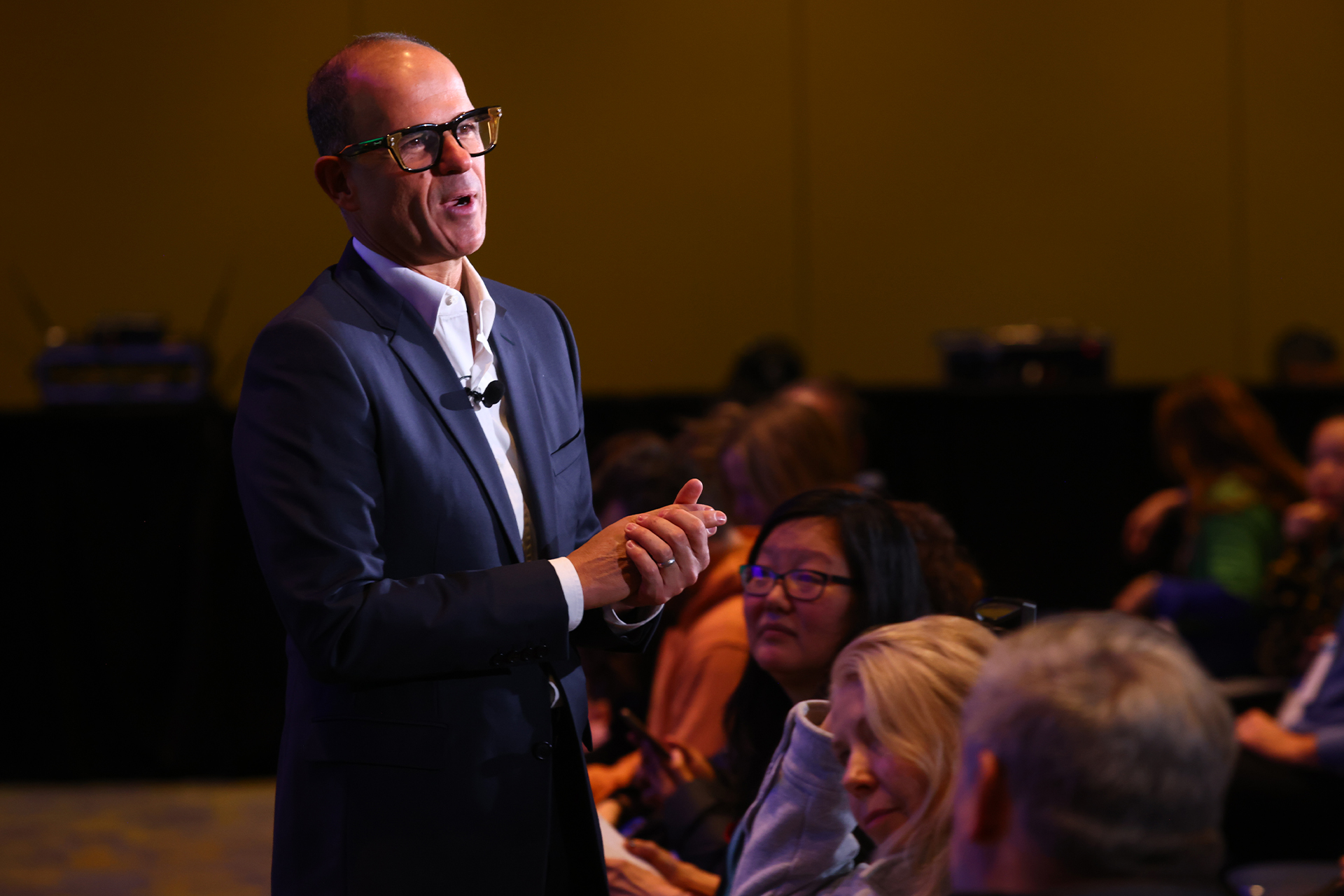
Lemonis (pictured above) explained in the letter that the Beyond part of Bed Bath & Beyond’s name had been vague and the assumption was that it referred to home goods beyond bed and bath. Now, he stated, Beyond “means something far more than retail. It stands for our commitment to support the family, the four corners of their property and the four walls of their home. It includes providing Beyond home products and services, Beyond home operating systems, home transaction platforms, Beyond home financial and protection products and home renovation and maintenance programs.”
Bed Bath & Beyond already has been assembling a portfolio that includes such retail banners as Bed Bath & Beyond Home, Kirkland’s Home, buybuy Baby and Overstock, as well as home-related services. Yet, the letter served as evidence that the company’s strategy will be broader than previously detailed.
Lemonis said the reason behind his taking on the Bed Bath & Beyond CEO role is “simple, yet ambitious. I want to make owning, living in and caring for a home easier, less expensive and more rewarding for all. We serve both the individual and the physical home, sometimes simultaneously, sometimes independently. I have always felt that home ownership is a bedrock of the American Dream. Whether someone is renting their first apartment, living in student housing, buying their first home or settling into a forever home, we want Bed Bath & Beyond to be associated with making those journeys more achievable, more affordable and less overwhelming.”
Lemonis noted that the costs associated with home ownership have risen in the United States. The circumstances as they’ve evolved have given Bed Bath & Beyond the opportunity to “expand outside of purely transactional retail into revenue sources such as home services, home transaction platforms, home staging and improvement, protection and financial tools.”
In that case, Bed Bath & Beyond will be able to prosper despite the cyclicality associated with the home sector.
Bed Bath and Beyond is reemerging as what Lemonis called the “Everything Home Company,” shaped by customer needs and lifestyles. The value created by a home isn’t just about the structure but also everything associated with its lifecycle, including furnishing and maintenance, insurance, financing, improvement, and, finally, moving on to the next dwelling, he said.
“Our strategy is built around serving the home as a living platform or operating system, and the customer as the evolving holder of that asset,” Lemonis stated. “We create loyalty with customers by connecting every part of their home life through technology, making life simpler, more affordable and securely connected over time with blockchain.”
The strategy and company organization, Lemonis noted, rest on three pillars: the first is a combination of omnichannel, retail, and commerce; the second is a combination of digital, financial, insurance, and blockchain services; and the third is a combination of Beyond Home platforms and Beyond Home OS.
He labeled pillar one — omnichannel, retail and commerce — “The Relationship Engine.” Omnichannel commerce will function as a bond with consumers, generating frequency of interaction with Bed Bath and Beyond. Then, an evolving physical store portfolio operates as the highest-value point of engagement, he said.
“Customers acquired in stores demonstrate greater loyalty, repeat behavior and tenure, reinforced by legacy data from Bed Bath & Beyond and buybuy BABY, and early performance at Kirkland’s,” Lemonis said. “We will execute this strategy through a combination of company-owned stores and an asset-light franchise and international licensing model.”
Pillar two — digital, financial, insurance and blockchain services — is set to create high-margin, recurring revenue that reduces the effects of housing cyclicality while making homes easier to finance, protect and maintain, according to Lemonis. It will be AI-driven and incorporate digital and blockchain platforms, including the affiliated tZERO operation, with regulatory advantages, licenses, patents, and technology aligned to make Bad Bath & Beyond a market-leading infrastructure platform. The second pillar will also integrate home warranty, product warranty, property and casualty insurance, umbrella insurance, shipping insurance, home maintenance programs, credit cards, financing tools and mortgage-related components.
Pillar three — Beyond Home platforms and Beyond Home OS — will focus on moments that matter most financially in the home lifecycle, when consumers buy, sell, finance or tokenize, renovate, insure, process title, or unlock liquidity from their homes, Lemonis said.
“We are building and investing in capital-disciplined, technology-enabled home transaction platforms that guarantee outcomes for consumers while monetizing high-value transactions across both ownership and asset-light models,” he said. “This pillar also includes targeted investments in modern prefab and modular homebuilders to address the affordable housing opportunity, leveraging trusted design, advanced lead management and efficient manufacturing. Tying it all together is Beyond Home OS, an AI-powered home operating system that serves as the connective tissue across services, data, and secure transactions, creating a unified, intelligent platform no home-centric company offers today at scale.”
To help it execute the three-pillar strategy, Bed Bath & Beyond is developing a unified home data function that, as Lemonis characterized it, links commerce, services, insurance, warranties, financing, home attributes, geographic trend and customer behavior. Artificial intelligence is the operating layer, helping to transform information into decision making, personalization, predictive maintenance, smarter attachment and enhanced financial performance through staffing efficiency, agentic commerce and marketing productivity.. The dynamic data generated ensures that every home-related transaction is informed by real-time data, Lemonis emphasized, including where people are moving, average and median home prices, affordability trends and local supply and demand dynamics.
As he announced the strategy, Lemonis made reference to Bed Bath & Beyond’s financial performance, declaring that over the past seven quarters, the company has built a solid foundation by streamlining operations, monetizing unproductive assets and eliminating unprofitable SKUs and suppliers, while reducing fixed overhead. He asserted that Bed Bath & Beyond delivered sequential improvement over the last 20 months in adjusted EBITDA loss and operating cash flow. For the third quarter, he maintained that net loss improved more than 90%, and adjusted EBITDA improved more than 80% year to date through the third quarter. Bed Bath & Beyond eliminated $50 million in fixed costs as net loss improved by more than $111 million and adjusted EBITDA improved by more than $89 million from the year-prior period. In addition, gross margins expanded to the 24%-26% range.
“As we continue to simplify the organization, use scale and invest in better systems and partnerships, we believe we have a clear path to eliminate an incremental $25 million of expense over the next 12 months, mainly through merger synergies,” Lemonis said. “We chose to rebuild the company on a healthier base, knowing that margin integrity, contribution economics and customer trust mattered more than headline revenue. That discipline is now visible in the results. Over the last year, the company used the public markets to strengthen its balance sheet, reporting approximately $200 million of cash at the end of the third quarter of 2025. This cash position is not an invitation to spend; it is a responsibility. We are operating with one plan, grounded in the three pillars outlined here. Capital will be deployed with discipline, prioritizing ROI and long-term sustainability of the business.”
With the core business strengthened, profitable growth is now Bed Bath & Beyond’s mandate, according to Lemonis. The company expects its pending Brand House Collective acquisition to add approximately $350 million of net revenue, which will give Bed Bath & Beyond a base revenue of about $1.5 billion for 2026. From that position, Bed Bath & Beyond has a path to additional accretive acquisitions over time, “pursued strategically, tested carefully and executed to enhance shareholder value,” Lemonis said. “We will pursue acquisitions and investments where we see category gaps, consumer services, business synergies or natural brand extensions through the next 12 months.”