Economist Keith Prather this week laid out three scenarios related to the new Section 122 global tariff enacted this week in the wake of the U.S. Supreme Court ruling reject certain tariffs imposed by President Trump.
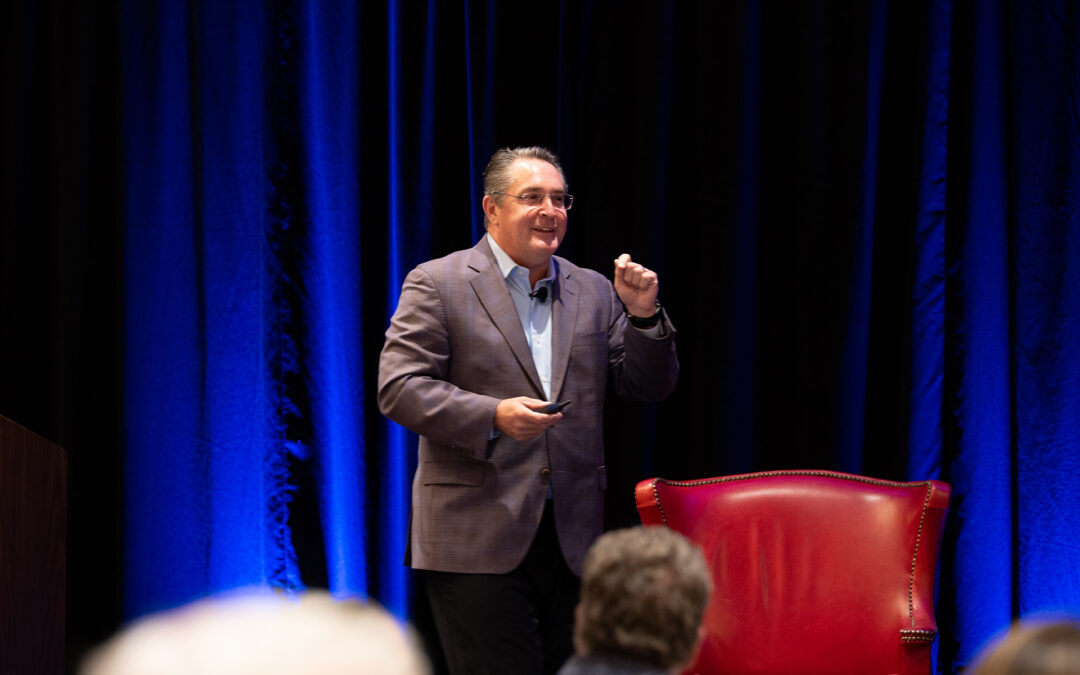
Prather (pictured above), co-founder and managing partner of Armada Corporate Intelligence, presented during a webinar hosted by credit rating and consulting firm Pulse Ratings. Pulse Ratings’s sister credit reporting platform ReimerPlus collaborates with the International Housewares Association on the Housewares Credit Group.
After the Supreme Court on February 20 struck down tariffs imposed by the Trump administration under the International Emergency Economic Powers Act (IEEPA),
President Trump invoked his authority under section 122 of the Trade Act of 1974 to impose a global 10% duty for 150 days, the allotted period under the statute, unless Congress votes an extension.
Section 122 of the Trade Act of 1974 authorizes the President to impose temporary import restrictions — including surcharges up to 15% or quotas — for up to 150 days to address fundamental international payments issues, such as severe balance-of-payments deficits or significant dollar depreciation
President Trump has threatened to raise the new Section 122 tariff, which would expire on July 24, 2026, without a Congressional extension, to 15%. Prather said he suspects the White House could follow through on the 15% rate if it feels the 10% rate undercuts previously negotiated trade deals with certain countries at 15% or higher.
Prather said such trade deals have yet to be ratified, which could cause officials from those countries to attempt to void them in favor of the Section 122 tariff. President Trump this week said the trade deals are not in jeopardy.
“Uncertainty is the killer of business and economic momentum, and the creator of risk,” Prather said before outlining the three scenarios related to the rollout of the new Section 122 tariffs.
Scenario one, which Prather gives a 24%-35% chance of happening, has Congress approving an extension of the Section 122 tariff beyond the 150-day period ending July 24. Such an extension, he said, could represent the beginning of a move by the Republican-majority Congress to pass new legislation ahead of the 2026 midterm elections, giving President Trump broader statutory authority for tariff delegation.
Under the first scenario, Prather said the Trump Administration likely would attempt to codify bilateral trade deals before July, which could mitigate tariff uncertainty by August. He said this could provide a strong incentive for front-loading of inventory by importers seeking to take advantage of the 10% current tariff rate before legislative action triggers possible lock-in of higher rates.
Economic impacts from an extension of the Section 122 tariff, Prather said, include a potential drag on GDP, currently projected by Prather’s firm at around 2.3% for 2026, to 2%; and a slight inflationary bump.
The second scenario, which Prather said has about a 45%-50% likelihood, sees the Section 122 tariff lapsing after 150 days. This, he said, could cause the White House to pivot to seek ways to impose new tariffs by expanding the scope of Section 232 sector-specific duties and to ramp up country-specific investigations toward a goal of imposing new Section 301 tariffs.
Section 232 of the Trade Expansion Act of 1962, based on determinations that the quantity or other circumstances of certain imports threaten to impair U.S. national security, currently covers tariffs on such sectors as steel, aluminum and copper. Section 301, which currently applies to goods from China, of the Trade Act of 1974 empowers the White House to impose tariffs on foreign products to combat unfair trade practices.
Under the second scenario, whereby Section 122 tariffs would expire in 150 days, Prather said, supply chains would have to recalibrate again by July. He added that this scenario could incentivize inventory frontloading at the 10% Section 122 tariff and for goods from countries under Section 301 investigation, while it would serve a limited front-loading incentive under Section 232.
The economic impact of the second scenario, Prather noted, would be no change in projected GDP and a possible inflationary impact on certain sectors that could be added under Section 232.
Scenario three, which Prather puts at about a 20%-25% likelihood, has the new Section 122 tariff getting blocked because of legal challenges. Such a situation, Prather said, would amount to “legal chaos” while creating another layer of refund questions on top of the refund uncertainty that has followed the Supreme Court rejection of IEEPA tariffs.
Such a stalemate could result in the most conservative inventory postures, according to Prather. He said the economic impact could be an interim higher GDP push, while the possible inflationary impact would be uncertain.