
The decision by California Governor Gavin Newsom to veto a restrictive bill and the New Mexico move to exempt fluoropolymers of the sort used in cookware from a PFAS ban could mark a legislative change in consideration of the chemical family that puts proponents and opponents on more even ground as they debate the merits of nonstick products.
Organizations, including The Cookware and Bakeware Alliance and the Cookware Sustainability Council, have argued that scientific evaluation has found no hazard in fluoropolymers as applied in the housewares industry, even as advocates and proponents, such as non-governmental organization have made the case that the thousands of chemicals that are defined as part of the PFAS family are risky as a class. Now, because of recent government actions, including those in California, which has traditionally been a leader in adopting health and environmental regulations, both sides of the argument might win a more equitable hearing in debates about legislation regulating PFAS chemicals.
A broad overview of the PFAS issue will occur during The Inspired Home Show in the Inspiration Theater session, “Legislative Update: PFAS & More.” The session is set for Wednesday, March 11, at 12:10 p.m. in McCormick Place South room S101a.
Governor Newsom, in his veto statement, pointed to the scope of the proposed ban in his decision to reject the legislation, saying, “I share the author’s goal to protect human health and the environment by phasing out the use of PFAS in consumer products.
“However, the broad range of products that would be impacted by this bill would result in a sizable and rapid shift in cooking products available to Californians,” Newsom continued. “I appreciate the effort to protect the health and safety of consumers, and while this bill is well-intentioned, I am deeply concerned about the impact this bill would have on the availability of affordable options in cooking products.”

California Governor Gavin Newsom
However, the broad range of products that would be impacted by this bill would result in a sizable and rapid shift in cooking products available to Californians. I appreciate the effort to protect the health and safety of consumers and while this bill is well-intentioned, I am deeply concerned about the impact this bill would have on the availability of affordable options in cooking products.
– Governor Gavin Newson
In his own veto message, reflecting the broad scope of the bill and singular approach to the range of the PFAS chemical family, bill sponsor California State Senator Ben Allen, D-Santa Monica, said. “I’m disappointed in the result for a bill that would have better protected our public health and environment. For decades, manufacturers of PFAS chemicals have been exposing us to dangerous toxins that lead to cancer, liver and kidney disease, decreased fertility, developmental harm and other serious health conditions. While the manufacturers escape accountability, ratepayers and local governments have been struggling to keep up with the ballooning costs of cleaning these ‘forever chemicals’ from our water infrastructure. I’m hopeful we can continue working on a transition away from these dangerous products, which already have safer alternatives at reasonable prices available on the market.”
Still, Allen hasn’t proposed to reintroduce his bill in the California legislature this year.
Shifting Perspectives
Fran Attilio, Managing Director of The Cookware & Bakeware Alliance, characterized the California veto as “a positive.” She said the willingness of California’s governor to listen to the concerns of the bill’s proponents and other parties, including the affected business community, was a major step toward gaining a broader perspective on what anti-PFAS legislation might affect.
“That is a huge change for us in some of what’s in other states, especially in that California is such a leader in these kinds of initiatives,” Attilio said.
Because anti-PFAS parties have been able to win the attention of legislators in states where they have been active, reiterating the characterization of the thousands of PFAS materials that each have their own properties as “forever chemicals” that create ongoing health and environmental damage, voices that have raised objections have had a hard time getting a hearing sufficient get their points across, especially about PFAS being a chemical family that has many formulations and characteristics. The ability to get a real hearing from legislators and the necessary access to them, Attilio noted, is critical but has been hard to come by. This is especially the case because, often in legislative committee hearings on pending bills, speakers in opposition to measures get too little time to make a scientific case distinguishing between what might be problematic and what has never been assessed as dangerous.
“I think a couple of things have happened that give me hope that this will lead to conversations instead of what’s been going on,” Attilio said. “California and Governor Newsom are responding so positively. It wasn’t just the veto, it’s what he said: let’s talk. It’s just such a rare hope in what’s been going on.”
I think a couple of things have happened that give me hope that this will lead to conversation instead of what’s been going on. California and Governor Newsom are responding so positively. It wasn’t just the veto; it’s what he said: “Let’s talk.” It’s just a rare hope in what’s been going on.
– Fran Attilio, Managing Director, The Cookware & Bakeware Alliance
Steve Burns of the Cookware Sustainability Alliance noted that the scientific case makes a difference when the business side can bring it to state governments, as happened with the governor’s office in California.
“If we didn’t have the science, they would have said, ‘Sorry. We’re not going to do anything,” Burns said. “I live here in California, and I can tell you that the environmental activists are very powerful, and they are listened to. I’m convinced that the science arguments that we brought forward were believed.”
The California bill that passed the legislature was loosely written and included not only the sale of non-stick cookware using fluoropolymers but also the distribution. Burns said that gave CSA and its allies an additional case: If a distribution ban went into effect, it would preclude non-stick cookware imports into California ports, as it would be illegal even to move the goods through the state.
“We made the argument that this is a lot of jobs, way beyond cookware,” Burns said, adding the law would encompass a lot more than cookware, which brought more parties to the discussion in the way the law was written. The bill, as proposed, could encompass anything used to prepare or store food, “which would technically mean everything from a coffee maker to walk-in refrigerators at restaurants. It means every non-stick grill on a food truck. And so the restaurants were very upset, too. There were economic arguments, but we began, and always begin, with the science.”
If we didn’t have the science, they would have said, “Sorry. We’re not going to do anything.” I live here in California and I can tell you that the environmental activists are very powerful and they are listened to. I’m convinced that the science arguments that we brought forward were believed.
– Steve Burns, Cookware Sustainability Alliance
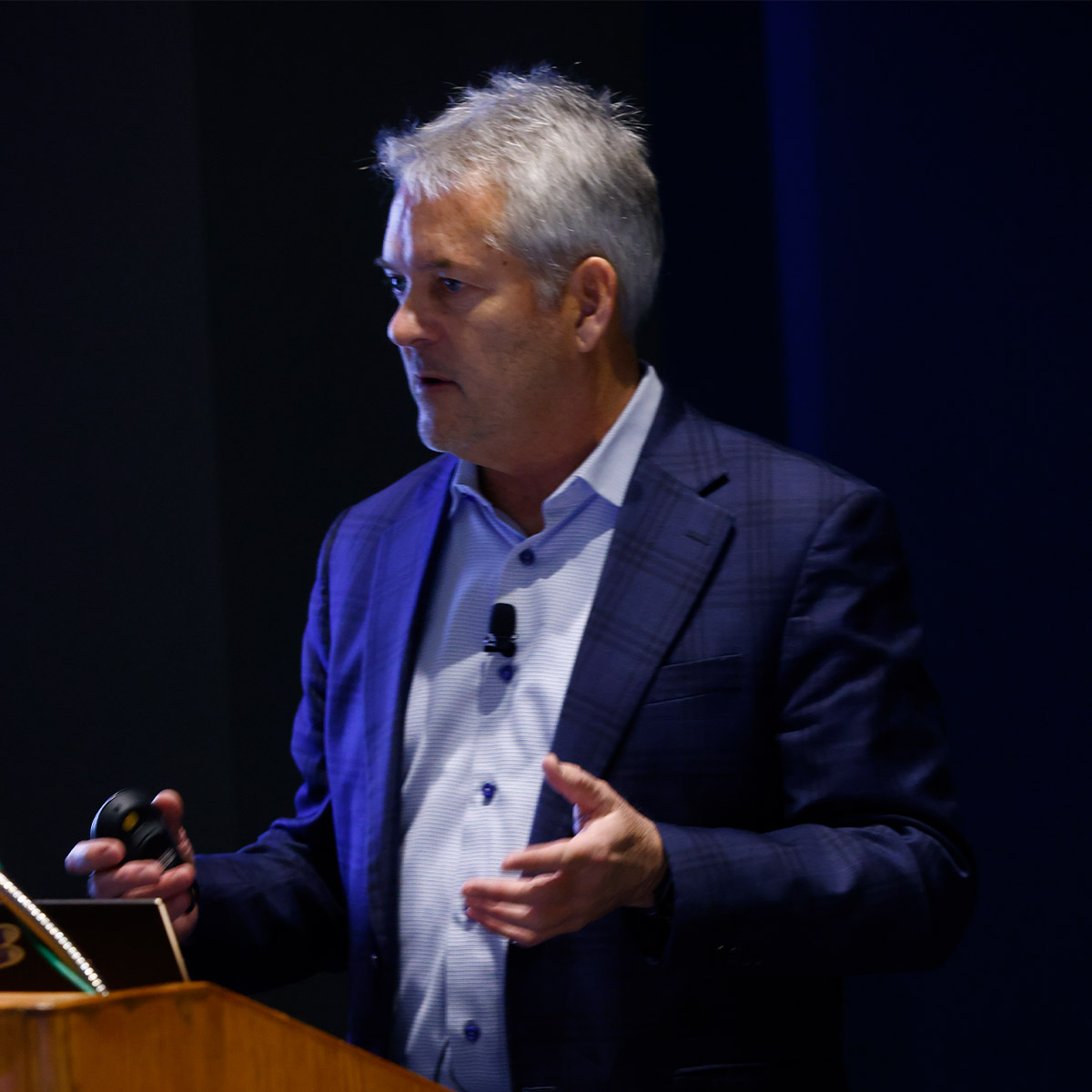
Steve Burns, Cookware Sustainability Alliance
New Mexico Case
In New Mexico, the legislators and other government officials involved with the bill regulating PFAS took a broader consideration of the safety issues involved with the chemical class, which influenced the final legislation, taking into consideration points raised by the business community.
New Mexico state representative and bill sponsor Joanne Ferrary told HomePage News that her involvement with the PFAS issue was a process.
“I became interested in sponsoring a bill during the 2024 Interim when we heard in the Radioactive Hazardous Materials Committee about PFAS contamination and the negative health effects it can have on people and animals. A bill was drafted by one of our committee staffers, and I filed it for the 2025 Session. The Environment Dept. Secretary James Kenney also had a bill that we merged to one bill and worked to accommodate the issues brought forward by manufacturers across the country.”
The bill that New Mexico finally enacted bans PFAS, identified as per- and polyfluoroalkyl chemicals, from cookware, but doesn’t address fluoropolymers at all.
“Fluoropolymers are exempt and that exemption applies across product types,” said Drew Goretzka, director of communications at the New Mexico Environment Department
The basic scientific argument is that fluoropolymers, such as the chemicals used in traditional non-stick cookware coatings, are based on molecules too large to pass from the bloodstream into the body even if consumed, Attilio said. What’s true for humans is true for animals as well, the science indicates, so no real threat emerges to wildlife from cookware fluoropolymers in the waste stream, she said.
Attilio said that the science indicating there is no demonstrable hazard in the use of the fluoropolymers as applied to non-stick cookware and other housewares products was credible enough for New Mexico to exempt it from regulation.

Fran Attilio, Managing Director, The Cookware & Bakeware Alliance
How do you get people to understand? They have to be willing to listen. That’s a tough thing right now when people are panicking and reacting. Typically, if you panic, you can’t hear the other side. If we could go back to a place of trust and conversation. I think we can get them to hear it.
– Fran Attilio, Managing Director, The Cookware & Bakeware Alliance
The analogy used by The Cookware and Bakeware Alliance to give people a sense of the degree of threat posed by PFAS chemicals is that, out of 14,000 mushrooms, only a few are hazardous. In a similar vein, CBA points out that the PFAS designation encompasses many thousands of chemicals that vary significantly in composition. Some PFAS chemicals and some mushrooms might be hazardous, but most are not. As such, chemicals under the PFAS umbrella should be considered on a case-by-case basis, Attilio said. Fluoropolymers, large chemicals that are too large to pass the body’s blood barrier, also aren’t water soluble, which affects their ability to interact with the environment and living beings, Attilio noted.
“Even at the basic level of understanding PFAS chemistry, water soluble versus non-water soluble, if people took the time to understand what that means, it would change the whole conversation,” Attilio said. “Water soluble means it gets in the waterways, and because we are predominantly water, we can absorb it. It can affect human beings; it can affect animals. Non-stick coatings on cookware are on the non-water-soluble side. Back in the ‘60s, the FDA proved that if you ingest a piece of it, it’s going to pass through you unchanged.”
Until recently, PFAS were considered a single group. Attilio said the need now is to get people who are concerned about PFAS chemicals to consider the whole story. The California and New Mexico decisions might open more people to a deeper understanding of the PFAS issue, rather than a reaction to the arguments that put the entire chemical family in the same boat.
“How do we get people to understand? They have to be willing to listen,” Attilio said. “That’s a tough thing right now when people are panicking and reacting. Typically, if you panic, you can’t hear the other side. If we could go back to a place of trust and conversation, I think we can get them to hear it.”
She noted the CBA and others who are working to promote what science says about fluoropolymers in cookware have learned they have to craft their messages to get a proper hearing, something they’ve lately applied to some effect, as in New Mexico and California.
Meanwhile, states such as Maine and Minnesota that have instituted PFAS bans, including the fluoropolymers used in cookware, are not expected by observers to roll back the bans even if they’ve moved to lengthen implementation to address technical and bureaucratic contingencies. States that have implemented PFAS bans face implementation hurdles, Attilio pointed out. For example, she said Maine had to rework its implementation because it didn’t have the structure to handle the volume of reporting required.
The reporting requirements that come along with PFAS regulation aren’t just a problem for Maine. They also are for companies trying to meet requirements across states. As such, the implementation of PFAS regulations has created significant challenges, some unanticipated, that are difficult and expensive to meet. The difficulty is another consideration for other state governments, which might at least give them pause in implementing broad PFAS bans.
A Seat at the Table
Prior to the veto in California and the fluoropolymer exemption in New Mexico, the momentum was such that it was hard to even generate a debate on PFAS legislation before it was enshrined in law. Now, Burns said, the California veto is an example that opponents of PFAS brands can take to other states, given that the Golden State is considered a stalwart of health and environmental regulation.
“What happens in California oftentimes spreads, and this is one case where I definitely would like it to,” Burns said. “We debated it, we debated the science, we debated the economics, we debated safety, the alternatives available, and none of those arguments came up to support a ban on non-stick cookware.”
Another positive development, Attillio said, is that the United States Department of Justice put out a request for information on the impact of state legislation, “and industry was able to comment.”
Although there is little evidence that the Federal government is going to take a stand in the present debates over PFAS legislation, the Justice Department’s interest might signal that the future might see Washington take up the issue beyond the regulation that has been established by the U.S. Food and Drug Administration, which does not ban non-stick fluoropolymer chemicals. Many activists have gone to the states, arguing that the FDA’s regulations are inadequate and that the states need to regulate PFAS chemicals individually. Federal interest might give states considering PFAS bans another reason to take a broad view of the chemical class.
Burns said he wants the U.S. Congress to take up the issue so there could be a single debate and a single set of laws. In part, that could take some emotion out of the issue, he added.
Anti-PFAS advocates have targeted cookware because it’s easier to focus on products that people buy to bring into their homes, Burns said. He added many sectors that use various PFAS chemicals, including medical device makers, which are large and have abundant resources to make the case for continued use of the materials. Medical devices are a class of goods that are always exempt from PFAS laws, Burns said.
Support for a more open PFAS debate can be found in other developments, including work by Canada’s EPA. Canadian officials are currently looking at PFAS chemicals, but they aren’t including fluoropolymers as unnecessary to the risk assessments underway, Burns said. As with California, what happens in Canada will affect the debate elsewhere.
Even with the developments in California and New Mexico, Burns said the effort to get the business side of the debate heard is ongoing. In Vermont, the CSA took the science to the state government and effectively made a scientific case that delayed implementation of a ban, he said. The ongoing discussions now support the value of presenting the scientific case to state governments considering bans.
“We were asked, where were you when we were crafting this law?” Burns said.
Today’s circumstances reflect the initial conditions that existed when proponents of PFAS resolution began to make their cases to state legislatures. However, they also reflect change. When it all started, companies that would feel the effects weren’t yet organized, so the work put in by the CSA and the CBAC is making a difference in getting the attention and a hearing from the powers that be on the state level, Burns said. The outcomes aren’t certain, he said, but the balance has changed and business now has a seat at the debate.