
2027 HomePage News
At-Home Entertaining Report
The past 12 months have been full of twists and turns marked by economic uncertainty and increasing consumer caution, but those challenges haven’t extinguished the desire to gather, share and entertain at home.
Inflation and softening consumer confidence might suggest that consumers are pulling back on social gatherings. Yet, the 2027 HomePage News At-Home Entertaining Report — based on findings from the 2027 International Housewares Association (IHA) At-Home Entertaining Survey — reveals the desire to socialize remains strong. Consumers might be more cautious with their money, rely more on friends and family and become more selective about how they spend. But entertaining at home remains an important part of their lives.
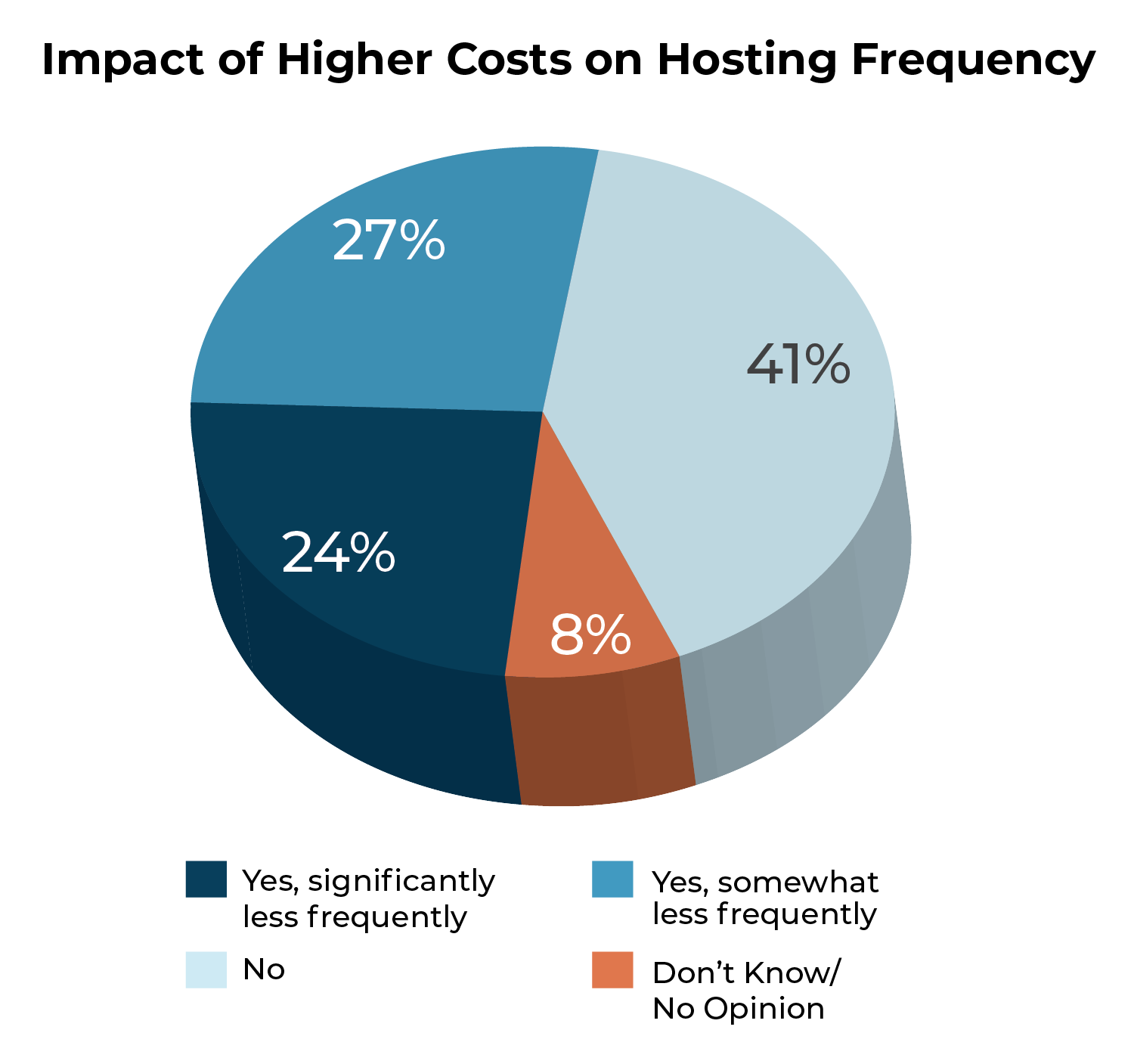
According to the latest At-Home Entertaining Survey conducted for IHA by Morning Consult, 56% of consumers hosted a casual gathering and the same proportion hosted an occasion-based gathering with family and friends during the past 12 months. Whether a movie night or a birthday, more than half of consumers reported hosting at home, with all that entails from planning through cleanup. Even with economic concerns, 41% of respondents said higher costs have not caused them to host less frequently, while 27% said they have reduced their hosting somewhat.
Looking ahead, 24% of consumers surveyed expect to host more often during the next 12 months, while 45% anticipate hosting about the same number of gatherings. The findings suggest continued opportunities for housewares companies serving consumers’ at-home entertaining needs.
Affordability is central to that opportunity. Some 42% of respondents said lower costs or more affordable options would make them more likely to host a gathering. For housewares companies, the opportunity extends beyond price reductions to developing and promoting products that deliver greater value, convenience and satisfaction.
Younger consumers present another opportunity. Gen Z and Millennials, at approximately 35% each, are more likely to anticipate hosting more frequently compared with 24% of consumers overall. The survey also indicates these generations are among the most likely to report needing to purchase housewares products before hosting, reinforcing their importance to the at-home entertaining market.
Analysis by Mike Duff, Contributing Editor at HomePage News
The potential for gatherings in the year ahead must be qualified by a unique lineup of circumstances, including economic uneasiness. Those circumstances may have influenced consumers responding to the IHA At-Home Entertaining Survey, which reported a slight year-over-year dip in the propensity to hold gatherings much more or somewhat more often: 10% and 14%, respectively, versus 12% and 16% in the 2026 report.
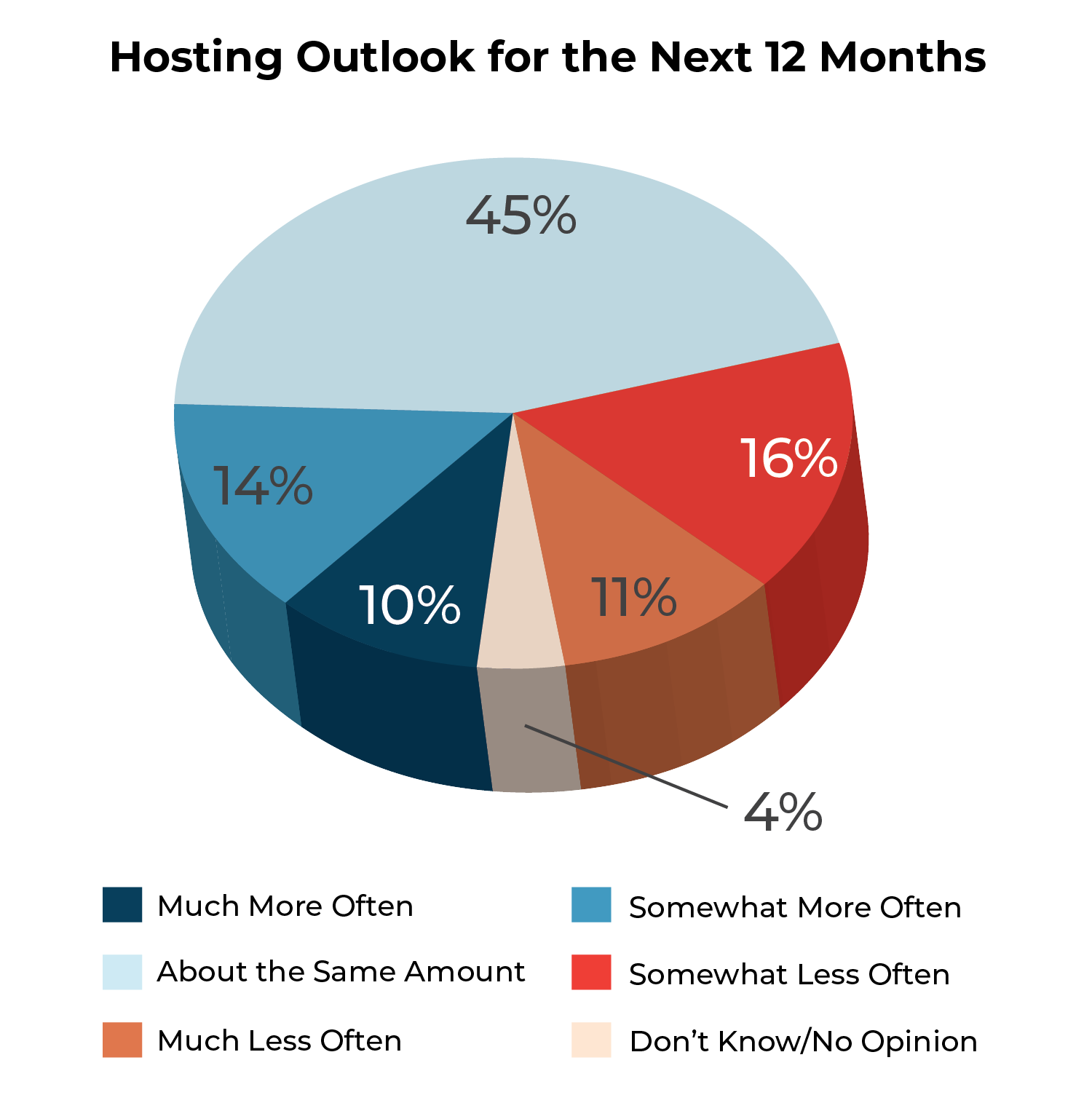
The potential for gatherings in the year ahead must be qualified by a unique lineup of circumstances, including economic uneasiness. Those circumstances may have influenced consumers responding to the IHA At-Home Entertaining Survey, which reported a slight year-over-year dip in the propensity to hold gatherings much more or somewhat more often: 10% and 14%, respectively, versus 12% and 16% in the 2026 report.
Despite economic factors such as inflation, consumers haven’t lost their taste for casual gatherings, with 58% typically hosting one to four casual gatherings a year, down from 62% in the 2026 IHA At-Home Entertaining survey. Another 28% said they generally host five to nine times, up from 23% a year earlier, while 9% said they host 10 or more, about flat with 10% in 2026.
Occasion-based gatherings, such as birthdays or holidays, shifted only slightly year over year. Some 67% of consumers said they typically host one to four such gatherings, compared with 69% in the year-earlier poll. Another 23% said they host five to nine, up from 20% last year, while 5% host 10 or more, up from 6%.
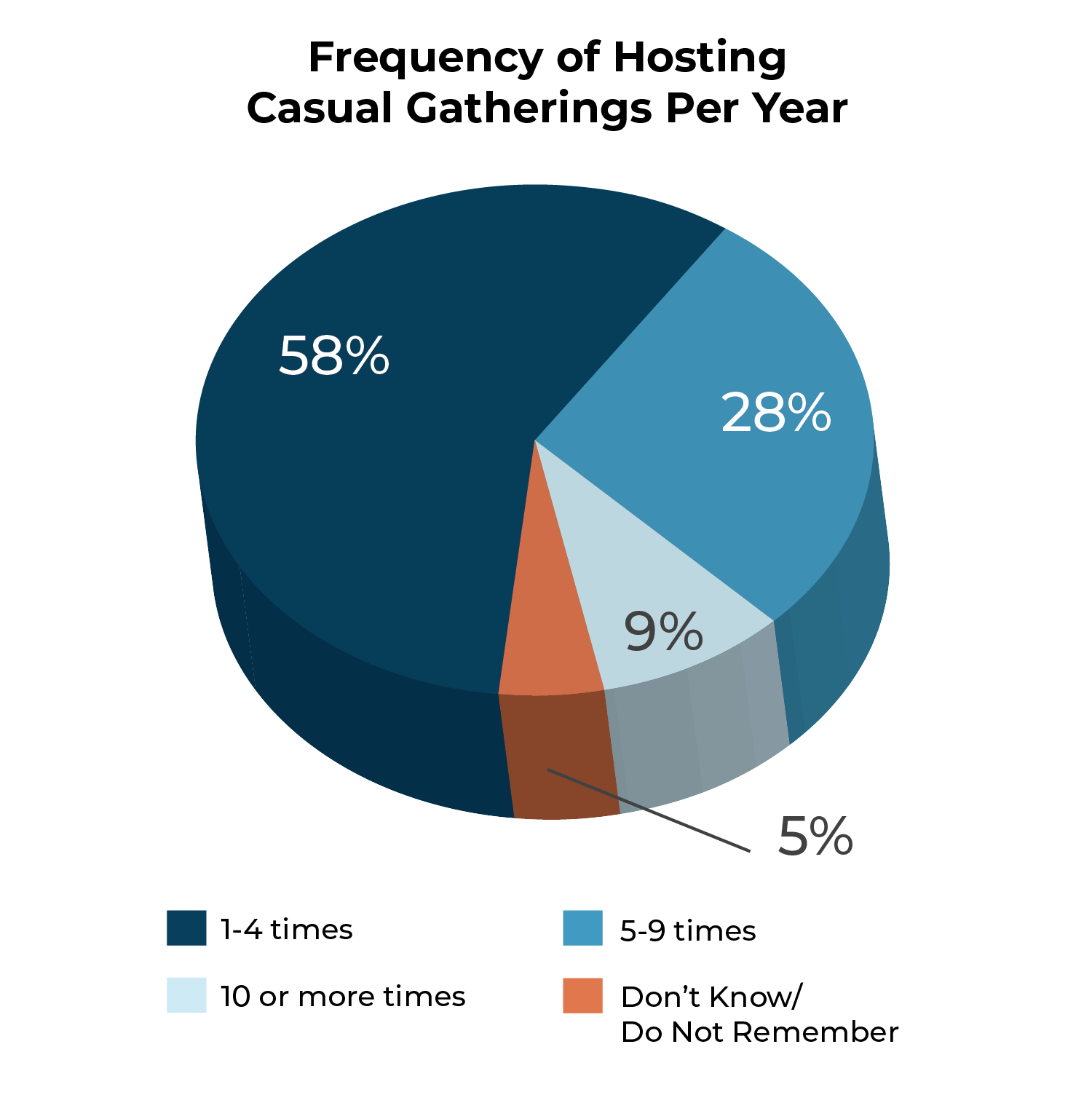
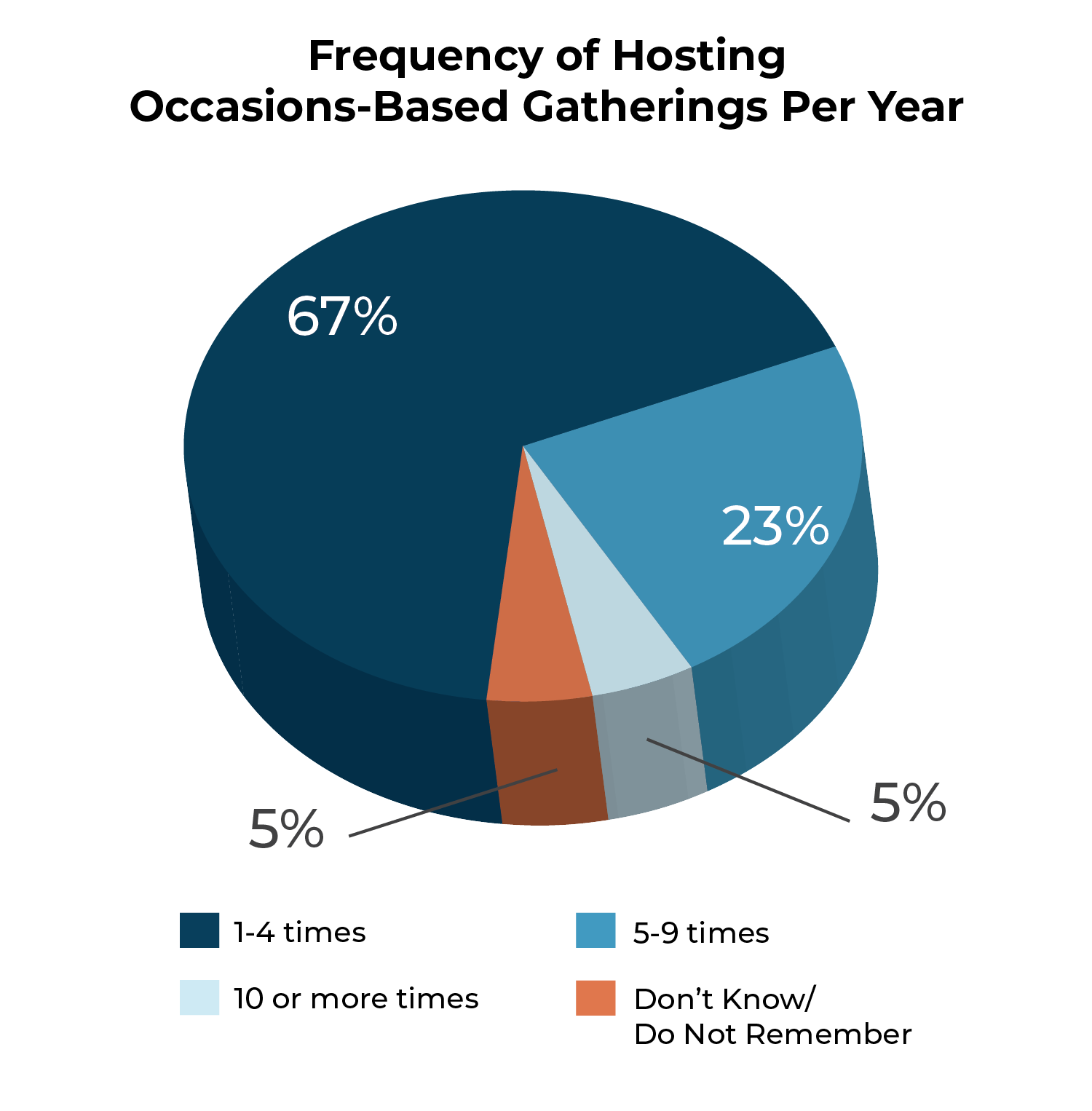
Gen Z and Millennials, tied at approximately 35% with much more or somewhat more combined, are considerably more likely to host a home gathering in the next 12 months than older generations.
Consumers continue to report needing to purchase products across a wide range of housewares categories when preparing to entertain at home. Food storage is among the most frequently needed categories, with 79% of consumers reporting a need to purchase it at least occasionally, followed by textiles at 74% and glassware, stemware or drinkware at 67%.
The need to purchase products varies by category, with some showing modest year-over-year increases. For kitchen electrics, 19% of consumers said they usually need to purchase hosting, compared with 13% in the previous survey. Tableware also gained some ground, with 17% always and 21% usually reporting a need to purchase products, compared with 16% and 18%, respectively, a year earlier.
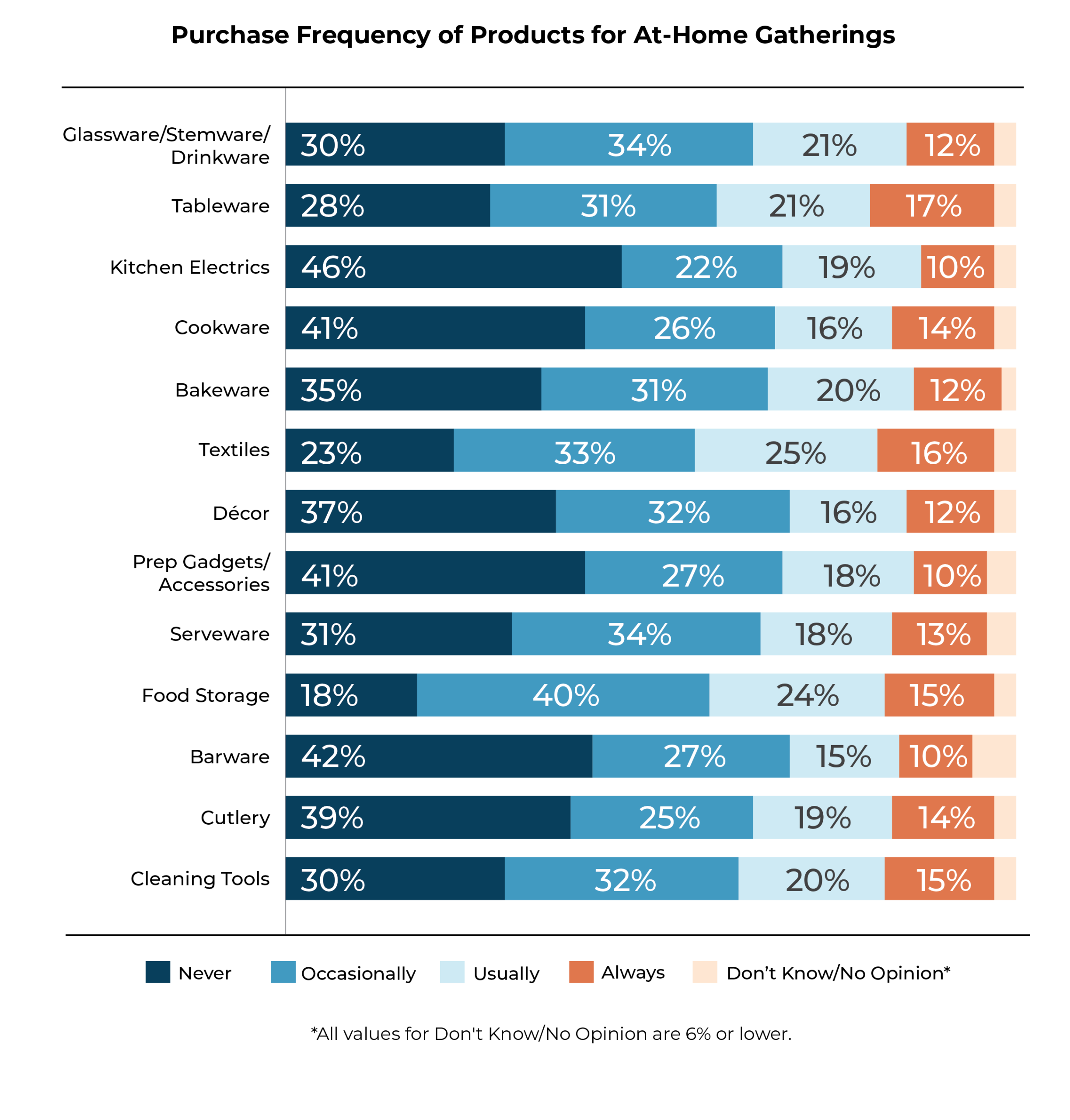
Demographic differences offer another perspective on purchasing needs. Consumers in the South and West were more likely to report always or usually needing to purchase drinkware, at 37% and 34%, respectively. Higher-income households were more likely to report needing to purchase tableware, while urban residents led in the need for prep gadgets, at 36%.
Décor purchases also revealed differences by gender. Some 35% of men said they always or usually need to purchase décor before hosting, compared with 21% of women. Younger consumers were particularly active in serveware, with 43% of Gen Z and 45% of Millennials reporting always or usually needing to purchase products in the category.
Taken together, the findings suggest that at-home entertaining continues to create purchasing needs across a broad range of housewares categories. However, the frequency and types of products consumers report needing vary by demographic group.
Millennials are the most likely to host 10 or more casual gatherings at home annually, at 12%, followed by Gen Z at 9%.
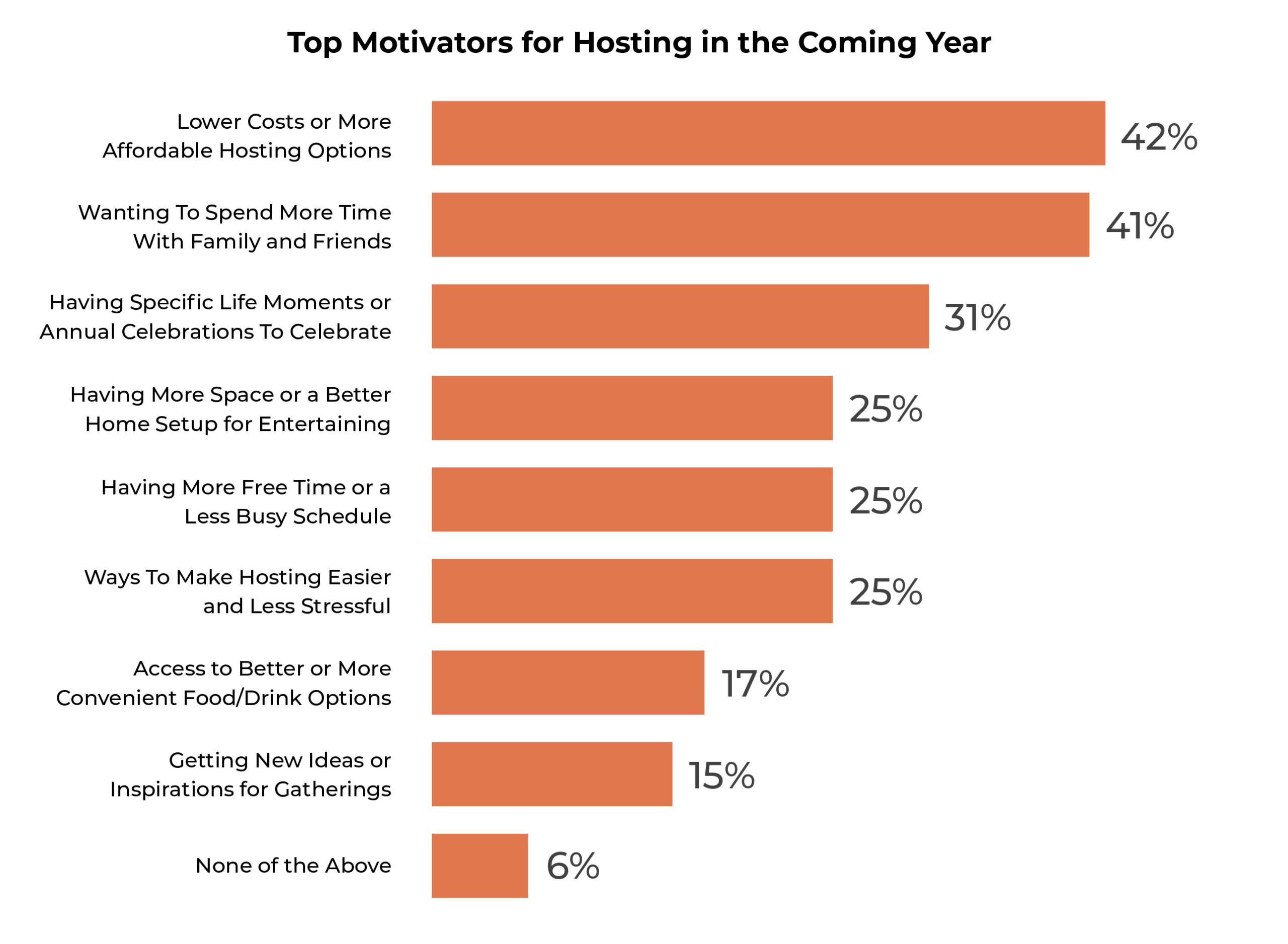
Economic pressures may be shaping consumers’ plans for the year ahead. The top motivations for an at-home gathering include lower costs or more affordable options (42%), spending more time with family and friends (41%), and specific life moments or annual celebrations (31%). That represents a shift from the previous survey, when 51% wanted to spend more time with family and friends, 37% had a specific life moment or annual celebration in mind and 31% cited lower costs or more affordable options.
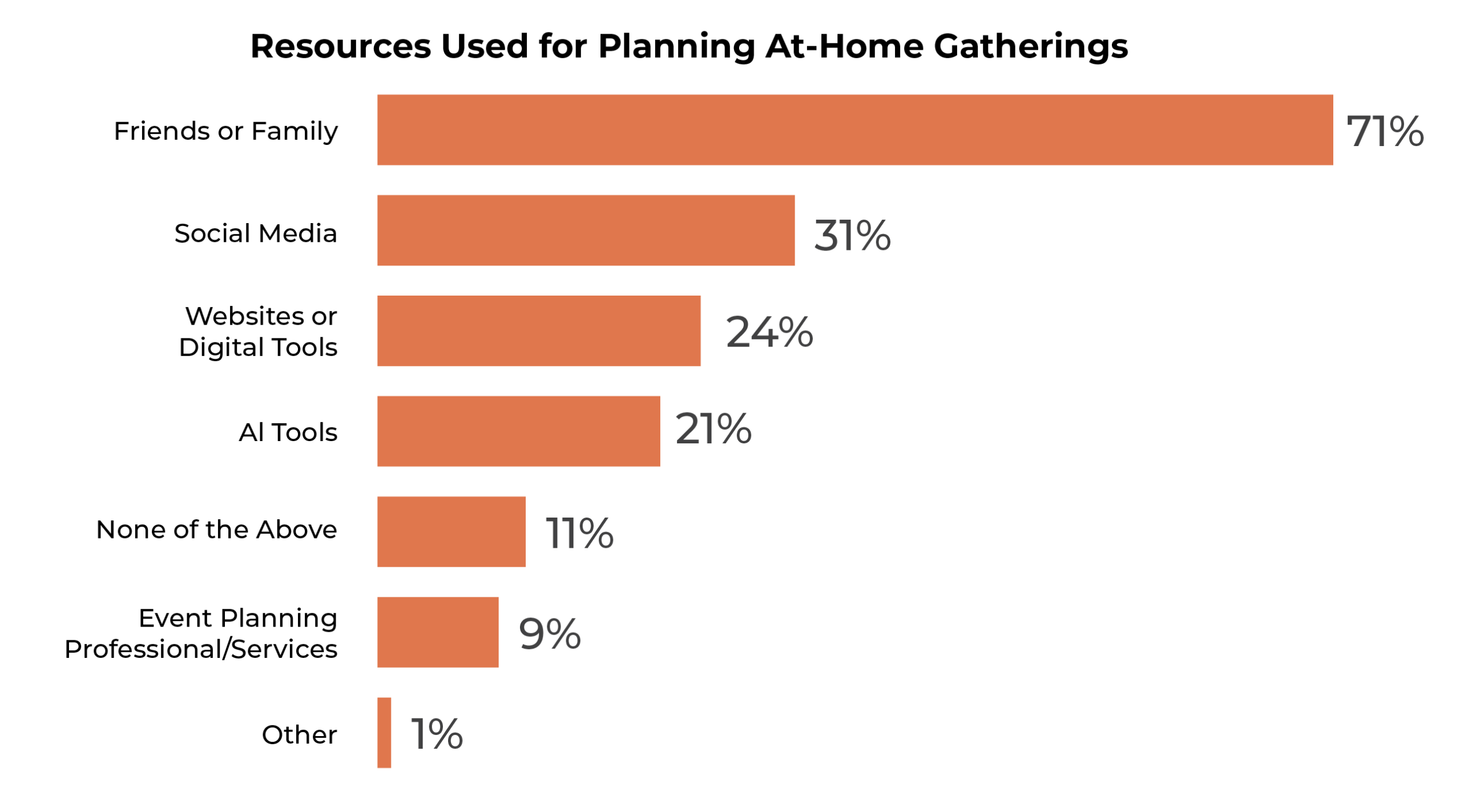
When planning a gathering, 71% of consumers turn to friends and family, followed by social media at 31% and websites and digital tools at 24%. The family and friends figure fell from 77% in the previous survey, while social media declined from 36%. AI tools were among the gainers, up five points to 21%, while event planning professionals and services increased two points to 9%.
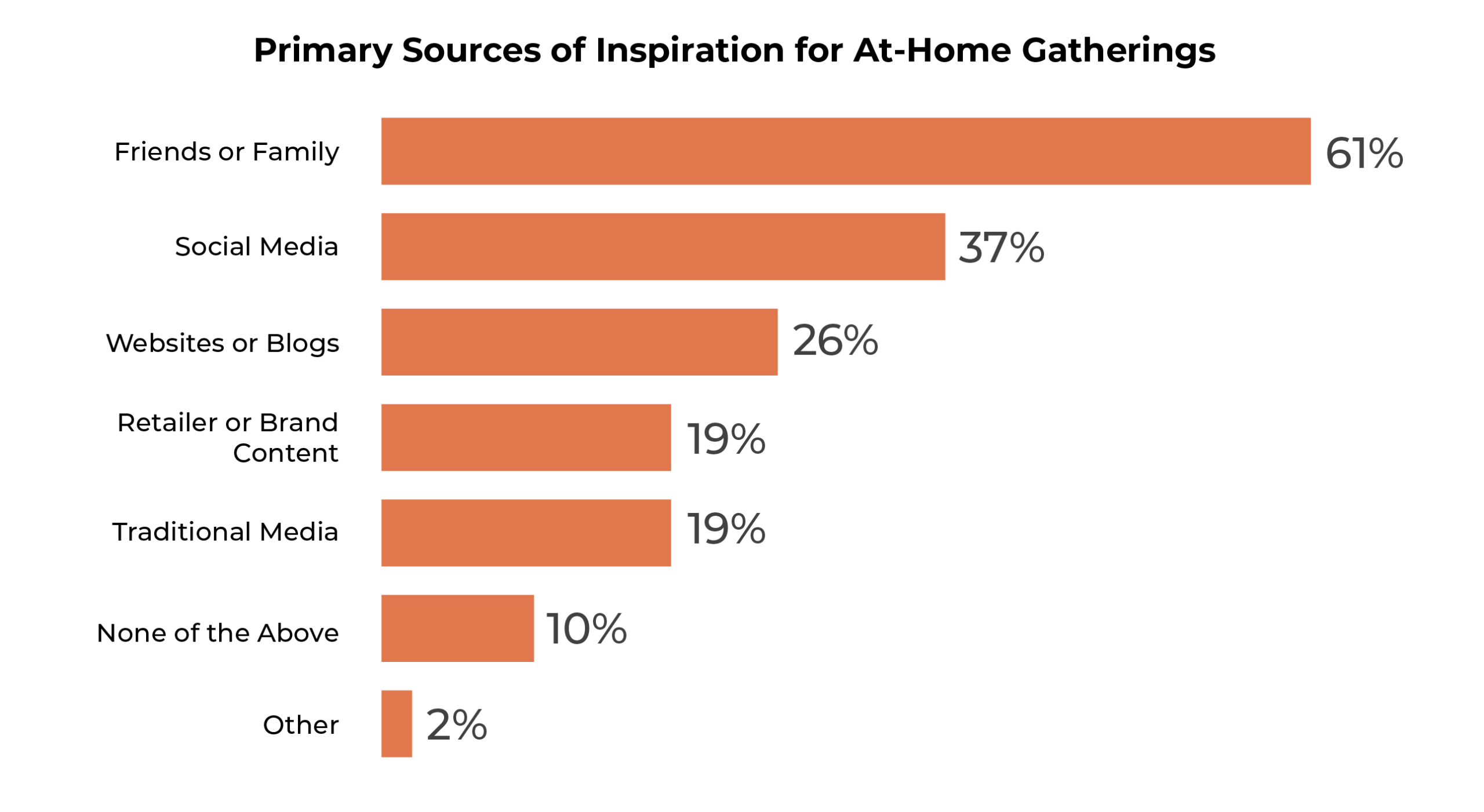
Family and friends are the top source of at-home entertaining inspiration, cited by 61% of consumers, with social media at 37% and websites or blogs at 26% next. Family and friends slipped from 69% in the previous survey, while most other sources remained relatively stable. Traditional media increased three points to 19%. Millennials rely least on friends and family for party ideas and are most likely to tap websites or blogs.
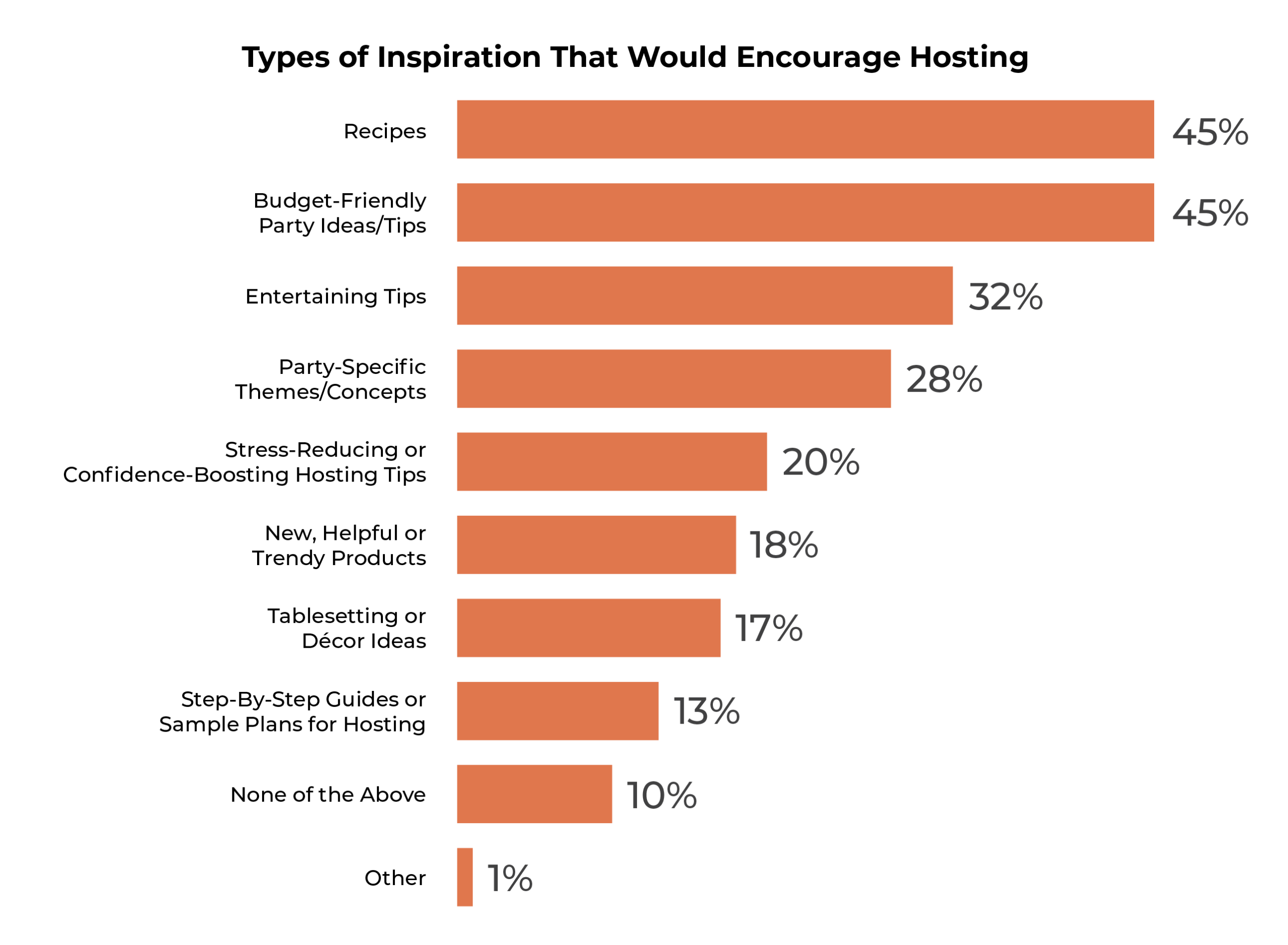
Recipes and budget-friendly party ideas lead equally, at 45%, followed by entertaining tips at 32% and party themes or concepts at 28%. The top two responses were basically flat from the previous survey, while entertaining tips advanced two points and table-setting or decorating ideas increased to 17%. Party themes slipped four points from 32%.
Gen Z and Millennials are more likely to host five to nine or 10 or more occasion-based gatherings annually, tied at 39%, with Gen Xers following at 20%.
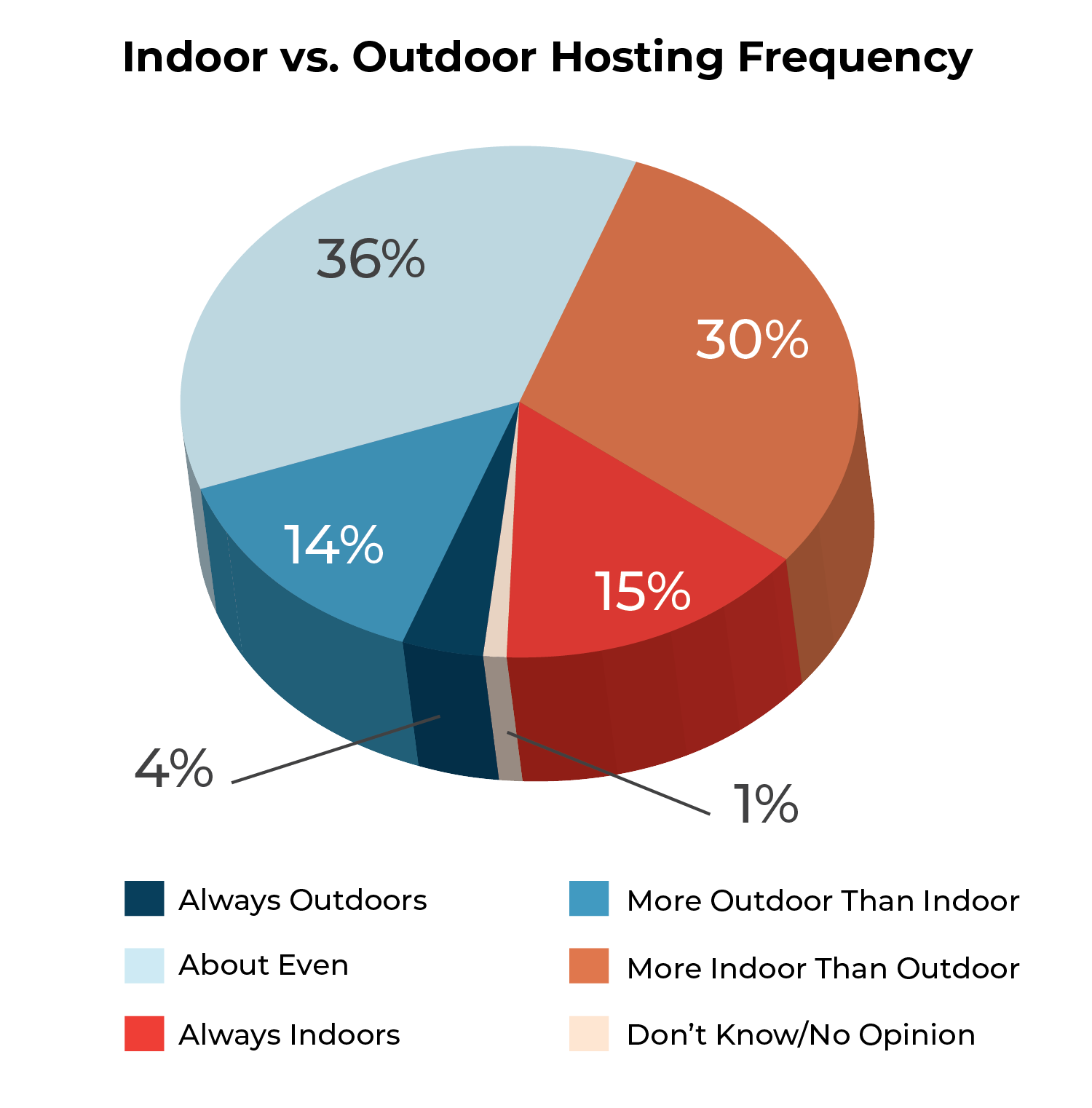
Consumers indicated slightly more interest in outdoor entertaining compared with the previous survey. Those who always host outdoors (4%), more often outdoors than indoors (14%), and about evenly between the two (36%) each increased slightly. Men were more likely than women to favor outdoor gatherings and younger consumers were more likely than Boomers to host outdoors.
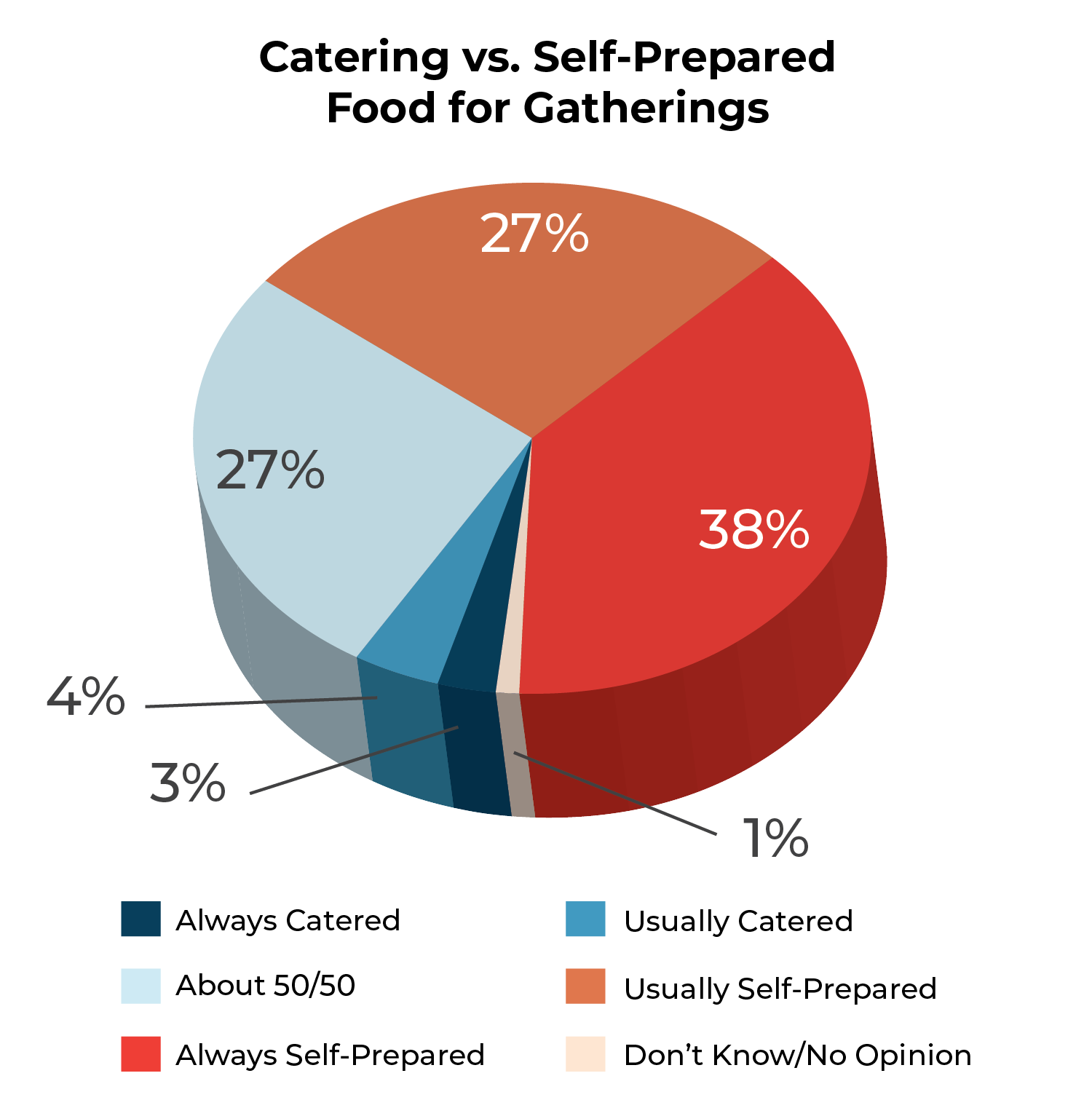
Despite economic uncertainty and inflation, the proportions of people catering at-home gatherings and those who self-prepare food remained very similar to the previous survey. Some 3% always cater, 4% usually cater and 27% split their gatherings about evenly between catered and self-prepared food. About two-thirds usually or always prepare the food themselves. Rural residents, at 48%, were by far the most likely to always self-prepare by community type.
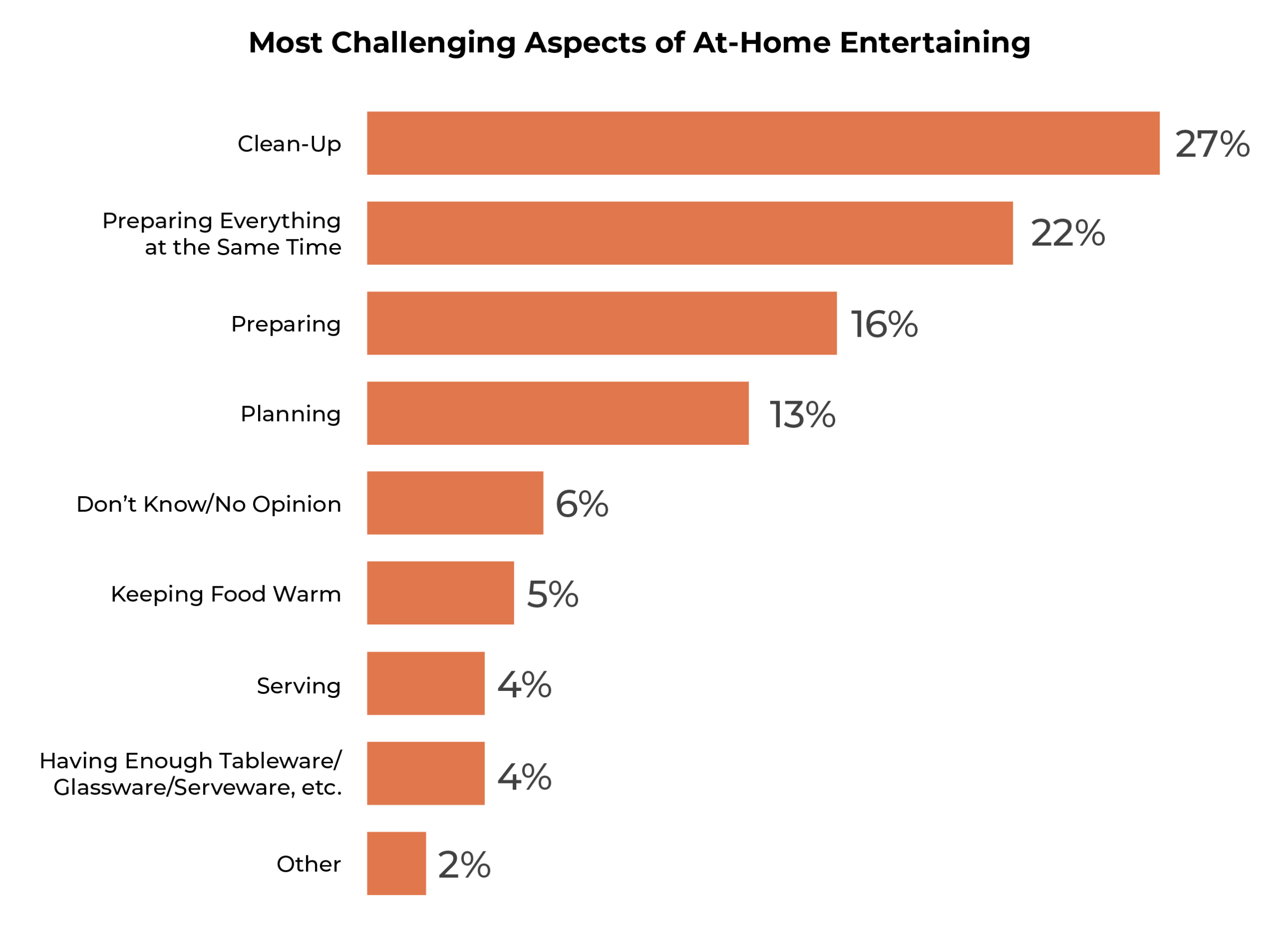
Cleanup was again cited as the most challenging aspect of hosting at-home events this year, although it declined four points to 27%. Preparing everything at the same time was just as tough this year as last, at 22%, while preparing food was cited by 16%, compared with 15% in the previous survey. Planning rose to 13%, up four points. Men, at 30%, were more likely than women, at 24%, to particularly dislike cleanup, while Millennials and Gen X were most inclined to dislike tidying, at 30% and 27%, respectively.
Urban residents are considerably more likely to always or usually need to purchase kitchen electrics before hosting a gathering, at 39%, compared with 25% of suburban residents.
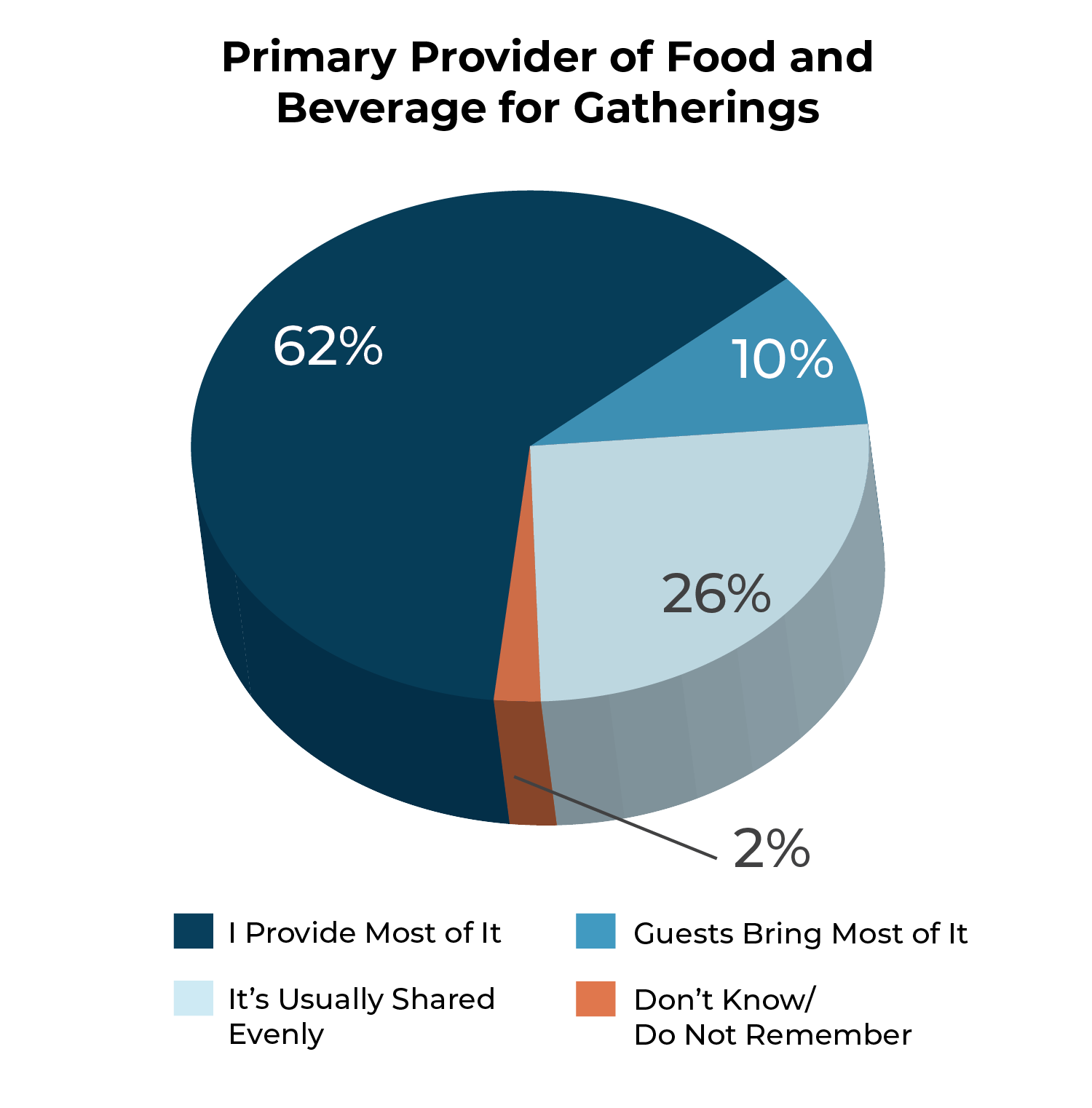
Hosts seem to rely on their guests to help with food and drink for gatherings a little more this year, as 62% of survey respondents said they provide most of the food and drink, down a couple of points from the previous survey, while 10% said guests bring most of it, versus 7% previously. The proportion saying responsibility is shared evenly remained flat at 26%. Boomers were most likely to provide most of the food and drink, at 69%, followed by Gen X, four points behind.
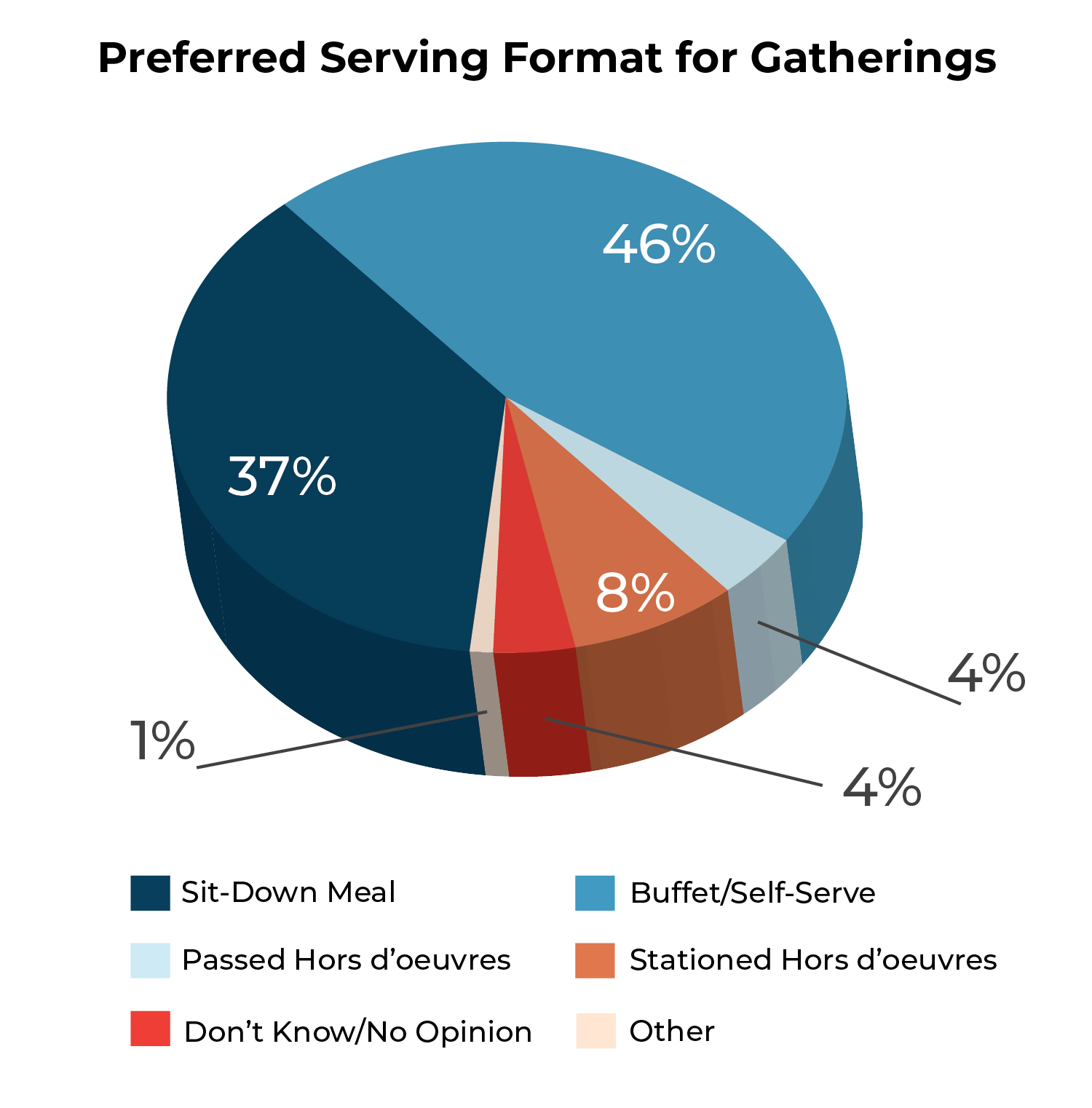
The top at-home gathering meal format in the previous survey was buffet/self-service, but its prominence has eroded. Although 46% of consumers still prefer a self-service format, that share is down from 51%, as slightly more respondents favored sit-down meals (37% vs. 35% previously). Passed and stationed hors d’oeuvres also edged up. Urban consumers were a little more likely to favor sit-down meals than suburban or rural residents, but rural residents were most likely to favor stationed hors d’oeuvres.
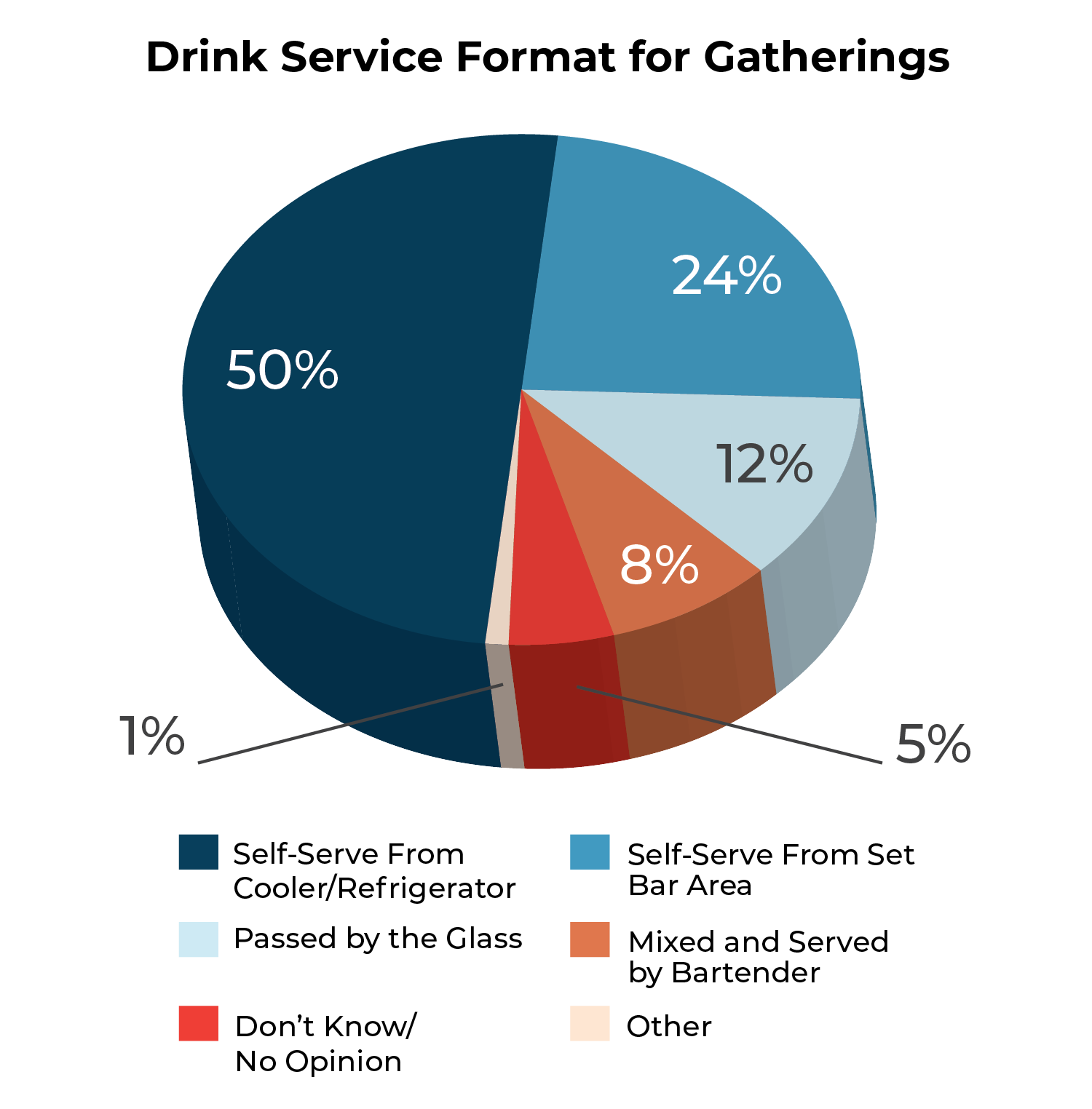
Self-service continues to dominate how drinks are provided for at-home entertaining and the change from the previous survey was slight. Half of hosts prefer self-service from coolers, refrigerators and other common sources, followed by self-service from a bar area, at 24%. Millennials are the most likely to have a bartender serve at their gatherings, although it remains a minority choice at 13%.
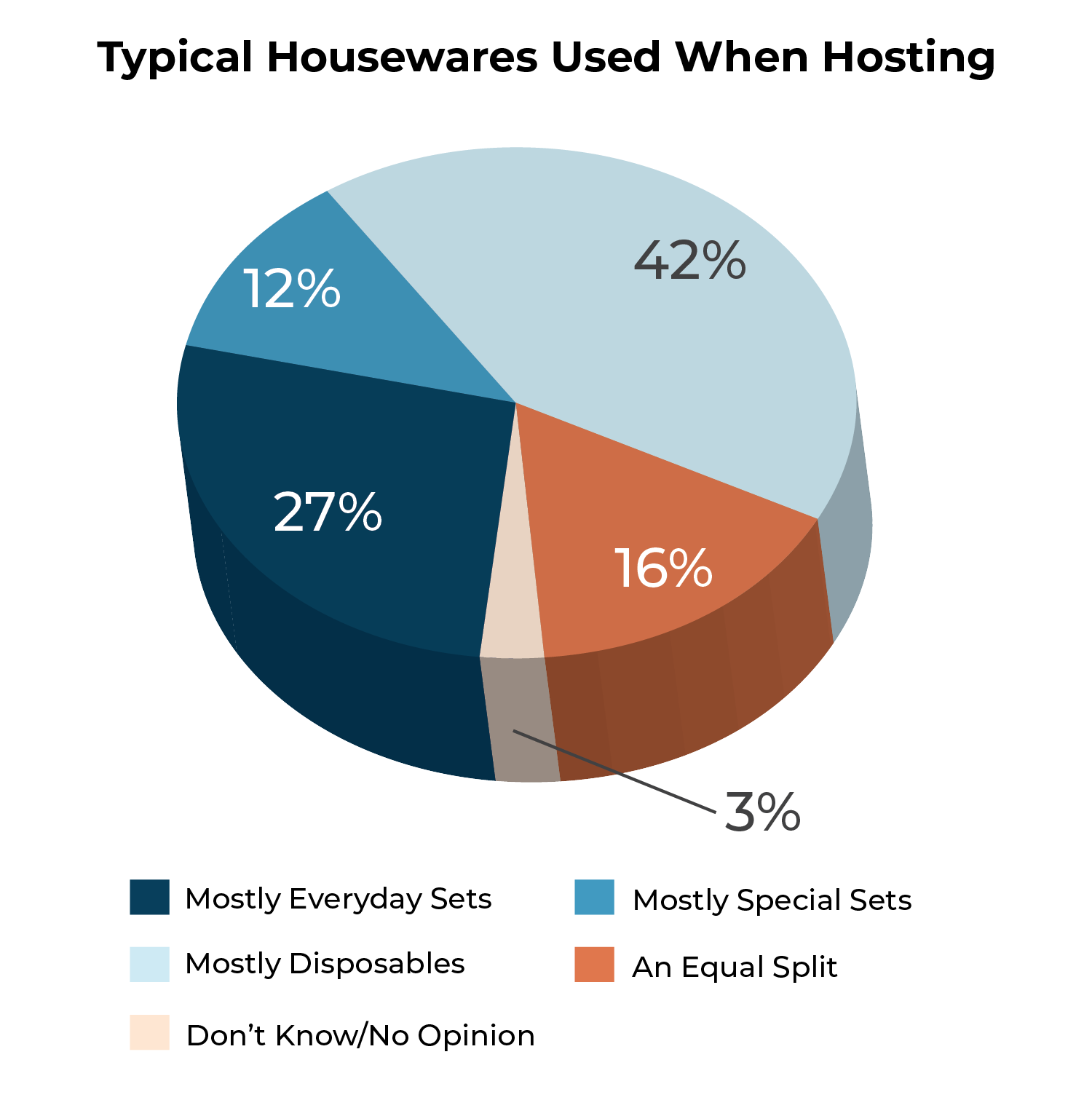
Everyday housewares were the choice for gatherings for 27% of consumers, up from 24% in the previous year. Disposables were still primary at 42%, down from 44%, and special sets also slipped marginally. Men were more likely than women (15% vs. 9%) to favor special sets, and by generation, Millennials (17%) were the biggest fans of special-occasion tableware.
Men are more likely than women to always or usually report needing to purchase cookware before hosting at 37%, compared with 24%.
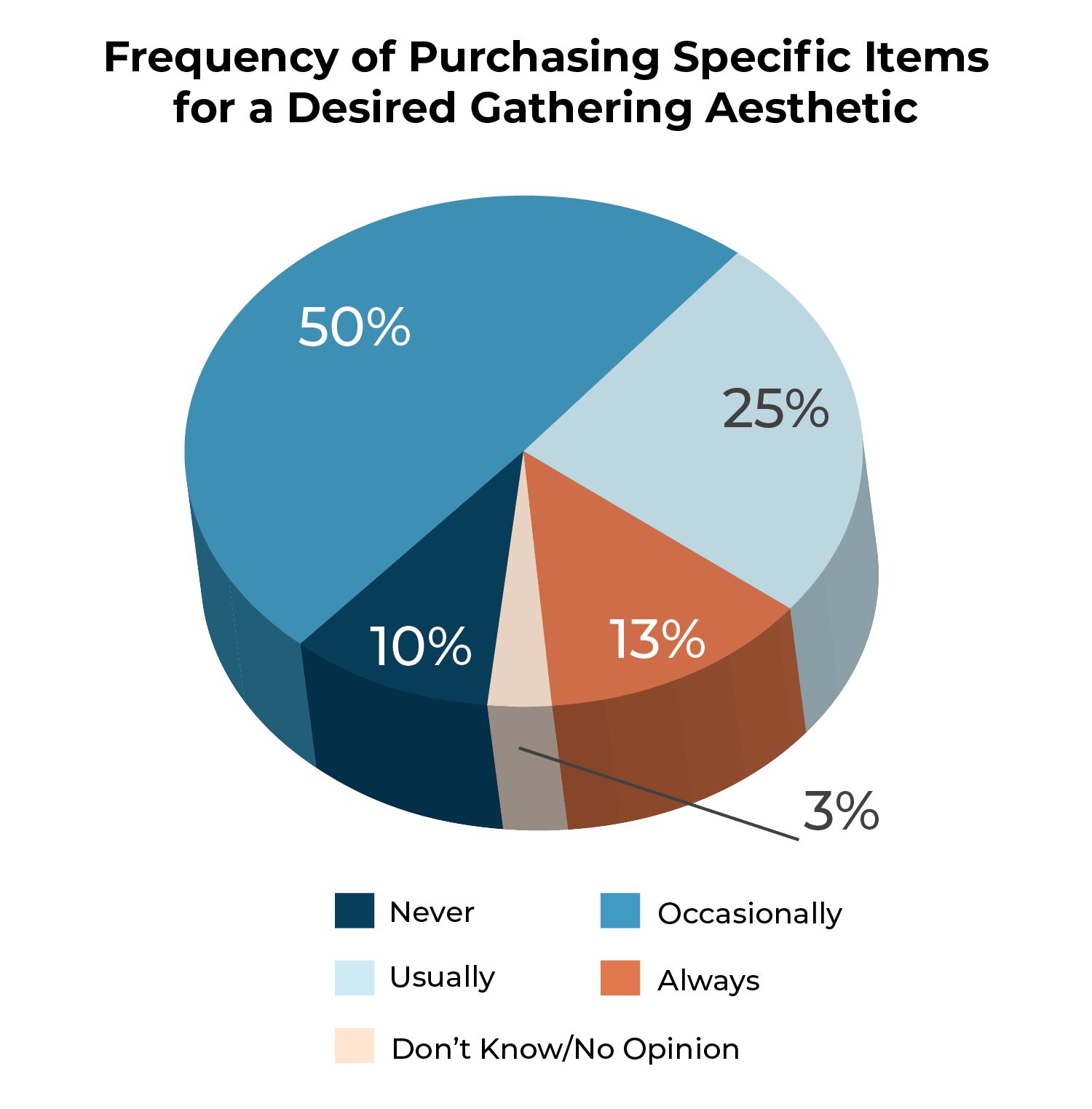
On aesthetics, hosts were fairly consistent with the previous survey, with 13% always purchasing specific items to achieve a particular look, down two points. The usually purchase response rose two points to 25%, while occasionally held steady at 50%. Almost half of Gen Z and Millennials always or usually purchase items to achieve a particular aesthetic, while only about a third or fewer of older consumers do.
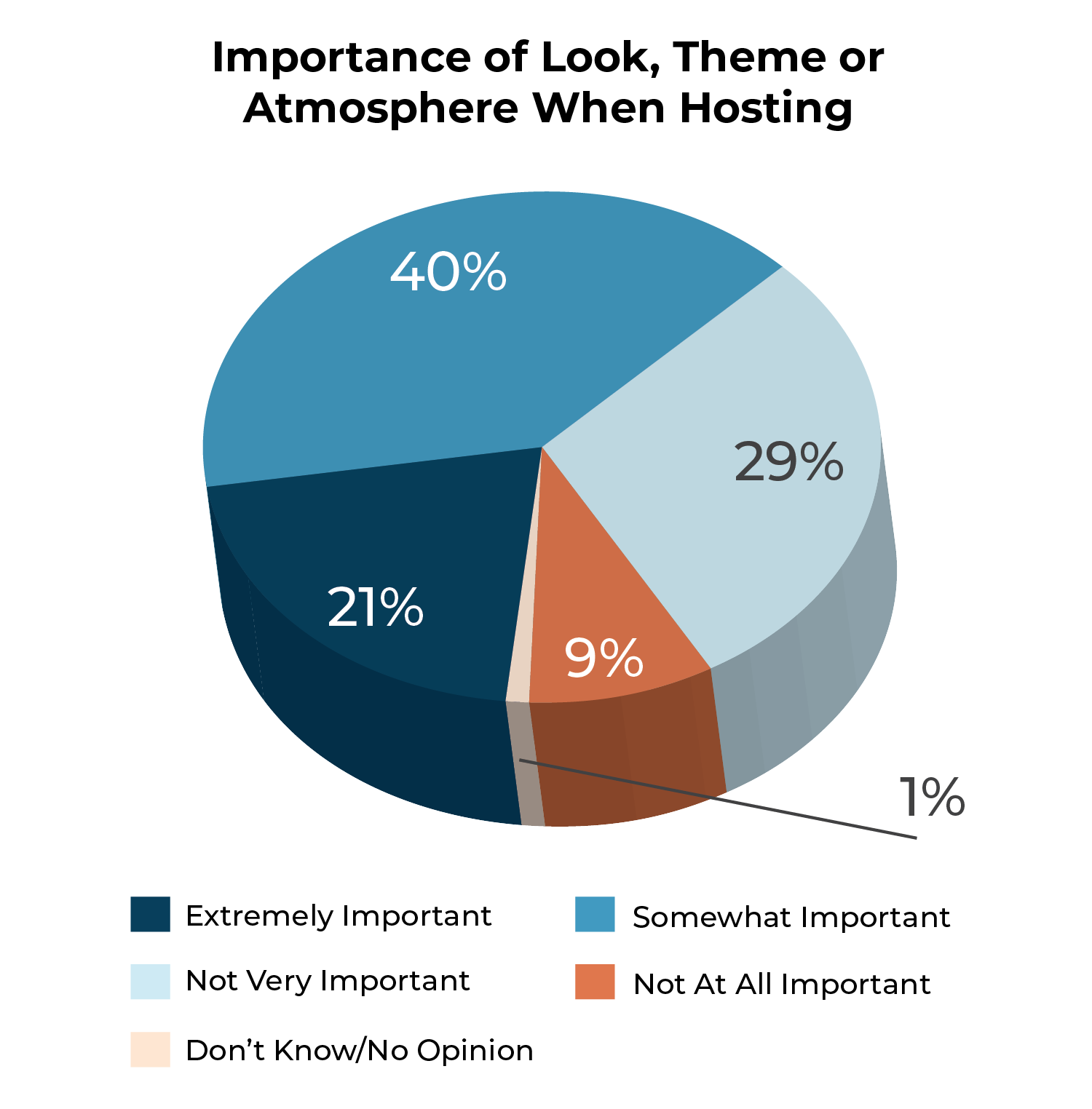
Most consumers, consistent with the previous survey, say they consider a look, theme, or unique atmosphere either extremely important (21%) or somewhat important (40%). However, a little more than a third disagree, saying it’s not very important or not important at all. The lower importance group was slightly more prominent this year. Men, at 63%, are five points more likely than women to consider a look, theme or unique atmosphere important.
Consumers in the South are the most likely to always or usually report needing to purchase bakeware ahead of an at-home gathering, at 35%, followed by consumers in the West at 31%.
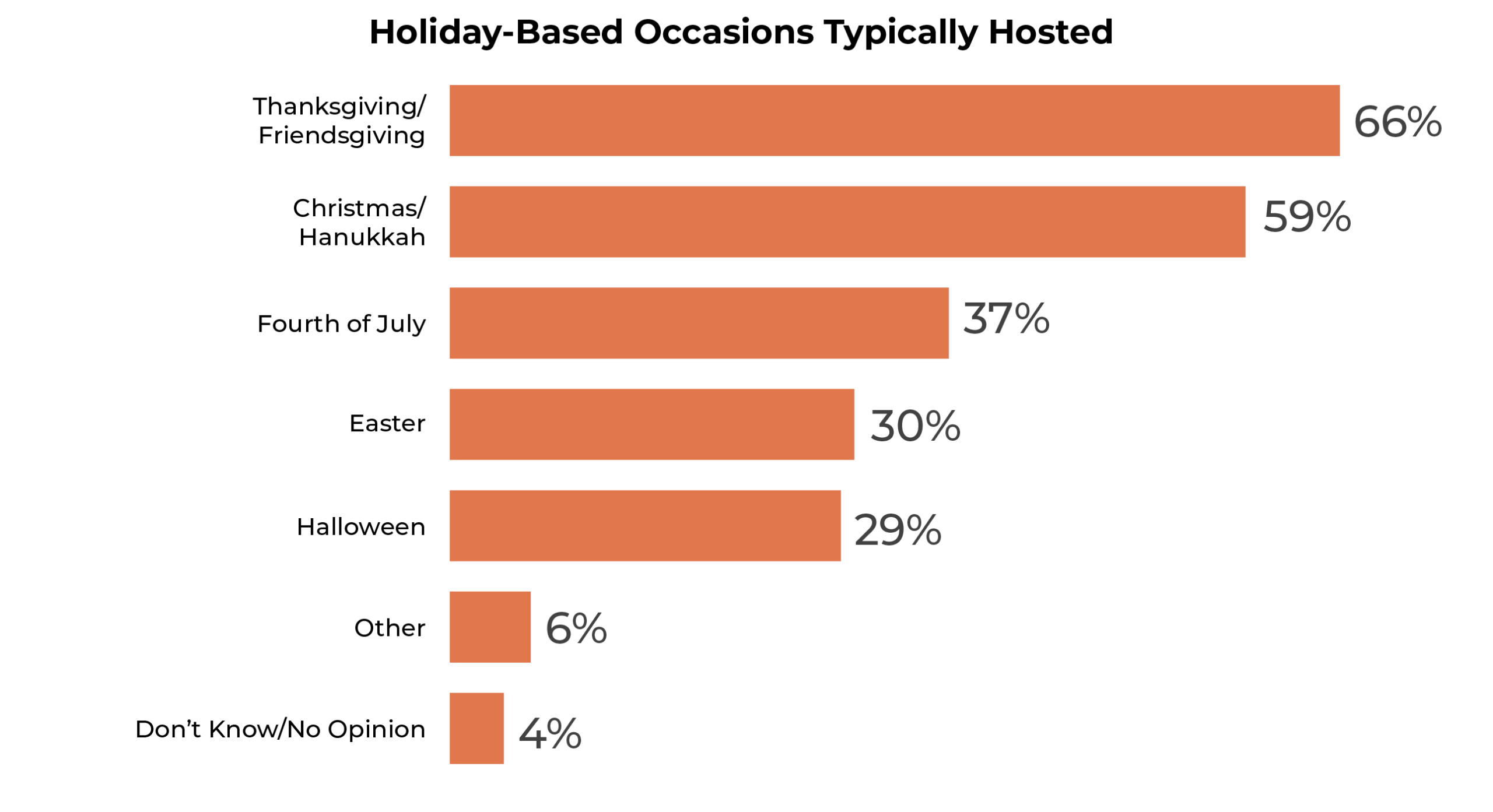
IHA At-Home Entertaining Survey results underscore the importance of Christmas/Hanukkah and Thanksgiving/Friendsgiving for product categories associated with get-togethers and hosting. Some 66% of survey respondents said they host Thanksgiving/Friendsgiving gatherings, followed by 59% who host for Christmas/Hanukkah. The falloff is significant, with the next most popular day for hosting, Fourth of July, at 37%, in line with the previous survey. The results underscore the importance of the November-December period for entertaining-related categories. Boomers and Gen X are most likely to host Christmas/Hanukkah gatherings.
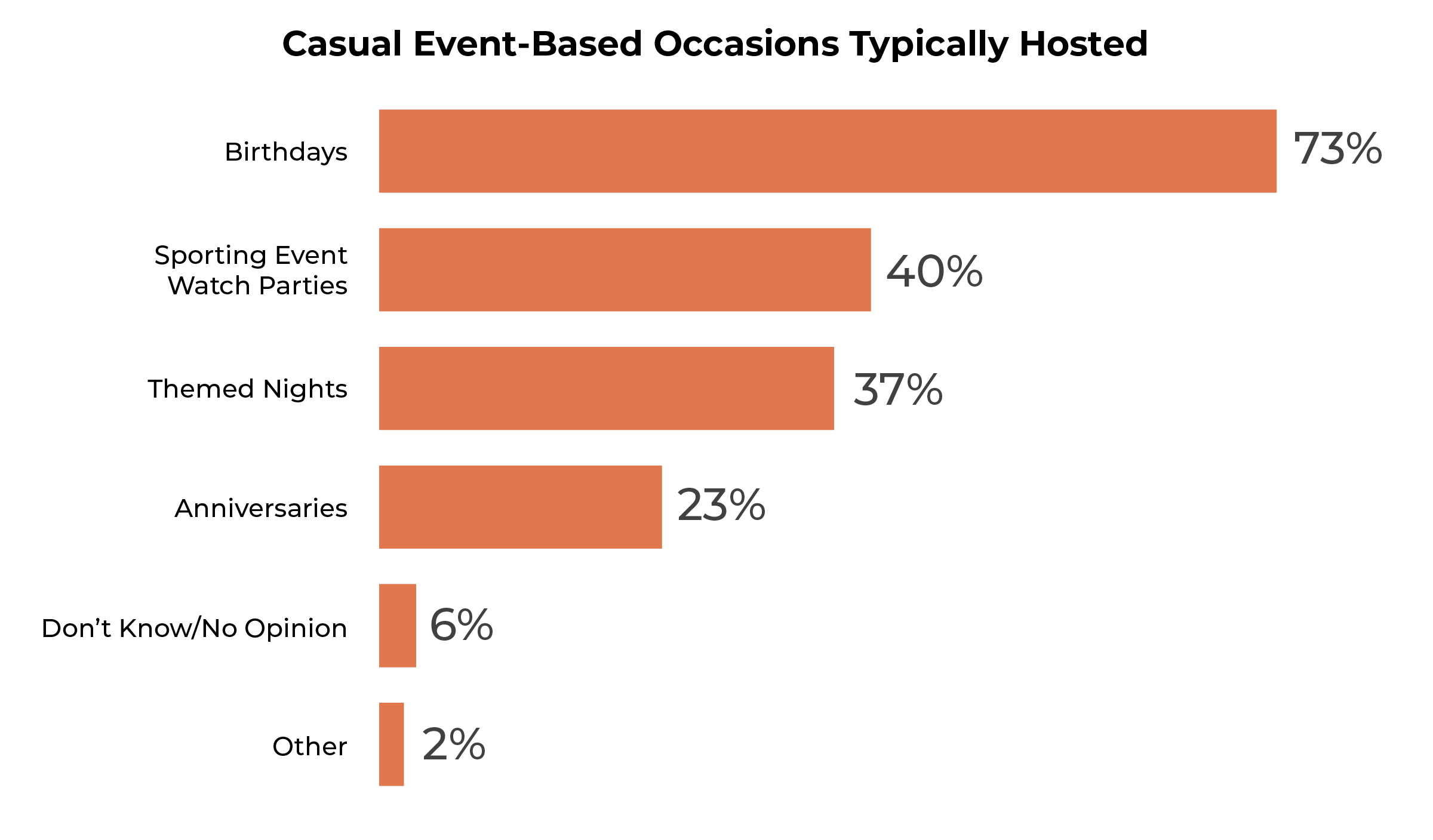
Consumers are slightly less likely to host most casual occasions than in the 2026 report, except for birthdays, which increased marginally to 73%. Anniversary gatherings (23%), sporting watch parties (40%), and themed occasions such as game nights (37%) declined from the previous survey. Boomers were most likely to host birthday gatherings, with the likelihood declining among younger generations.
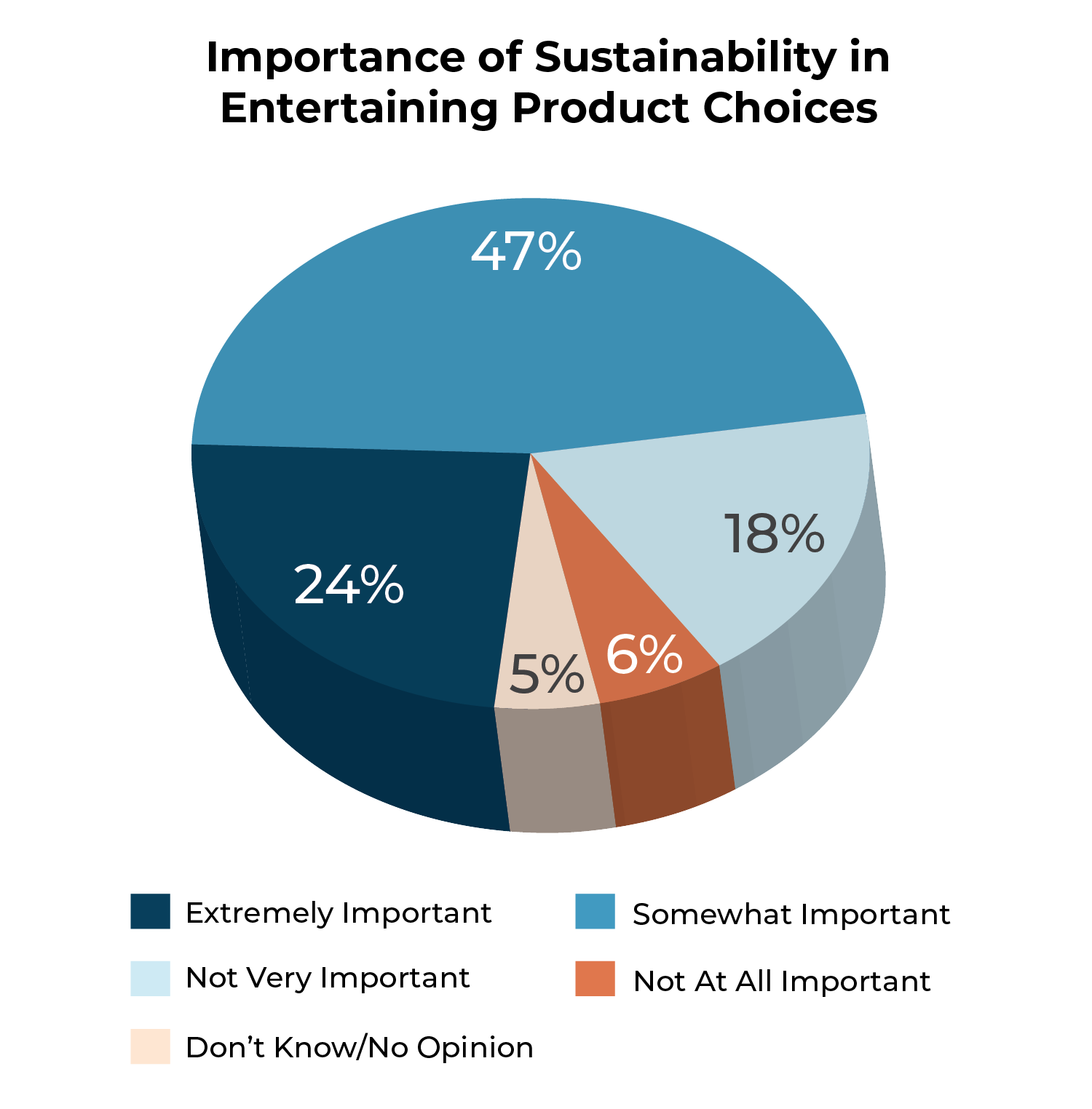
Sustainability remains an important consideration for consumers choosing products for at-home entertaining. While the proportion calling sustainability extremely important fell two points to 24%, somewhat important gained three points to 47%. Combined, about seven in 10 consumers consider sustainability at least somewhat important when preparing to host at home. Even among consumers 65 and older, the least concerned age group, six in 10 considered sustainability somewhat or extremely important.
More than half of Gen Z and Millennials, at 52% and 51%, respectively, always or usually report needing to purchase home textiles ahead of a gathering, followed by 36% of Gen X.
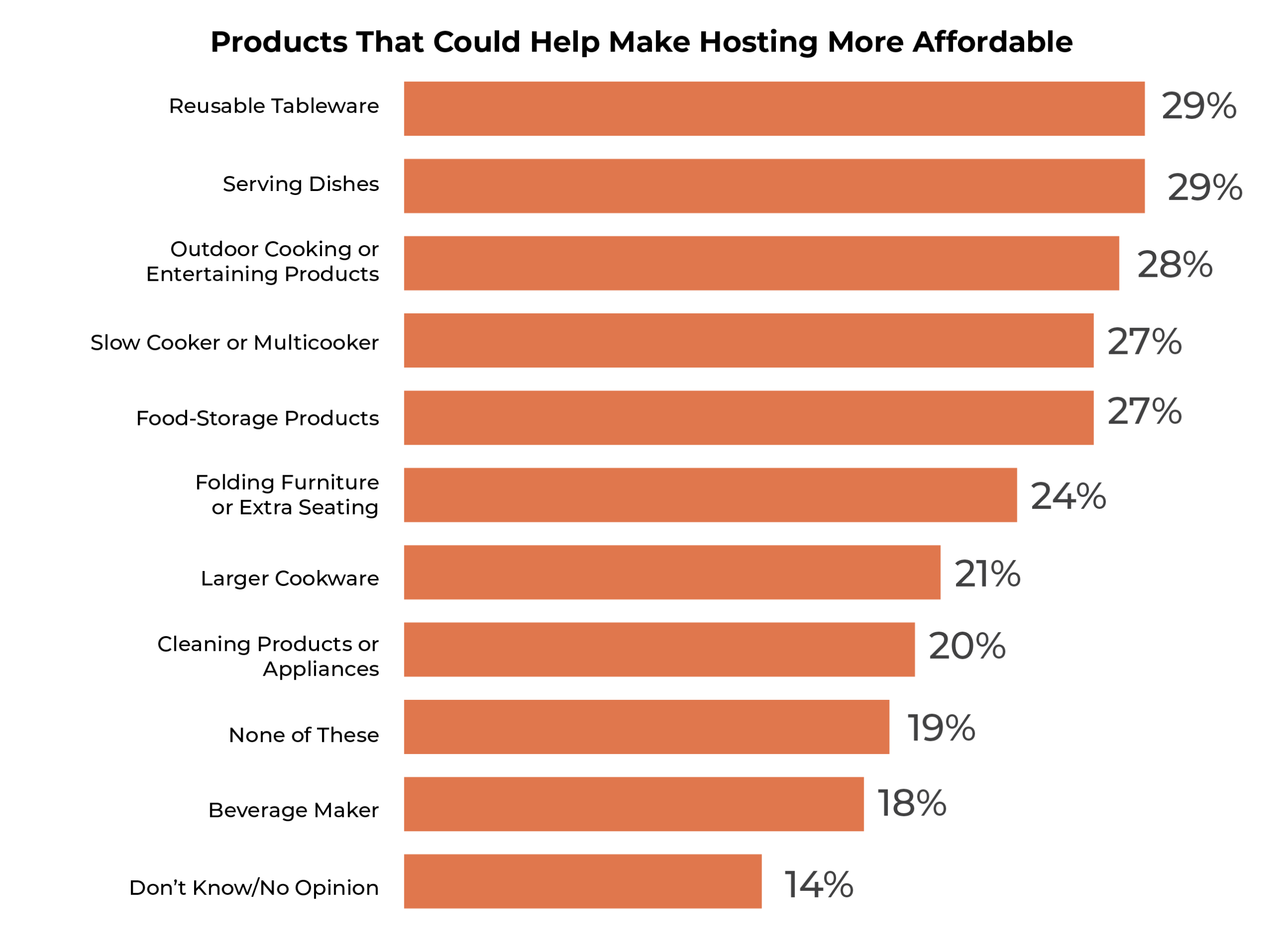
Consumers see a range of housewares as valuable to entertaining at home, particularly products that can make hosting easier and more affordable. Reusable tableware and serving dishes lead the products consumers say can help make gatherings more affordable, each cited by 29%. Outdoor cooking and entertaining products follow at 28%, while slow cookers or multicookers and food storage products each rank at 27%.
Consumers from middle-income households earning $50,000 to $100,000 annually were most likely to cite lower costs or more affordable options as a motivator for hosting at home, at 44%, followed by those earning less than $50,000, at 43%
Costs weigh on consumers when they consider hosting at-home gatherings. Some 24% of survey respondents said they’re hosting significantly less frequently because of higher costs, while another 27% said they’re hosting somewhat less frequently. Meanwhile, 41% said higher costs have not caused them to host less often.
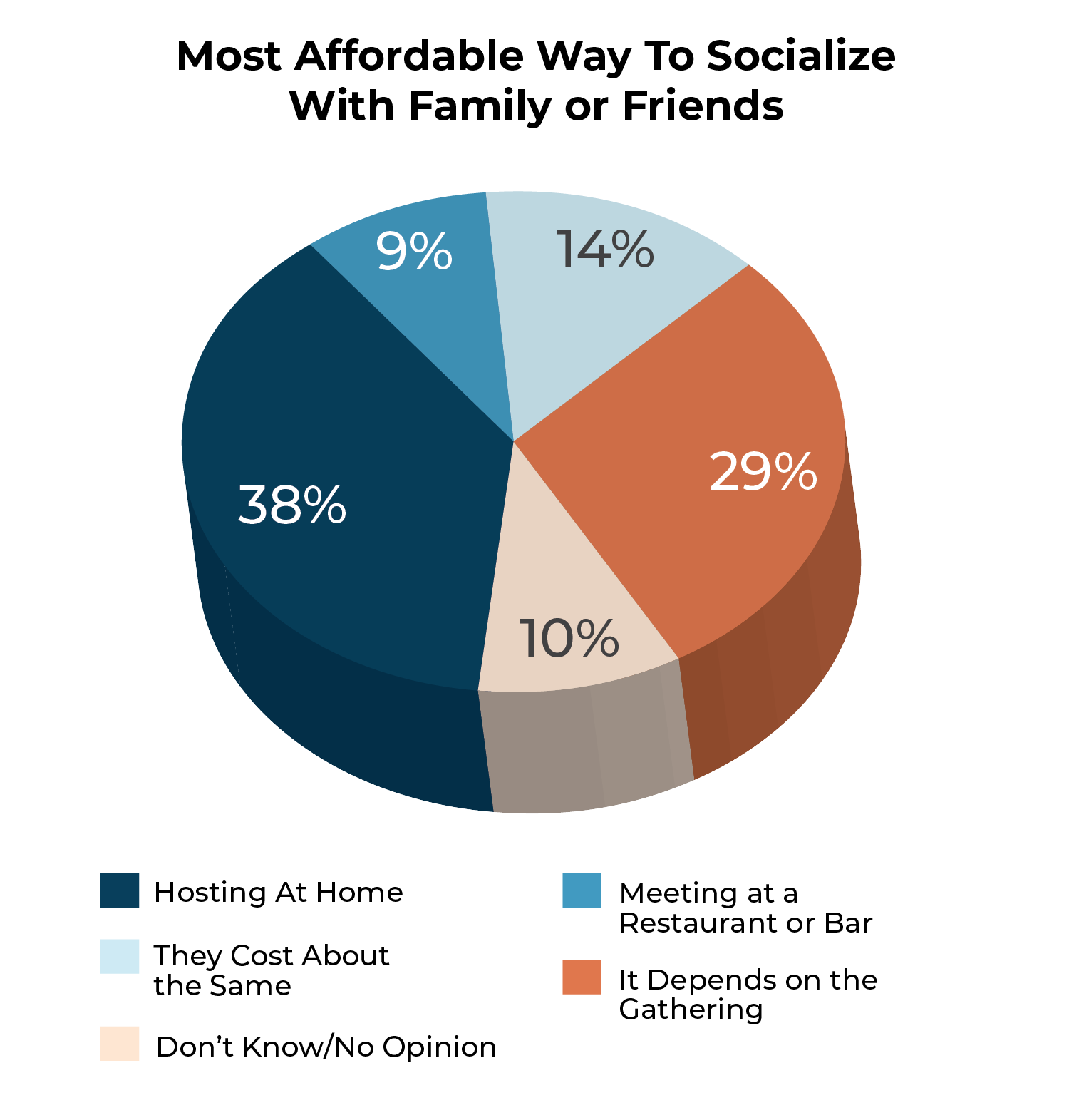
Consumer opinions about the cost of celebrating with family and friends aren’t straightforward. Although 38% of consumers find hosting at home more affordable than meeting at a bar or restaurant, 29% say affordability depends on the gathering. Another 14% say the two cost about the same, while 9% consider meeting at a bar or restaurant more affordable. Overall, consumers are more likely to give hosting at home the edge on affordability.
Methodology: The 2027 HomePage News At-Home Entertaining Report is based on a survey conducted by Morning Consult on behalf of the International Housewares Association (IHA) in October 2026. The survey included 2,253 U.S. adults, with a margin of error of approximately ±2 percentage points for the full sample. Questions specific to consumers who hosted gatherings were generally based on a subset of 1,386 respondents.